

KEY POINTS
- The historic sporting rivalry between England and Argentina is defined by iconic, controversial moments that have transcended soccer to become cultural milestones.
- From Antonio Rattín’s infamous dismissal in 1966 to Diego Maradona’s legendary “Hand of God” in 1986, the fixture is steeped in high-stakes drama.
- Ahead of their potential 2026 World Cup showdown, veterans and fans are reflecting on the moments of brilliance and heartbreak that shaped this intense matchup.
The historic competitive tension between the English and Argentine national teams stands as one of the most passionate and deeply rooted rivalries in international sports. When these two soccer powerhouses clash on the pitch, the match is rarely just about a game; it represents a collision of distinct footballing philosophies, national pride, and decades of dramatic shared history. For fans in the United States and across the globe, understanding the backstory of this fixture is essential to appreciating the pure theater that unfolds whenever they share a stadium.
What You Need to Know
To understand the intense rivalry between England and Argentina, one must look back to the landmark matches that laid the foundation for decades of sporting animosity. While geopolitical tensions—most notably the 1982 Falklands War—undeniably added an extra layer of complexity to their encounters, the sporting friction actually ignited much earlier on the pitch. The primary catalyst occurred during the 1966 World Cup quarterfinal at Wembley Stadium, a highly contentious match that ended in a 1-0 victory for England but left a lasting legacy of resentment.
During that infamous 1966 clash, Argentine captain Antonio Rattín was controversially sent off by West German referee Rudolf Kreitlein for “violence of the tongue,” despite the referee not speaking Spanish and Rattín demanding an interpreter. The Argentine midfielder refused to leave the pitch for several minutes, eventually walking off and famously sitting on the red carpet reserved exclusively for Queen Elizabeth II. The incident prompted England manager Alf Ramsey to forbid his players from swapping jerseys with the South Americans after the match, famously labeling the visitors “animals” in his post-game remarks—a comment that deeply offended the Argentine nation and sparked a lasting athletic feud.
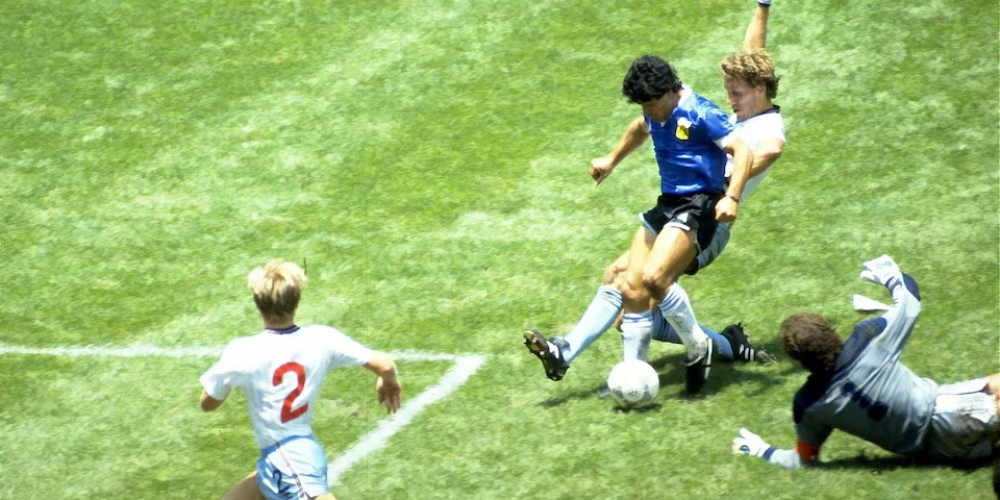
Twenty years later, the rivalry reached its absolute zenith during the 1986 World Cup quarterfinals in Mexico City. In a match that would define his legendary career, Diego Maradona scored two of the most famous goals in football history within a four-minute span. The first, a highly controversial goal where Maradona used his hand to punch the ball over England goalkeeper Peter Shilton, was famously described by the playmaker as being scored “a little with the head of Maradona and a little with the hand of God.” Minutes later, Maradona redeemed any controversy by embarking on a breathtaking 60-yard slalom run past five English defenders to score the “Goal of the Century,” cementing the match as an eternal piece of sports folklore.
Red Cards and Revenge: The Modern Era
The drama did not stop in the twentieth century, as subsequent generations of players inherited the weight of this historic rivalry. At the 1998 World Cup in France, the two nations met in a thrilling Round of 16 match that would alter the career trajectory of one of England’s most famous athletes. Early in the second half, with the score tied at 2-2, young English midfielder David Beckham was fouled from behind by Argentine midfielder Diego Simeone. In a moment of frustration, Beckham, while lying face down on the turf, flicked his leg out and clipped the back of Simeone’s leg.
Simeone exaggerated the contact, falling dramatically to the ground, which prompted referee Kim Milton Nielsen to brandish a straight red card to Beckham. England went on to lose the match in a heartbreaking penalty shootout, and Beckham returned home to a torrent of abuse from the English media and public, with some fans hanging effigies of the young star outside London pubs. The moment served as a stark reminder of how thin the line between hero and villain is when playing against Argentina.
Beckham would eventually earn his redemption four years later at the 2002 World Cup in Japan and South Korea. Drawn into the same group, the two teams faced off in a highly charged match in Sapporo. When England was awarded a first-half penalty, Beckham stepped up to face Argentine goalkeeper Pablo Cavallero. Displaying immense composure, Beckham blasted the penalty straight down the middle to secure a 1-0 victory for England, effectively exorcising his personal demons from four years prior and contributing to Argentina’s shock group-stage exit from the tournament.
Why This Matters
For American soccer enthusiasts, the enduring legacy of the England-Argentina rivalry offers a fascinating window into the cultural and emotional power of international sports. As soccer’s popularity continues to skyrocket in North America, newer fans are discovering that the sport’s greatest narratives are built on decades of theatrical, high-stakes competition. Understanding these legendary storylines enriches the viewing experience, transforming a standard ninety-minute match into a historic event with massive cultural stakes.
Additionally, the global interest generated by these historic matchups has a tangible impact on the growth of the sport in the United States. Major matches involving these two iconic nations routinely draw massive television ratings in the American market, driving media engagement and youth participation. The drama, tactical intrigue, and star power associated with this classic rivalry serve as a powerful marketing tool for the beautiful game in a country rapidly preparing to host future major international tournaments.
NCN Analysis
As both nations navigate their respective pathways in the current international landscape, the potential for another classic chapter in this rivalry looms large. The modern-day squads are filled with elite superstars who ply their trade in the world’s most competitive domestic leagues, ensuring that any future encounter will feature a dazzling display of athletic talent. However, the tactical approach has evolved; while past matches were often defined by physical intimidation and gamesmanship, today’s matchups emphasize high-pressing systems, transitions, and collective defensive discipline.
What makes this rivalry truly special is that it refuses to fade with time. Even as new generations of players take the pitch—athletes who were not even alive when Maradona scored in Mexico or when Beckham was sent off in Saint-Étienne—they still carry the collective memory of their nations’ footballing history. It is this unique blend of athletic excellence and historical narrative that ensures England vs. Argentina will always remain one of the crown jewels of international sports.
The legendary battles of the past serve as a powerful reminder that whenever England and Argentina meet, soccer transcends the boundaries of a simple game to become an unforgettable theatrical event.
Reported by the NCN Editorial Team









