

KEY POINTS
- The World Cup semifinal in Atlanta reignites a deeply emotional six-decade football rivalry marked by historic clashes, military conflict, and iconic playmakers.
- From the infamous “animals” insult in 1966 to Diego Maradona’s defining goals in 1986, meetings between the two nations have repeatedly transcended sports.
- Wednesday’s high-stakes knockout match represents the first time these two footballing giants will face off in a World Cup semifinal.
The sporting world is bracing for an absolute blockbuster in Georgia as Argentina and England prepare to reignite one of international football’s most layered and emotional rivalries. With a coveted spot in the 2026 World Cup final on the line, the clash in Atlanta brings decades of historical grievances, modern ambitions, and athletic brilliance to a boiling point. For millions of spectators across the globe, this semifinal represents far more than ninety minutes of athletic competition.
What You Need to Know
The complex relationship between the two countries on the pitch has always been deeply intertwined with historical events off it, most notably the 1982 South Atlantic conflict. The brief war over the islands known as the Falklands to the British and the Malvinas to Argentinians claimed the lives of hundreds of soldiers, leaving deep wounds that immediately spilled over into sports. When the national teams met four years later at the 1986 tournament in Mexico, the atmosphere was charged with an intensity that extended far beyond standard athletic competition.
It was during that legendary quarterfinal at the Estadio Azteca that Diego Maradona etched his name permanently into sporting folklore with two wildly contrasting moments. His opening goal, a cheeky handball that he famously described as being scored “a little with the head of Maradona and a little with the hand of God,” remains the most debated incident in football history. Minutes later, he scored a breathtaking solo effort, weaving past half the English team in what is widely considered the greatest goal ever witnessed at a World Cup.
For many in Argentina, that victory was viewed as a form of poetic justice and symbolic compensation for the painful military defeat suffered years prior. The match established a cultural narrative that elevated sporting triumphs over England to a level of national atonement. Ever since, fixtures between the two sides have carried an undercurrent of tension and emotional weight passed down through generations of supporters.
Rattin, Red Cards, and the Genesis of Animosity
While the 1986 match remains the most famous chapter, the bitter roots of the England-Argentina rivalry actually stretch back to the 1966 World Cup. Playing in a quarterfinal at Wembley Stadium, Argentine captain Antonio Rattín was controversially dismissed by a West German referee for “violence of the tongue,” despite the official speaking no Spanish. A furious Rattín refused to leave the field, famously sitting on the red carpet reserved for Queen Elizabeth and clutching a British corner flag, prompting outraged English fans to pelt him with beer cans.
Following England’s narrow 1-0 victory, manager Alf Ramsey created a diplomatic storm by forbidding his players from swapping shirts with their opponents. Ramsey publicly labeled the Argentine players “animals,” an insult that deeply offended the South American nation and instantly galvanized a fiercely defensive footballing identity. The fallout from this ill-tempered match was so severe that it directly inspired the introduction of red and yellow cards in international football to prevent future linguistic and physical misunderstandings.
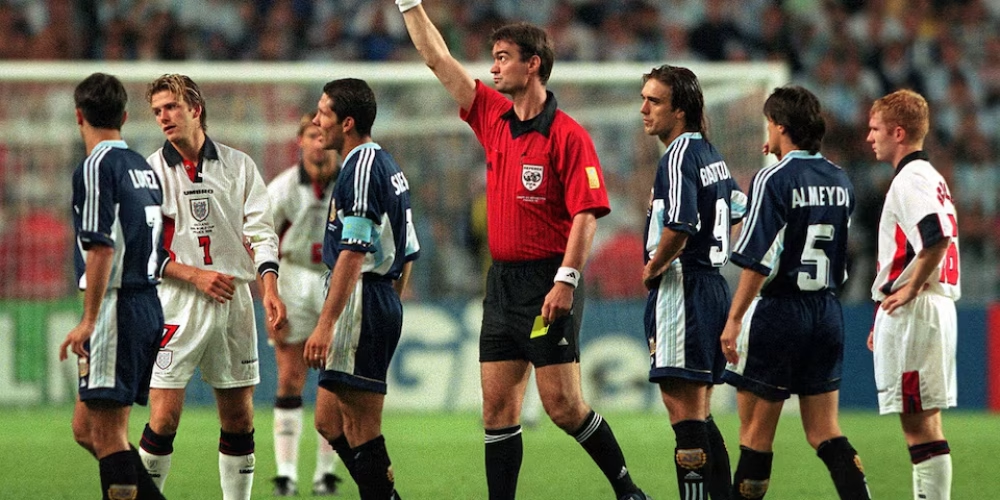
Thirty-two years later, the drama found a new generation of protagonists during a thrilling round-of-16 encounter at France ’98. In a match filled with spectacular goals, the narrative was ultimately stolen by a moment of tactical provocation when Argentina’s Diego Simeone fouled a young David Beckham. Lying face-down on the turf, Beckham petulantly flicked his leg out at Simeone, receiving a straight red card that saw him vilified by the British media and public for months after England was eliminated on penalties.
Now, in 2026, a brand-new chapter of this grand saga is ready to be written on American soil. For the first time in his legendary career, Lionel Messi will lead Argentina against England in an international fixture, looking to guide his team to consecutive World Cup finals. Meanwhile, a highly motivated and resilient English squad is desperate to exorcise their historical ghosts and secure their first global trophy since 1966.
Why This Matters
For soccer fans and sports business stakeholders in the United States, this semifinal showcases the sheer cultural power and historical depth of international football. While American sports rivalries are often built on geographical proximity or divisional races, the England-Argentina dynamic introduces a foreign concept where sport, military history, and national identity are completely fused. It offers a unique educational experience for domestic audiences, highlighting how global football serves as a living, breathing archive of modern history.
Additionally, hosting a match of this immense historical sensitivity demonstrates the growth and maturity of the American sporting infrastructure. Atlanta must manage not only the logistical demands of a massive global event but also the intense emotional energy of traveling supporter groups. The successful handling of such a politically charged atmosphere will further cement the United States as the premier destination for major international sports tournaments in the decades to come.
NCN Analysis
The weight of history hanging over this match will undoubtedly influence the tactical approaches of both managers in Atlanta. Argentina’s Lionel Scaloni has actively sought to downplay the geopolitical narratives, insisting his squad is focusing strictly on neutralizing England’s potent attack. However, the emotional intensity of the Argentine players—who were recently filmed celebrating their quarterfinal victory with traditional anthems referencing past struggles—suggests that the spirit of Maradona still heavily inspires this group.
From a tactical standpoint, England must remain incredibly disciplined and avoid falling into the emotional traps that have plagued them in past meetings. If Jude Bellingham and Declan Rice can dominate the central midfield and isolate Messi, England has the physical engine to wear down the defending champions. But in a fixture historically decided by fine margins and moments of individual genius, no one should discount the ability of Messi to produce one last piece of magic to rival the legends of the past.
The clash in Atlanta promises to add yet another dramatic chapter to football’s most emotionally charged rivalry, where the ghosts of the past continue to shape the heroes of the present.
Reported by the NCN Editorial Team









