

KEY POINTS
- Spain aims to combat the dangerous French frontline by establishing total midfield control and retaining long spells of ball possession.
- Travel fatigue is a major factor for the Spanish side, which has traveled approximately 16,000 kilometers more than their opponents.
- Despite Spain’s victories over France in their recent European Championship and Nations League matches, players stress that past achievements do not guarantee success.
The highly anticipated 2026 FIFA World Cup semifinal in Dallas is set to showcase a fascinating clash of styles as Spain prepares to neutralize the terrifying offensive depth of France. Rather than sitting deep to absorb waves of pressure, the Spanish squad intends to use territorial dominance and structured passing to dictate the match’s tempo. Keeping the ball out of French hands is viewed as their strongest defensive weapon against a formidable opposition.
What You Need to Know
This high-stakes meeting at Dallas Stadium represents a continuation of one of international soccer’s most competitive modern rivalries. Over the last two years, Spain has managed to find a tactical formula that disrupts the French structure, securing crucial wins in the semifinals of Euro 2024 and the Nations League. However, tournament football is highly unpredictable, and past success provides nothing more than psychological confidence.
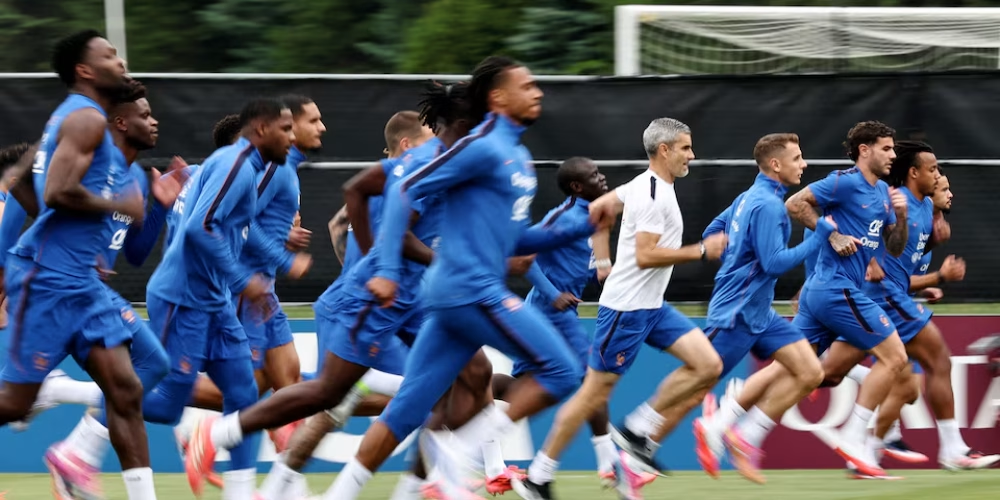
France enters this semifinal on the cusp of an era of unprecedented World Cup dominance, pursuing a third consecutive final appearance under Didier Deschamps. The French side has shown an exceptional ability to transition between clinical counter-attacks and possession-heavy phases. Under Deschamps’ leadership, they have continually refreshed their roster without losing their identity, meaning Spain faces a vastly different, more versatile team than in previous cycles.
Meanwhile, Spain’s route to the final has been complicated by severe logistics. To prepare for this massive match, the Spanish coaching staff and players must overcome significant physical weariness. Finding a balance between maintaining high pressing energy and recovering from constant internal flights is arguably Spain’s biggest off-field challenge in this tournament.
Neutralizing the French Attack and Travel Disparities
The core battle of this semifinal revolves around how Spain’s defense can handle France’s elite “Fab Four” offensive frontline. Spearheaded by Kylian Mbappé, the attack features Michael Olise, Ousmane Dembélé, and either Bradley Barcola or Désiré Doué. This group possesses elite speed, ball-carrying skills, and clinical finishing that can easily punish defensive structural lapses. Spanish winger Alex Baena emphasizes that the objective is to force these attacking superstars to defend rather than run wild in transition.
To make this plan work, Spain intends to monopolize ball possession, using short, precise passing patterns in the midfield. By maintaining a slow, deliberate build-up and keeping the pitch small, Spain hopes to frustrate the French wingers and deny them the space required to accelerate. Managing the transition moments when possession is lost will be critical to keeping the game balanced.
Beyond the tactical battles on the pitch, a massive disparity in travel distances has emerged as a crucial subplot. Spain chose to establish their team headquarters in Chattanooga, Tennessee—a city that has not hosted any matches—forcing the squad to fly extensively across three different time zones. In stark contrast, France remained comfortably at their home base in Boston, Massachusetts, and did not play a single game outside the Eastern Time zone until traveling to Texas for this semifinal.
This scheduling difference has forced Spain to cover an estimated 16,000 kilometers more than the French squad. While Spanish full-back Pedro Porro downplayed the physical strain by highlighting the team’s professional recovery protocols, Baena was more candid, admitting that the constant travel is taking a toll as the tournament nears its conclusion. The final outcome of the match could easily hinge on whether Spain’s tired legs can keep up with a much fresher French team in the dying minutes.
Why This Matters
For soccer fans and sports business stakeholders in the United States, this tournament represents a major milestone in the country’s sports landscape. The presence of world-class teams like Spain and France playing highly competitive semifinals in state-of-the-art stadiums in Texas demonstrates the massive growth of soccer in North America. These matchups draw immense global viewership, creating a significant economic boom for local tourism, hospitality, and broadcasting partners across the country.
Additionally, the physical demands placed on the players due to the vast travel distances highlight ongoing concerns regarding tournament logistics and player welfare. The 16,000-kilometer travel discrepancy between the two semifinalists will likely spark conversations among sports scientists, MLS clubs, and international football organizations about how future multi-city tournaments in North America should structure team bases to ensure fair competition.
NCN Analysis
Spain’s possession-based approach is incredibly logical, but its execution will require absolute physical and mental precision. If their passing becomes slow and predictable due to exhaustion, they will play directly into France’s hands. The French are masters of the low defensive block, often waiting patiently for an opponent to make a mistake in possession before unleashing a devastating counter-attack through Mbappé and Olise.
Ultimately, we believe the first 20 minutes will dictate the nature of this match. If Spain can establish a comfortable rhythm early on and keep France pinned back, they can preserve their energy and control the tempo. However, if France scores an early goal, Spain will be forced to chase the game, opening up defensive gaps that a fast, rested French side can ruthlessly exploit to secure their spot in the final.
The path to the World Cup final will be determined by Spain’s ability to control the midfield while fighting off immense physical fatigue against a formidable French opponent.
Reported by the NCN Editorial Team









