

KEY POINTS
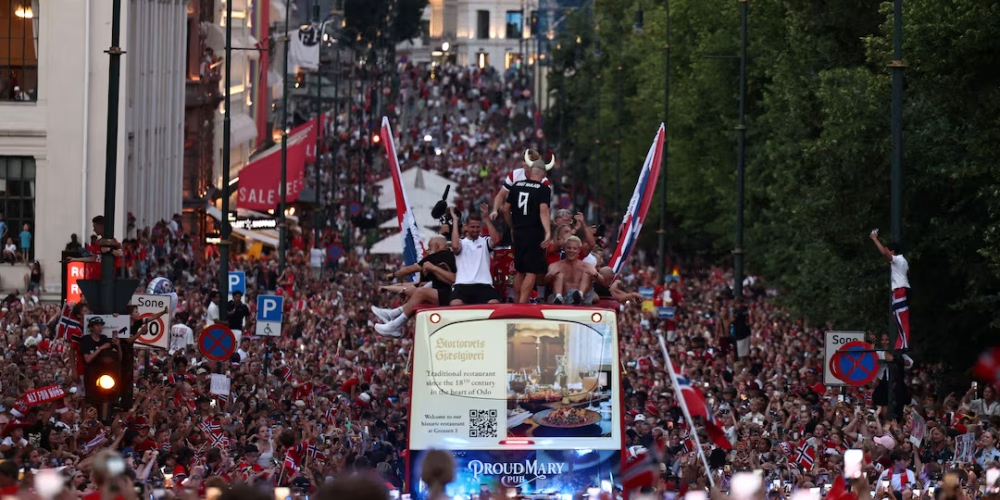
- More than 100,000 ecstatic supporters packed the streets of Oslo to turn World Cup quarterfinal heartbreak into a massive national celebration.
- The team was honored by King Harald V at the Royal Palace before leading the passionate crowd in one final, resounding “Viking row.”
- Star striker Erling Haaland and midfielder Sander Berge missed the final stages of the parade due to travel delays departing the United States.
An incredible wave of national pride swept through the Norwegian capital as tens of thousands of citizens turned out to welcome home their record-breaking men’s national football team. Under the warm summer sun, the public transformed what could have been a somber homecoming into a joyous festival of appreciation. The massive turnout proved that the squad’s historic tournament run has forever captured the imagination of the Nordic nation.
What You Need to Know
Norway’s dreams of a historic World Cup semifinal berth were dashed in agonizing fashion on Saturday following a grueling 2-1 extra-time defeat against England. Despite the devastating manner of the exit, the achievement of reaching the quarterfinals represents a watershed moment for Norwegian football, which had struggled for decades to make an impact on the global stage. The country’s previous best World Cup showing in the modern era was a round-of-16 finish back in 1998.
This current generation of talent, boasting some of the most recognizable names in European club football, has finally galvanized the nation around its national team. The squad’s performances in North America over the past month have sparked unprecedented interest, creating a cultural phenomenon that has united casual observers and hardcore supporters alike. Upon returning to domestic soil, the players were greeted not with disappointment, but with overwhelming gratitude.
The centerpiece of the homecoming took place at the Royal Palace in Oslo, where the entire delegation was granted a formal audience with King Harald V. The royal reception served as official recognition of the team’s contribution to national prestige. It highlighted how deeply the team’s fighting spirit has resonated with the Norwegian public and the country’s leadership.
Royal Salutes, Street Celebrations, and Flight Delays
The team’s plane touched down at Oslo Airport to a traditional water cannon salute before the players transitioned to an open-top double-decker bus to begin their parade. As the procession wound its way toward the Royal Palace, massive crowds estimated at over 100,000 people lined the famous Karl Johans gate. The sheer volume of people packed along the route created logistical challenges, temporarily halting the bus and forcing it to reverse at one point as police escorts worked to clear a safe passage.
Once the team arrived at the palace, the atmosphere reached a crescendo. Standing on the palace steps with the Royal Guard standing to attention, Crown Prince Haakon took to the drums to lead the massive crowd in a powerful “Viking row” chant, a symbolic gesture that echoed through the heart of Oslo. Waving national flags and singing traditional anthems, the crowd honored a team that had exceeded all external expectations.
However, the festive scene was marked by the noticeable absence of Norway’s star striker, Erling Haaland, and midfielder Sander Berge during the final stages of the parade. National team head coach Ståle Solbakken explained to reporters that the squad’s charter flight from the United States had suffered a frustrating four-hour delay. As a result, both players had to leave the group early directly from the airport to catch pre-scheduled flights to meet their respective club commitments.
Despite the missing stars, the remaining squad members, led by captain Martin Ødegaard, fully embraced the party. Waving flags, singing with fans, and enjoying cold drinks, the players slowly made their way to City Hall Square, where tens of thousands of patient supporters had waited hours to show their appreciation. Ødegaard expressed disbelief at the turnout, admitting that no one in the squad could have envisioned such an emotional and widespread reception.
Why This Matters
For sports fans and soccer organizations in North America, the spectacular scenes in Oslo illustrate the profound, unifying power that a successful World Cup campaign can have on a nation. As the United States, Canada, and Mexico host matches, the tournament is not just a showcase of athletic skill but a catalyst for national identity and collective joy. The emotional homecoming in Norway demonstrates the lasting legacy of the tournament, showing how a sporting event can leave an indelible mark on a country’s culture long after the final whistle.
Additionally, the logistical hiccup that forced Haaland and Berge to skip the celebrations highlights the intense physical and scheduling demands placed on modern elite athletes. With the global soccer calendar becoming increasingly congested, the transition between international tournaments and domestic pre-season training is incredibly brief. This incident will likely fuel ongoing discussions about player welfare and the necessity of giving elite players adequate rest between major tournaments and club responsibilities.
NCN Analysis
Norway’s quarterfinal exit to England may have felt like heartbreak in the moment, but this national celebration is a crucial building block for the future of Norwegian football. For years, this squad was criticized for possessing world-class individual talents like Haaland and Ødegaard without being able to function as a cohesive team. Their performance in this World Cup has shattered those doubts, proving that they can compete with and push the world’s absolute best teams to their limits.
The challenge now for Solbakken and his players is to sustain this momentum and ensure that this historic run is not a one-off achievement. With a young, exceptionally talented core that is just entering its prime, Norway has established itself as a rising powerhouse in European football. If they can build on the tactical defensive stability they showed in North America, this team will be a force to be reckoned with at the upcoming European Championships and the next qualification cycle.
The extraordinary reception in Oslo proved that while Norway may have lost the match, they have permanently won the hearts of their nation.
Reported by the NCN Editorial Team









