

KEY POINTS
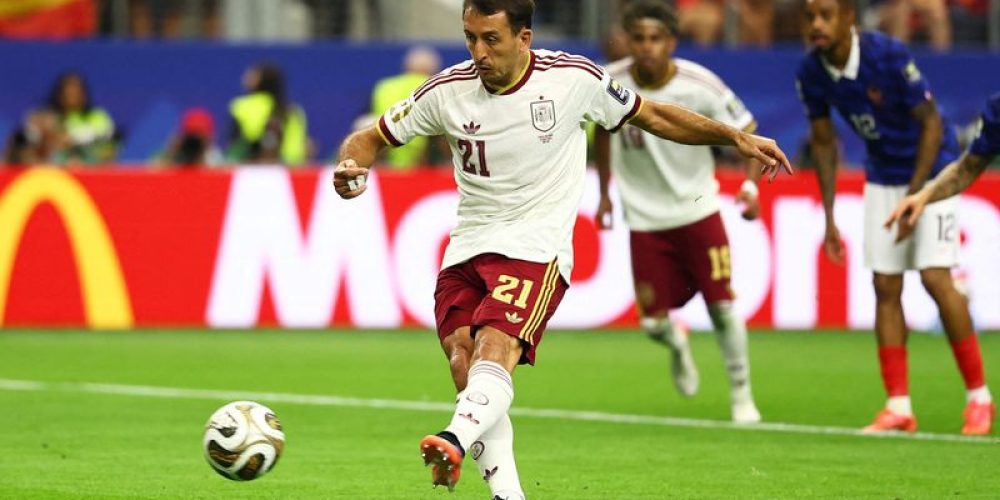
- Spain secured a 2-0 victory over France at Dallas Stadium to advance to their first FIFA World Cup final in 16 years.
- Mikel Oyarzabal converted a first-half penalty, while Pedro Porro sealed the win in the 58th minute with a clinical finish.
- La Roja’s impenetrable defense successfully neutralized French superstar Kylian Mbappé, ending France’s bid for a third consecutive final appearance.
Spain has officially booked its ticket to the Spain World Cup final after delivering a stunning, tactically flawless 2-0 victory over tournament favorites France in Arlington, Texas. In front of a sold-out crowd at Dallas Stadium on Tuesday afternoon, La Roja put on a defensive masterclass that effectively choked the life out of a star-studded French attack led by Kylian Mbappé. With this monumental victory, the Spanish national team returns to the biggest stage in global sports for the first time in sixteen years, igniting celebrations from Madrid to North America.
What You Need to Know
To fully appreciate the magnitude of Spain’s achievement, one must look back at the long journey of reclamation La Roja has undertaken since their historic golden era. In 2010, a generation of legendary players secured the country’s first and only World Cup title in South Africa. In the decade and a half that followed, Spain struggled to replicate that magic, suffering early tournament exits and undergoing multiple painful rebuilds that left fans wondering if the nation’s signature tiki-taka philosophy had run its course. Under the quiet but confident leadership of head coach Luis de la Fuente, a new wave of youthful, dynamic talent has emerged to rebuild Spain’s reputation as a global powerhouse.
France, conversely, entered this semifinal clash as the gold standard of modern international soccer. Having won the tournament in 2018 and narrowly missed out on defending their crown in a historic 2022 final in Qatar, Didier Deschamps’ squad was bidding to become the first men’s team in over two decades to reach three consecutive World Cup finals. Backed by the offensive genius of Ousmane Dembélé and Kylian Mbappé, the French team was widely considered the most formidable roster in the tournament, carrying the weight of massive expectations into this highly anticipated match.
Ultimately, Spain’s strategic discipline proved to be the ultimate differentiator on the pitch. While France relied heavily on individual brilliance and explosive wing play, Spain countered with a cohesive, structured defensive block that completely isolated France’s key playmaker. This collective efforts not only secured the victory but also signaled a shifting of the guard in European and international soccer hierarchy.
Tactical Mastery Seals Victory in Dallas
The high-stakes encounter got off to a blistering start at Dallas Stadium, with both teams looking to establish structural dominance in the midfield. France initially threatened to exploit their signature counter-attacking speed, but Spain’s cohesive tactical block quickly neutralized the French threats. The defining breakthrough of the match occurred in the 22nd minute when winger Lamine Yamal, celebrating his nineteenth birthday just a day prior, launched a mesmerizing run into the French penalty area. His quick feet proved too elusive for French defender Lucas Digne, who committed a costly foul inside the box, prompting the referee to immediately point to the penalty spot. Mikel Oyarzabal stepped up to face France’s formidable goalkeeper Mike Maignan, calmly slotting the penalty low into the bottom corner to give Spain a crucial early lead.
With a 1-0 advantage in hand, Spain’s positional play took absolute control of the pitch, frustrating an increasingly disjointed French squad. France attempted to fight back, but Spain’s defensive unit, anchored by Aymeric Laporte and Pau Cubarsí, stood firm against every direct aerial ball and wing attack. The decisive blow came in the 58th minute when right-back Pedro Porro orchestrated a magnificent one-two passing sequence with Dani Olmo. Slicing through the French defense, Porro collected the return pass and fired a spectacular strike past Maignan, doubling Spain’s lead and sending the Spanish supporters into absolute rapture.
Deschamps attempted to rescue the match by introducing fresh attacking talent in the second half, including Désiré Doué and Rayan Cherki. However, Spain managed the clock with immense maturity and tactical discipline. Goalkeeper Unai Simón acted astutely as a sweeper-keeper, cutting out several dangerous long balls, while defender Marc Cucurella made a heroic late-game tackle to deny Mbappé a clean shot on goal. When the final whistle blew, the scoreboard read 2-0, sealing a masterclass in game management and marking a historical triumph for Spain.
Why This Matters
For the millions of American sports enthusiasts who have tuned in to this tournament, the thrilling matchup in Texas highlights the phenomenal growth and passion for soccer currently sweeping across the United States. Hosting a match of this caliber on American soil provides local fans with a firsthand look at the peak of international athletic competition, fueling grass-roots interest in the sport. The vibrant, multicultural atmosphere inside Dallas Stadium showcased how major tournaments can unite diverse local communities, cementing North America’s status as a premier destination for global sporting events.
Additionally, this tournament run is a massive boon for global sports broadcasters and local economies in the United States. With the final scheduled to take place at the iconic New York New Jersey Stadium in East Rutherford, the anticipation for Sunday’s championship match is reaching a fever pitch. A final featuring a rejuvenated Spain against either England or Argentina guarantees record-breaking viewership numbers and a significant economic windfall for local businesses, hotels, and tourism sectors in the host regions.
NCN Analysis
From an editorial perspective, this victory is a resounding validation of Spain’s strategic pivot toward a more direct, dynamic style of play. Under Luis de la Fuente, the Spanish team has successfully shed the possession-heavy passiveness of recent years, replacing it with a lethal combination of high-intensity pressing and youthful fearlessness. The emerging partnership between seasoned veterans and prodigies like Lamine Yamal suggests that Spain is not just built to win this tournament, but is positioned to dominate international soccer for years to come.
As the team prepares for Sunday’s historic final, they will undoubtedly carry an immense wave of momentum. However, they must remain focused, as either Argentina or England will present a completely different set of tactical challenges. If Spain can maintain the same defensive discipline and clinical finishing they displayed in Arlington, they are well on their way to lifting their second World Cup trophy and completing a fairy-tale tournament run.
Spain’s remarkable combination of defensive resilience and ruthless finishing has rightfully earned them a shot at global immortality on the world’s grandest stage.
Reported by the NCN Editorial Team









