

KEY POINTS
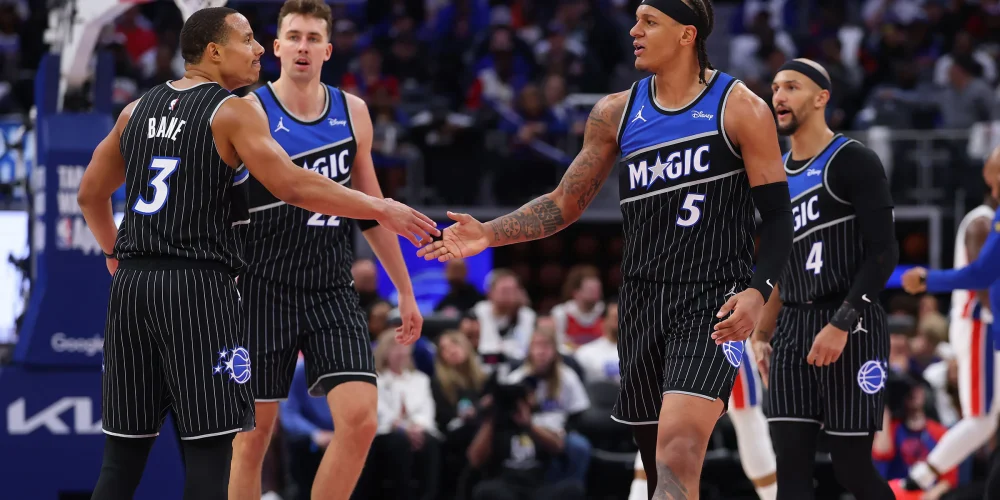
- The Orlando Magic secured a 108-98 victory over the Detroit Pistons in Game 1 of the Eastern Conference playoffs.
- Orlando maintained the lead throughout the entire contest, never trailing against the conference’s top seed.
- Paolo Banchero led the charge for the Magic, neutralizing the Pistons’ momentum from the opening buzzer.
The Orlando Magic delivered a massive statement on the opening day of the Eastern Conference playoffs, handing the top-seeded Detroit Pistons a stunning 108-98 defeat at Little Caesars Arena. In a display of tactical discipline and relentless intensity, the visitors seized control early and never surrendered the lead, effectively silencing the home crowd and putting the Pistons on the defensive before the series has even found its rhythm.
What You Need to Know
Entering the postseason as the number one seed, the Detroit Pistons were widely favored to make a deep run, having leveraged a dominant regular season defined by high-efficiency perimeter shooting and consistent interior play. Conversely, the Magic entered the bracket as an underdog hungry to prove that their late-season surge was no accident. For Orlando, the objective was simple: force the Pistons into uncomfortable sets and break the rhythm that made Detroit so difficult to handle in the winter months.
This matchup has historically been defined by aggressive defensive schemes, but Game 1 showcased an unexpected offensive efficiency from Orlando. While Detroit looked to establish a fast-paced tempo, the Magic countered by clogging the paint and forcing the Pistons to rely on contested jumpers. The result was a stagnant night for Detroit, who struggled to find answers for Orlando’s length and defensive versatility.
A Wire-to-Wire Masterclass
From the opening possession, Orlando dictated the pace. Paolo Banchero was the focal point of the Magic’s attack, consistently drawing double teams and distributing the ball to open shooters whenever the Pistons attempted to collapse the defense. By the end of the first quarter, the Magic held a double-digit lead, a margin they defended with clinical precision throughout the second and third frames.
Detroit attempted to mount a comeback in the final quarter, fueled by a brief flurry of baskets from their backcourt, but Orlando remained unfazed. Every time the Pistons narrowed the gap to a single possession, the Magic responded with high-percentage looks at the rim or crucial defensive rebounds. The closing minutes saw the visitors maintain their composure, successfully navigating Detroit’s full-court press to ice the game at the free-throw line.
Why This Matters
For NBA fans in the United States and global observers, this game highlights the razor-thin margins that exist between the top and bottom of the playoff bracket. When a top-seeded team like Detroit falls in Game 1, it disrupts the expected path to the Finals and generates a sense of unpredictability that drives engagement throughout the postseason. For businesses associated with the league, these upsets are crucial as they extend series and generate interest in markets that might otherwise be overlooked during the initial rounds.
Furthermore, this game underscores the growing importance of defensive length in modern basketball strategy. As teams prioritize players who can switch across multiple positions, the ability of a team like Orlando to neutralize a high-powered offense is a template that other franchises will undoubtedly study. For the Pistons, the challenge is now psychological; they must prove they can handle the pressure of being the hunted in a league where momentum shifts overnight.
NCN Analysis
The Pistons looked visibly rattled by Orlando’s defensive pressure, which is a concern for their coaching staff heading into Game 2. If Detroit cannot adjust their offensive sets to better handle the length of the Magic’s frontcourt, they risk falling into an insurmountable deficit. This is a crucial moment for the team’s leadership to demonstrate their ability to iterate on their strategy mid-series.
Orlando, meanwhile, has achieved the most difficult part of the series: securing a win on the road. The challenge for them now is consistency. It is rare for a team to maintain this level of defensive focus for an entire seven-game series, and the Pistons are likely to respond with a much higher intensity in the next outing. Fans should watch for how Detroit’s rotation changes—specifically their reliance on bench depth—to counter Orlando’s defensive scheme.
Orlando has proven they are not intimidated by the top seed, turning this playoff series into a genuine dogfight.
Reported by the NCN Editorial Team









