

KEY POINTS
- Thomas Tuchel’s defensive tactical adjustments backfired, allowing Argentina to stage a spectacular comeback.
- England was limited to just 12% possession after taking a second-half lead through Anthony Gordon.
- A late offensive surge orchestrated by Lionel Messi shattered England’s hopes of reaching the final.
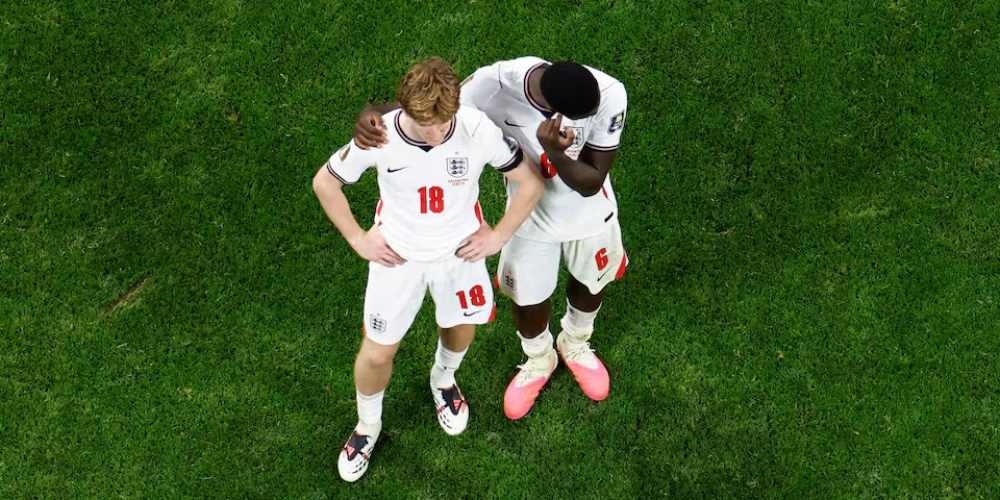
England’s ambitious campaign to secure a historic spot in the World Cup final dissolved in spectacular fashion on Wednesday night after a costly defensive collapse against Argentina. Leading through an energetic second-half goal, the Three Lions retreated deep into their own territory, inviting an onslaught of South American pressure that eventually broke their resolve. The dramatic 2-1 defeat in Atlanta exposed the limits of defensive conservation on the global stage and left Thomas Tuchel’s side facing familiar heartbreak.
What You Need to Know
For soccer tacticians, the dilemma of whether to defend a narrow advantage or chase a consolidating second goal remains one of the sport’s most scrutinized debates. Throughout the 2026 World Cup, several powerhouse nations have struggled to successfully employ conservative tactics under high-stakes tournament pressure. When a leading team cedes control of the midfield, they often lack the technical outlet to relieve defensive pressure, turning the final minutes of a match into an agonizing test of survival.
England’s modern footballing identity has long struggled with this psychological transition. Despite boasting a generation of elite, dynamic attackers playing across Europe’s top domestic leagues, the national team has historically defaulted to deep defensive blocks during the crucial knockout rounds of major tournaments. This conservative mindset has repeatedly proved to be their undoing, preventing them from matching the proactive philosophy of elite soccer nations during decisive moments.
The semifinal match in Atlanta presented a unique tactical challenge due to the immense presence of Lionel Messi. Even at 39, the legendary playmaker retains an unparalleled ability to unlock disciplined defensive lines with a single progressive pass or cross. For opponents trying to preserve a lead, containing Messi requires constant, high-energy pressing—a physical demand that becomes increasingly difficult to sustain as players tire in the closing stages of a match.
How Tuchel’s Defensive Tactics Sparked a Collapse
The tactical narrative of the match shifted completely ten minutes into the second half. Following a scoreless opening period dominated by physical midfield duels, England took a deserved lead in the 55th minute. Morgan Rogers delivered an exquisite cross to the back post, allowing Anthony Gordon to expertly guide his effort past Argentine goalkeeper Emiliano Martinez, sending the traveling English supporters into wild celebrations.
Rather than utilizing the momentum to search for a decisive second goal, England immediately shifted into a defensive posture. Head coach Thomas Tuchel made a series of defensive personnel changes, abandoning England’s fluid attacking shape in an attempt to protect the lead. However, this defensive adjustment backfired dramatically. The tactical shift starved England of the ball, forcing them to survive on a meager 12% of possession over the final 38 minutes of the match.
With England’s midfield sitting too deep, Argentina seized complete control of the game’s rhythm. Messi shifted to the right flank, finding space to deliver a series of highly dangerous, curving crosses into the English penalty box. Although Jordan Pickford kept England alive with a spectacular save from a Nico Gonzalez header, and Alexis Mac Allister struck the post, the pressure on the English backline became unsustainable.
The breakthrough arrived in the 85th minute when Messi found Enzo Fernandez unmarked on the edge of the box. A fatigued Jude Bellingham was unable to close the space in time, allowing Fernandez to unleash a brilliant strike past Pickford. With momentum fully behind them, Argentina pushed forward and secured the winning goal in the second minute of stoppage time, as Lautaro Martinez rose unchallenged to head home another accurate Messi cross.
Why This Matters
This high-profile tactical battle has significant implications for soccer development and tactical philosophies in the United States. As co-hosts of this expanded tournament, American sports fans and coaches have witnessed firsthand the dangers of passive, fear-based play at the highest level of international soccer. The dramatic comeback underscores the necessity of proactive, possession-oriented play, which is increasingly being taught in modern American soccer academies as they seek to build a competitive national identity.
Additionally, the dramatic nature of the match has further elevated the popularity of the sport within the American mainstream market. Millions of viewers tuned in to watch two of soccer’s greatest rivals contest a high-stakes semifinal, demonstrating that the appetite for top-tier global soccer in the United States has reached an all-time high. The commercial success of this tournament will undoubtedly influence future broadcasting rights, domestic league investments, and sponsor engagements across North America.
NCN Analysis
Thomas Tuchel’s decision to play his cards early and focus entirely on defending a one-goal lead was a major tactical miscalculation. While defensive solidity is essential in tournament football, completely surrendering possession to a team featuring Lionel Messi is akin to tactical suicide. The lack of an outlet player in the final half-hour meant that even when England did regain possession, they were entirely incapable of building counterattacks to relieve their overworked defensive line.
Looking forward, England’s coaching staff must address this recurring psychological and tactical barrier if they are to ever replicate their famous 1966 triumph. Churning out semifinal appearances is a testament to the nation’s immense talent pool, but crossing the final threshold requires a level of tactical bravery that was sorely lacking in Atlanta. Until England learns to play with authority while leading, they will continue to suffer the same painful exits on the global stage.
The lesson from Atlanta is clear: in modern soccer, the best defense is often a sustained, intelligent offense.
Reported by the NCN Editorial Team









