

KEY POINTS
- Lionel Messi did not find the back of the net but orchestrated both of Argentina’s late goals.
- The 39-year-old captain has now played every single minute of Argentina’s grueling knockout stage.
- With his two key setups, Messi matches elite playmaking records to seal a final date with Spain.
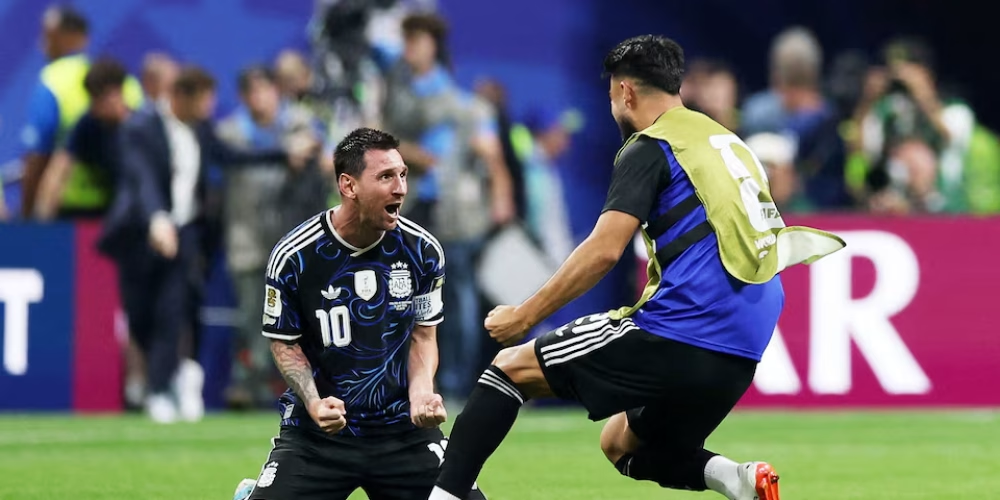
Defending champions Argentina reached their second consecutive World Cup final on Wednesday evening, defeating England 2-1 in a dramatic semifinal clash in Atlanta. While Lionel Messi did not add to his impressive tournament goal tally, his profound, unselfish influence on the pitch ultimately decided the high-stakes encounter. The legendary captain set up both late goals, proving that his playmaking vision remains the heartbeat of this relentless South American side.
What You Need to Know
While modern attacking greats are often evaluated strictly by their individual goal-scoring exploits, Lionel Messi continues to redefine the role of a talismanic leader. Throughout the 2026 tournament, his game has transitioned beautifully into a masterclass of energy preservation and playmaking efficiency. By picking his moments to strike, the veteran ensures he has the physical reserves required to decide games when the stakes are highest.
Argentina’s road to the final in North America has been a grueling test of endurance, requiring the squad to navigate successive, high-pressure knockout fixtures. Prior to the Atlanta semifinal, the Albiceleste battled through demanding extra-time encounters against Switzerland and Cape Verde, alongside a five-goal thriller with Egypt. Through each of these intense physical tests, their captain has been a constant presence on the field, guiding a younger generation of players with his immense tactical intelligence.
Unselfishly prioritizing the team collective over personal glory, Messi has consistently elevated those around him rather than attempting to drag the side through on solo efforts alone. His ability to orchestrate plays from deeper positions has allowed younger stars to flourish in advanced areas. This collective synergy has made Argentina incredibly difficult to contain, as opponents cannot simply focus their defensive efforts on neutralizing a single goal-scoring threat.
The Playmaker Decides a Semifinal Classic
The high-stakes semifinal in Atlanta saw England take a surprising lead ten minutes into the second half through a tap-in from Anthony Gordon. Facing a defensive, compact English low block, Argentina spent the next half-hour patiently probing for an opening. As the match progressed, Messi strategically drifted from his central attacking starting position out to the right wing, instantly changing the tactical dynamics of the game.
From the right flank, the Argentine captain began to dictate the tempo of the game, delivering a series of curling, pinpoint crosses that stretched the English backline. His vision paid dividends in the 85th minute when he spotted midfielder Enzo Fernandez unmarked near the edge of the box. A simple, perfectly weighted pass allowed Fernandez to take a touch and blast a powerful equalizer past Jordan Pickford.
Just seven minutes later, in the second minute of stoppage time, Messi’s relentless work rate created the decisive moment. Scrambling to keep a loose ball in play near the corner, he managed to gain control and loft an exquisite cross back into the penalty area. Striker Lautaro Martinez met the delivery with a thumping header to secure the winning goal, sparking wild celebrations that saw the entire squad immediately run to mob their captain in the corner.
Why This Matters
The tactical evolution of Lionel Messi offers a fascinating case study for soccer coaches, analysts, and fans across the United States. As the country experiences an unprecedented soccer boom during this co-hosted tournament, Messi’s intelligent style of play highlights the value of spatial awareness and decision-making over pure athletic endurance. For young American players developing in domestic academies, studying how a veteran star influences elite games without relying on constant running provides invaluable lessons in tactical maturity.
Furthermore, Messi’s continued success on American soil represents a monumental commercial triumph for the sport’s domestic infrastructure. Having established himself as a cultural icon in Major League Soccer with Inter Miami, his run to yet another global final ensures maximum engagement from the American sporting public. The historic nature of Sunday’s final against Spain will draw unprecedented television audiences across North America, accelerating soccer’s integration into the mainstream American sports landscape.
NCN Analysis
Lionel Messi’s performance against England was the ultimate display of a complete team player. By matching the historic record of 12 career World Cup assists alongside his 21 tournament goals, Messi has cemented his status as the most complete attacking force in the history of the game. His willingness to sacrifice individual goal-hunting to serve as the team’s primary creative engine is precisely why Argentina finds themselves on the cusp of back-to-back world titles.
The upcoming final against Spain presents the ultimate stylistic battle, pitting the veteran playmaker against a highly disciplined, youthful Spanish midfield. Spain’s coordinated pressing will seek to deny Messi the time and space he enjoyed on the wing in the latter stages of the semifinal. However, with the opportunity to potentially sign off his international career at the absolute pinnacle of the sport, write against Lionel Messi at your own peril.
The master playmaker is ready for one final, historic act.
Reported by the NCN Editorial Team









