

KEY POINTS
- Thousands of traveling Scottish soccer supporters paraded to Fenway Park to experience American baseball.
- The cultural crossover followed Scotland’s historic 1-0 victory over Haiti in their World Cup opener.
- The Boston Red Sox hosted a sold-out Scottish Heritage Night to welcome the passionate fan base.
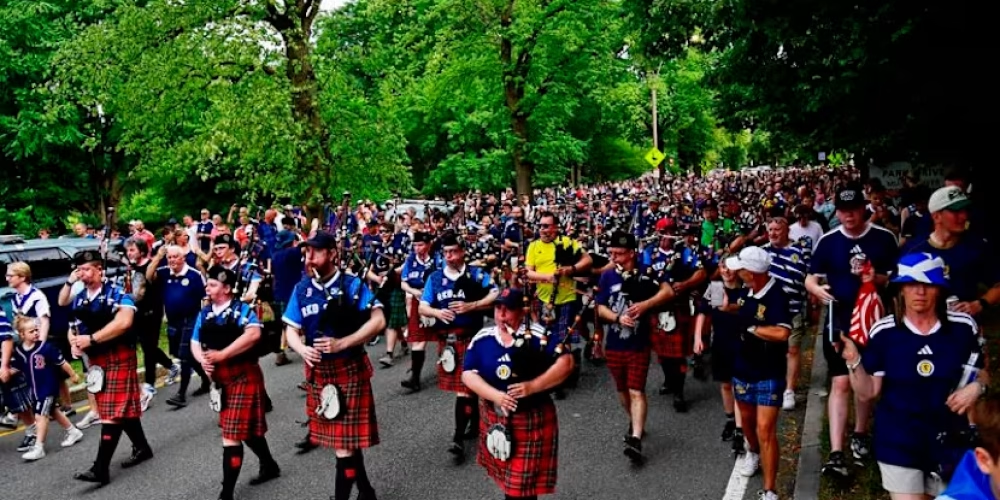
Following a historic victory on the soccer pitch, thousands of traveling Scottish soccer fans traded their traditional football chanting for American baseball by taking over Boston’s historic Fenway Park. The raucous supporters, globally recognized as the Tartan Army, brought their distinctive energy, traditional kilts, and bagpipes to a Major League Baseball game between the Boston Red Sox and the Texas Rangers. The colorful cross-sport invasion created an unforgettable atmosphere in one of America’s most iconic sports towns, showing how the tournament is fostering unique international connections.
What You Need to Know
The World Cup group stage matches have brought an influx of global sports culture to North American cities, but few fan groups carry the legendary reputation of Scotland’s Tartan Army. Known for their fiercely loyal, boisterous, yet remarkably friendly nature, these supporters travel by the thousands whenever their national team qualifies for major international tournaments. For this particular fanbase, the trip across the Atlantic represents a generational milestone.
Prior to this year’s tournament, Scotland had suffered a grueling 28-year absence from the world’s biggest soccer stage, with their last appearance dating back to 1998. More impressively, the nation had not tasted a tournament victory since 1990. That agonizing drought came to an end at Gillette Stadium in Foxborough, Massachusetts, where the Scottish squad secured a thrilling 1-0 win over Haiti in their opening Group C match. The victory sent waves of euphoria through the traveling contingent, setting the stage for a massive celebration in the streets of New England.
Major League Baseball Meets the World Cup
With a five-day break before their next pivotal fixture, the Scottish faithful decided to immerse themselves in a classic slice of Americana. On Sunday evening, a sea of blue and orange jerseys assembled at a public park roughly a half-mile away from Fenway Park. Led by more than a dozen bagpipers, the massive crowd marched in unison through the streets of Boston, guided by local police escorts. The procession moved past the center-field bleachers and flooded into the famous sports bars lining Lansdowne Street behind the fabled Green Monster.
Recognizing the unique marketing opportunity, the Boston Red Sox management officially designated the game as “Scottish Heritage Celebration Night.” The franchise offered special ticket packages that included customized baseball jerseys sporting Scottish colors, a promotion that completely sold out days in advance. Inside the 114-year-old stadium, the Scottish fans integrated their traditional stadium anthems with American ballpark traditions, singing along passionately to the stadium loudspeakers as they blasted John Denver’s classic anthem before the ceremonial first pitch.
The infectious energy even spread to the opposing team’s clubhouse. Following a competitive game that saw the Texas Rangers defeat the Red Sox with a final score of 6-4, Texas players were heard playing Scottish soccer anthems during their post-game celebrations. Athletes from both sides noted that the unified singing and intense energy brought a refreshing, European-style soccer environment to the baseball diamond, highlighting a sense of community that is rarely replicated in domestic sports leagues.
Why This Matters
For American communities, businesses, and sports franchises, this massive cultural crossover demonstrates the immense economic and social value of hosting global sporting events. The presence of the Tartan Army provided an immediate financial boost to local hospitality industries, packing out historic taverns, hotels, and public transportation networks across the greater Boston metropolitan area. It proves that international tourism during major tournaments extends far beyond the confines of the soccer stadiums themselves, benefiting broader commercial ecosystems.
Furthermore, the event highlights a growing appetite among American sports fans and franchises to embrace international sporting traditions. By successfully hosting a sold-out heritage night, Major League Baseball demonstrated how traditional American sports can capitalize on global tourism. This cross-cultural exchange helps demystify cricket, rugby, or soccer cultures for domestic audiences while simultaneously offering international visitors a memorable introduction to classic American pastimes.
NCN Analysis
The vibrant scenes at Fenway Park offer a glimpse into the evolving landscape of sports fandom in the United States. While North American sports culture has traditionally relied on structured, family-friendly entertainment, the influx of international supporters introduces an organic, fan-driven passion characterized by synchronized chanting, marching, and deep-rooted civic pride. This blending of traditions suggests that the domestic sports landscape will absorb these international influences long after the tournament concludes.
Looking ahead, sports business executives should watch how other host cities adapt to these traveling fanbases. As Scotland prepares for its upcoming Group C clash against Morocco in Boston before traveling to Miami to face Brazil, local municipalities will need to maintain flexible security protocols and proactive commercial engagement. The economic windfall will likely encourage future collaborations between different sports leagues, establishing a new blueprint for international tourism activation in major American sports markets.
The celebratory march of Scottish fans through the streets of Boston highlights the profound power of international sports to unite distinct cultures over a shared love of competition and community.
Reported by the NCN Editorial Team









