

KEY POINTS
- Texas Tech forward Toppin Anderson has finalized his decision to remain in the professional draft pool, ending his collegiate career.
- Santa Clara breakout guard Jaxson Graves is also bypassing his remaining eligibility to fully commit to the professional ranks.
- Both standout players made their final decisions just hours before the high-stakes collegiate withdrawal deadline.
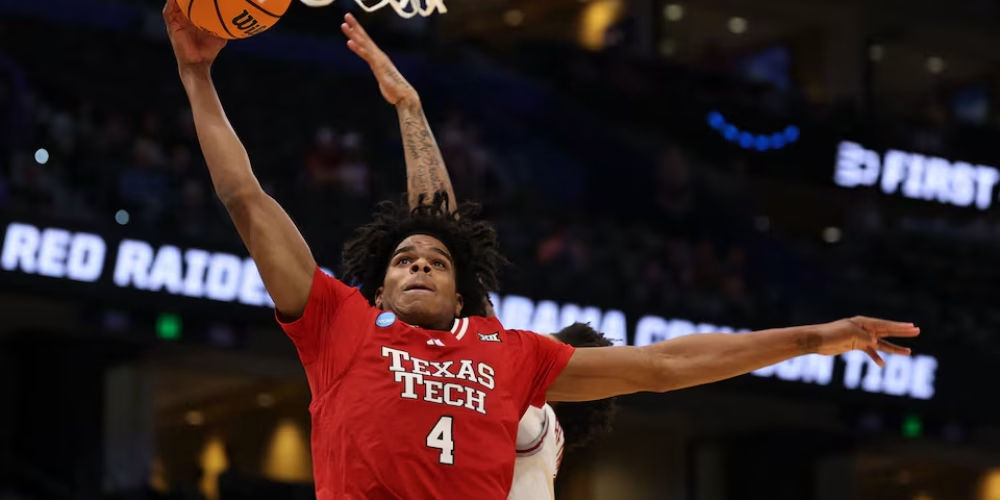
The landscape of collegiate basketball continues to shift dramatically as the final hours of the professional evaluation window come to a close. Texas Tech forward Toppin Anderson and Santa Clara guard Jaxson Graves have both officially decided to forfeit their remaining collegiate eligibility and stay in the professional draft. The announcements come as a major development for both programs, who were eagerly awaiting the final choices of their star players before the official midnight deadline for underclassmen to return to school.
What You Need to Know
The weeks leading up to the official draft registration deadline represent one of the most volatile periods in American sports. Underclassmen are permitted to declare for professional consideration, participate in official team workouts, and receive formal feedback from executives while technically maintaining their amateur standing. This strategic window allows elite athletes to gauge their exact professional value before deciding whether to launch their careers or return to campus for another season.
For mid-major programs and power-conference staples alike, these decisions dictate the entire trajectory of the upcoming winter season. Coaches are forced to operate in a state of suspended animation, balancing potential roster vacancies against an ever-shrinking pool of available talent in the transfer portal. When high-caliber starters choose to remain in the professional pool, it triggers an immediate domino effect, forcing athletic departments to quickly pivot their recruitment strategies.
The evaluation process has become increasingly precise, with front offices placing immense value on advanced analytics, physical measurements, and scrimmage performances during the spring evaluation circuit. Players who receive explicit guarantees or favorable feedback regarding their defensive versatility and shooting metrics frequently choose to take the professional leap. This economic and professional calculus has turned the traditional multi-year collegiate career into an exception rather than the rule for elite tier talent.
Anderson and Graves Commit to the Professional Route
The departure of Toppin Anderson represents a significant structural change for Texas Tech’s frontcourt rotation. The versatile forward was a centerpiece of the team’s interior presence, combining physical rebounding with an evolving perimeter game that caught the attention of scouts during regional workouts. By electing to keep his name in the final pool, Anderson signals confidence in the feedback received from professional front offices over the past month.
Simultaneously, Santa Clara must now replace the elite production of Jaxson Graves, who served as the primary engine for the Broncos’ offense throughout the past season. Graves saw his professional stock rise exponentially following a series of strong performances in front of scouts, showcasing the precise playmaking and perimeter scoring that modern professional backfields demand. His decision to bypass his remaining amateur eligibility continues Santa Clara’s recent trend of producing highly coveted professional prospects.
Both athletes utilized the maximum amount of time allotted by the system to finalize their plans, weighing the long-term benefits of immediate professional development against the potential financial upside of collegiate Name, Image, and Likeness (NIL) packages. Ultimately, the allure of entering the professional ranks and securing a spot within a franchise developmental system outweighed the prospects of returning to the collegiate circuit.
With both players officially out of the collegiate equation, their respective coaching staffs must immediately transition into asset management. The open scholarship slots created by these departures will undoubtedly be used to target veteran players remaining in the transfer market. The finality of these declarations allows both Texas Tech and Santa Clara to clear up roster ambiguity and aggressively pursue replacements before the summer training window begins.
Why This Matters
For basketball fans across the United States, these decisions highlight the incredible depth of talent operating outside of the traditional blue-blood institutions. The fact that programs like Texas Tech and Santa Clara can consistently develop athletes capable of making early professional jumps speaks to the democratization of elite training and visibility in the modern era. Viewers are no longer just tracking a handful of top-tier schools; they are paying close attention to roster movements across the entire national landscape.
Additionally, these roster shifts directly impact the competitive balance of regional conferences and national tournament projections. The sudden loss of an all-conference caliber forward or a dynamic starting playmaker forces sportsbooks to adjust championship odds and alters how national media outlets rank teams heading into the autumn practice schedule. For regional businesses and university collectives, it underscores the constant need to maintain robust funding to attract the next wave of elite talent.
NCN Analysis
The dual announcements from Anderson and Graves underscore a broader trend of underclassmen prioritizing professional entry over extended collegiate tenures. In the current basketball ecosystem, players who project as viable rotational pieces are increasingly willing to bet on themselves, trusting that entry into professional coaching structures will accelerate their growth faster than another year of collegiate competition. This shift puts immense pressure on mid-tier programs to establish sustainable developmental pipelines.
For Texas Tech and Santa Clara, the immediate challenge is avoiding a significant regression in net efficiency. Replacing the specific spatial advantages that Anderson provided inside and the late-shot-clock creation of Graves is an incredibly difficult task this late in the calendar. Fans should expect both programs to be highly active in the graduate transfer market over the coming weeks, searching for short-term veteran fixes to bridge the talent gap for the upcoming season.
The formalization of these draft choices marks the end of two impactful collegiate tenures and sets the stage for a frantic summer rebuilding period.
Reported by the NCN Editorial Team









