

KEY POINTS
- Initial findings from a United Nations inquiry show Israeli tank shells struck a peacekeeping position.
- The incident at the al-Qawzah base resulted in several injuries to Ghanaian peacekeepers.
- The Israeli military admitted to the mistake and issued a formal apology to the UN and Ghana.
The Israel Defense Forces recently acknowledged that their tank fire hit a United Nations peacekeeping position in southern Lebanon. This incident occurred on March 6 at the al-Qawzah base located near the border. Initial findings from an internal United Nations inquiry suggest that three tank shells directly struck the facility.
The strikes caused moderate injuries to several peacekeepers from Ghana who were stationed at the post. A Western military source indicated that the munitions used were 120-mm M339 shells. These specific rounds are manufactured by Israel Military Industries and were fired during a five-minute window.
Israeli military officials stated that their troops were responding to anti-tank missile fire from Hezbollah at the time. They mistakenly identified the United Nations position as the source of the incoming attack. The military has since conveyed a formal apology to both the United Nations and the government of Ghana.
The United Nations Interim Force in Lebanon, known as UNIFIL, monitors hostilities along the demarcation line with Israel. This area has seen intense clashes between Israeli troops and Hezbollah fighters over the last several weeks. The mission is currently scheduled to conclude its operations at the end of 2026.
UNIFIL officials described the attack on their identifiable position as unacceptable and a violation of international law. They emphasized that the location of the base was well-known to all parties operating in the region. The investigation into the full circumstances of the shelling remains ongoing.
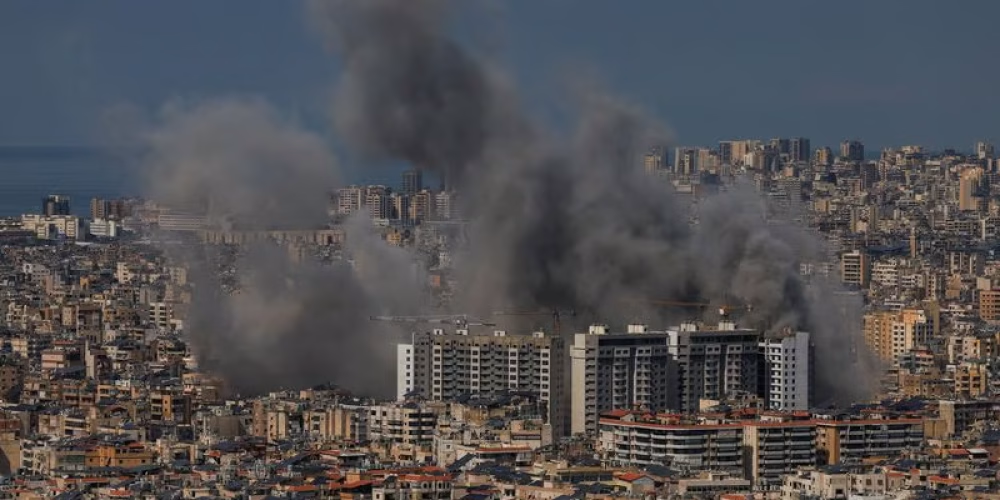
The incident highlights the growing risks to international personnel as military operations expand in southern Lebanon. Peacekeepers have frequently been caught in the crosshairs of both sides during the current conflict. UNIFIL reported that other peacekeepers were also fired upon in separate recent incidents.
Diplomatic pressure is increasing on all actors to ensure the safety and security of neutral observers. International law requires all combatants to take necessary precautions to avoid harming non-combatants and peacekeeping missions. Any deliberate attack on UN personnel is considered a grave violation of global humanitarian standards.
Israel has repeatedly accused Hezbollah of using civilian and sensitive areas to conduct military strikes. However, the UN remains firm that its positions must be respected by all armed forces in the region. The current escalation continues to test the ability of the mission to carry out its mandate.
Regional stability remains a primary concern for the international community as the war continues to broaden. More than one million people have already been displaced by the fighting in Lebanon this month alone. Both sides have ignored previous calls for a ceasefire to allow for humanitarian aid and civilian safety.
The Israeli military has promised to take steps to prevent similar identification errors in the future. They are reviewing their targeting protocols to better protect UNIFIL personnel during active combat situations. Future developments will depend on the intensity of the ground operations along the border.









