

KEY POINTS
- Nearly 1.8 million fans lined the streets of Madrid as Spain’s national soccer team returned home following their 1-0 FIFA World Cup final victory over Argentina in New Jersey.
- King Felipe VI and Prime Minister Pedro Sánchez received the squad in official receptions before an open-top bus parade ended in a massive victory rally at Plaza de Cibeles.
- Substitute Ferran Torres scored the decisive 106th-minute goal in extra time to secure Spain’s second men’s World Cup trophy and its first since 2010.
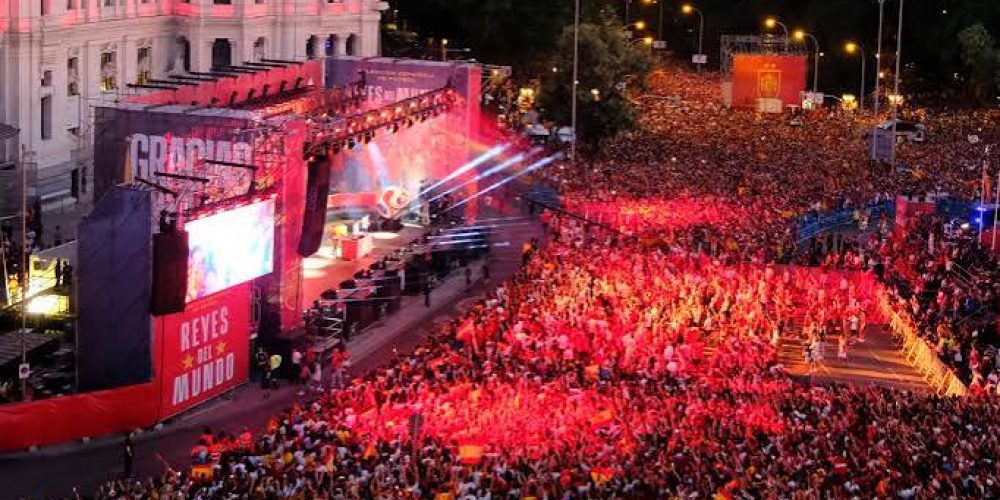
Nearly two million supporters flooded the historic avenues of Madrid on Monday to welcome home Spain’s national soccer team following their dramatic 2026 FIFA World Cup title victory. The euphoric homecoming celebration capped a historic campaign that culminated in a tense 1-0 extra-time win over defending champions Argentina in New Jersey. From royal audiences to massive street parties, the victory parade transformed the Spanish capital into a vibrant sea of red and yellow.
What You Need to Know
Spain’s conquest at the 2026 tournament marks the country’s second men’s FIFA World Cup star, arriving sixteen years after their iconic 2010 triumph in South Africa. Guided by head coach Luis de la Fuente, La Roja navigated the newly expanded 48-team tournament with incredible tactical discipline and defensive composure, conceding just one goal throughout their entire World Cup run.
The crowning moment arrived on Sunday night at New York New Jersey Stadium, where Spain dominated possession against Argentina in a grueling, physical encounter. After ninety goalless minutes, substitute forward Ferran Torres latched onto a loose ball inside the penalty box following a cross from Pedro Porro and an assist by Nico Williams, converting in the 106th minute of extra time to break the deadlock and seal the world title.
The victory touched off immediate nation-wide jubilation, with hundreds of thousands of fans gathering in public squares, parks, and bullrings across Spain to watch the match on giant screens. As the final whistle blew in East Rutherford, spontaneous street parties erupted from Barcelona to Seville, setting the stage for Monday’s official, multi-stage homecoming festivities in the capital.
Spain World Cup Celebration Fills the Streets of Madrid
The squad touched down at Madrid’s Barajas Airport on Monday afternoon, where team captain and tournament Golden Ball winner Rodri emerged from the aircraft holding the world championship trophy aloft. The team’s official itinerary opened with formal receptions at Zarzuela Palace with King Felipe VI, Queen Letizia, and the royal family. King Felipe praised the squad’s resilience, fortitude, and athletic achievement in carrying Spain to the summit of international sport.
Following the royal reception, the 26-man roster traveled to Moncloa Palace for an official audience with Spanish Prime Minister Pedro Sánchez, who commended the coaching staff and players for their sportsmanship and team unity. Speaking on behalf of the squad, Rodri noted that representing the country and lifting the trophy was the greatest honor of his professional career, echoing the memories of the 2010 squad that inspired his generation.
The team then boarded an open-top victory bus decorated with the phrase “Stars Shine Together” for a multi-mile parade toward central Madrid. An estimated 1.8 million spectators lined the procession route in summer heat reaching 95 degrees Fahrenheit, waving national flags and cheering as the bus navigated through historic avenues. Left-back Marc Cucurella and 19-year-old winger Lamine Yamal led the squad in songs and chants from the upper deck, interacting with fans along the route.
The parade reached its peak at Plaza de Cibeles, the traditional focal point for major sports triumphs in Madrid. Before a crowded square of over 120,000 supporters, players were introduced individually onto a custom stage, selecting personal entrance music while celebrating alongside prominent Spanish performing artists. Head coach Luis de la Fuente was hoisted into the air by his players as the squad raised the World Cup trophy together before the roaring crowd.
The national celebration also prompted official recognitions across Spanish civic life. Spain’s postal service, Correos, announced the release of a commemorative stamp featuring two stars to mark the nation’s world titles, while civic leaders praised the peaceful atmosphere across major metropolitan areas during the night of the final.
Why This Matters
For global sports audiences and international soccer fans, Spain’s World Cup campaign represents a defining tactical evolution in modern football. By combining classic midfield possession control with high-intensity pressing and dynamic wing play, La Roja demonstrated how squad depth and tactical discipline can overcome elite opponent lineups. Their victory sets a benchmark for national team construction and youth academy development that federations globally will study during the upcoming international cycle.
Additionally, the overwhelming fan turnout across host venues in the United States and during homecoming celebrations in Europe highlights the expanding global reach of international soccer. The tournament’s commercial success and record-breaking television viewership demonstrate the sport’s unique ability to unite international audiences, drive hospitality spending, and generate sustained cultural engagement across continents.
NCN Analysis
Spain’s World Cup triumph signals a decisive passing of the torch in men’s international football. Led by a nucleus of elite young talents—including Lamine Yamal, Pau Cubarsí, and Nico Williams alongside world-class leadership from Rodri—this squad possesses both the technical versatility and age profile necessary for sustained tournament competitiveness. Unlike previous eras reliant heavily on single-club tactical philosophies, De la Fuente’s side displays remarkable adaptability against diverse opponent setups.
Looking ahead to future international competitions, football analysts will monitor whether Spain can maintain its defensive organization and pressing intensity. If La Roja continues to integrate top-tier youth prospects into its senior setup while preserving its tactical identity, this World Cup victory could serve as the foundation for another dominant era in European and global soccer.
Spain’s spectacular homecoming parade proves that while winning the trophy in New Jersey was a historic athletic accomplishment, bringing a nation together in collective celebration remains the ultimate reward of World Cup glory.
Reported by the NCN Editorial Team









