

KEY POINTS
- Spain captured their second World Cup trophy after securing a dramatic 1-0 extra-time victory in East Rutherford.
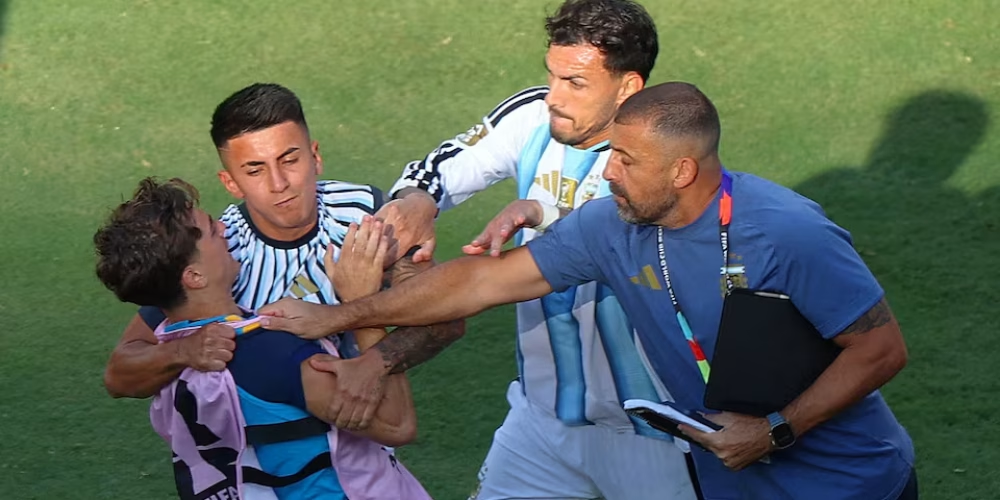
- A tense melee erupted at the final whistle between players and coaching staff after the physical battle concluded.
- Substitute Ferran Torres delivered the championship-winning strike in the 106th minute to dethrone the defending champions.
Spain was crowned global champions after a fierce, extra-time victory over Argentina at New York New Jersey Stadium, but the historic moment was instantly shadowed by chaotic scenes on the pitch. Following 120 minutes of high-intensity physical competition, emotions boiled over immediately after the final whistle as players and staff engaged in a heated post-match altercation. The victory marks Spain’s second world title, completing a dominant sweep following their European Championship crown.
What You Need to Know
The clash between the reigning European champions and the defending World Cup winners carried immense competitive weight, bringing together two of international football’s most sophisticated tactical systems. Spain entered the championship match seeking to cement their era of dominance under Luis de la Fuente, relying on patient possession and precision movement. Argentina, led by Lionel Messi in his final World Cup appearance, aimed to become the first repeat champions in over six decades.
Throughout the tournament, both squads demonstrated remarkable consistency, navigating a expanded bracket to reach the showpiece match in North America. The final lived up to its billing as a tactical war of attrition, characterized by tight defensive blocks, tactical fouls, and intense pressure in midfield. As the match progressed without a goal through 90 minutes, the physical toll and psychological strain became increasingly evident on both sides.
Compounding Argentina’s late-game difficulties was a numerical disadvantage heading into extra time. Midfielder Enzo Fernández was dismissed in second-half stoppage time after receiving a second yellow card for a late challenge on Pau Cubarsí. Operating with ten men against a Spanish side that controlled over two-thirds of the ball forced the South Americans into a deep, heroic defensive shell to survive.
Tensions Boil Over in Extra-Time World Cup Showdown
Spain finally broke the deadlock in the 106th minute of extra time through substitute Ferran Torres. A deep cross from Pedro Porro was headed across the face of goal by Nico Williams, allowing Torres to react quickest and volley past Emiliano Martínez. The strike triggered wild celebrations along the Spanish bench and ultimately proved to be the decisive goal that sealed the championship.
The final whistle triggered contrasting emotions that rapidly escalated into physical confrontation. As Spanish substitutes sprinted onto the pitch to celebrate their triumph, Argentina midfielder Leandro Paredes confronted Spain defender Eric García. The interaction quickly drew in surrounding players, with Spain’s Gavi stepping in to separate the pair before further pushing and shoving broke out near the touchline.
Coaching staff and security personnel rushed onto the field to restore order before the situation escalated further. Argentina manager Lionel Scaloni actively intervened to pull his players away from the commotion, helping to defuse the flashpoint so the official trophy presentation could proceed. Despite the ugly post-match scuffle, cordiality eventually returned as players from both nations exchanged handshakes and embraced Lionel Messi in recognition of his historic career.
Statistical dominance favored Spain throughout the 120 minutes, as La Roja generated 20 shot attempts while restricting Argentina’s attack for vast stretches of the contest. Spain keeper Unai Simón earned the Golden Glove for a record-breaking defensive campaign, while Spain became the first champion in World Cup history to concede only a single goal across an entire tournament.
Why This Matters
For American sports fans and organizers, the dramatic conclusion in New Jersey provided an unforgettable showcase of international football’s highest stakes. MetLife Stadium hosted a sellout global crowd, demonstrating the immense appetite for soccer in the United States and proving that North American venues can successfully stage the world’s most intense sporting spectacles.
The wild scenes and dramatic extra-time finish will dominate global sports headlines for weeks, driving massive viewership across American broadcasting networks and social platforms. For domestic event organizers, executing a seamless final despite the late-game tension highlights the operational readiness of US host cities as they prepare for future major global athletic events.
NCN Analysis
Spain’s victory establishes a new standard for modern international football, proving that technical precision combined with tactical adaptability can break down even the most disciplined defensive structures. With young stars like Lamine Yamal, Pau Cubarsí, and Nico Williams playing central roles in a World Cup triumph, Spain’s talent pipeline ensures they will remain the team to beat for the foreseeable future.
For Argentina, the loss marks the end of an extraordinary golden era that yielded back-to-back Copa América titles and a World Cup trophy. The federation now faces an inevitable transition period as veteran leaders step aside, requiring a fresh generation of talent to rebuild around the competitive mentality that brought them to the summit of international sports.
Spain stands atop the world once again after surviving an unforgettable night of high drama in New Jersey.
Reported by the NCN Editorial Team









