

KEY POINTS
- Mikel Merino scored a dramatic late winner to secure Spain’s victory over rivals Portugal.
- The tightly contested knockout match sends La Roja into the 2026 World Cup quarter-finals.
- This high-stakes Iberian Derby elimination marks a major turning point in the tournament.
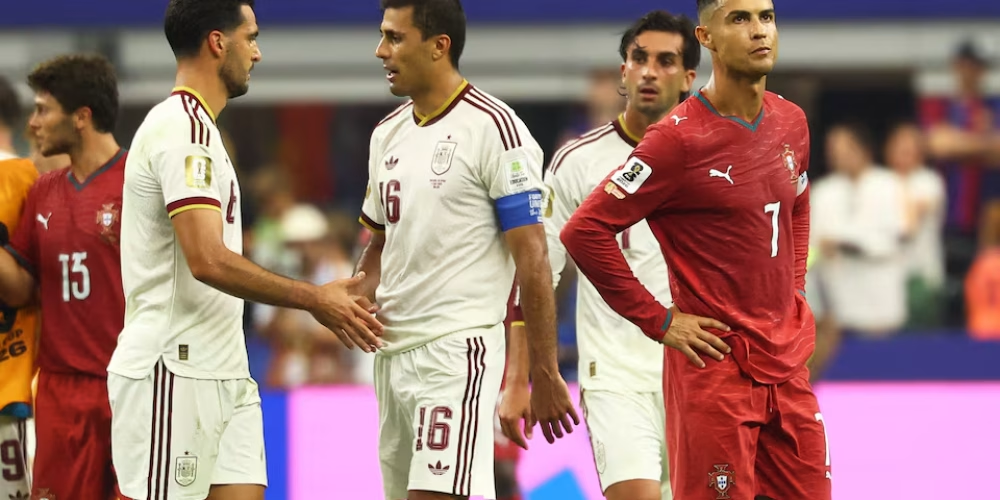
Spain has advanced to the quarter-finals of the 2026 FIFA World Cup after a thrilling knockout triumph over modern rivals Portugal on Monday. Midfielder Mikel Merino delivered the decisive blow in the dying minutes of the game, breaking a tense deadlock that seemed destined for extra time. The dramatic victory keeps Spain’s championship dreams alive while bringing a bittersweet end to Portugal’s ambitious tournament run.
What You Need to Know
The Iberian Derby stands as one of international soccer’s most historic and fiercely contested rivalries. Whenever Spain and Portugal meet on the world stage, tactical brilliance, intense physicality, and high emotional stakes are guaranteed. Over the last few decades, both nations have established themselves as dominant powerhouses in European and global soccer, frequently clashing in European Championships and past World Cup tournaments. Entering this knockout stage matchup in the 2026 tournament, the anticipation among global sports fans was at an all-time high, with both squads boasting a mixture of seasoned veteran icons and explosive young talent.
Spain entered the 2026 tournament looking to recapture the golden era that saw them dominate global soccer between 2008 and 2012. Under their current tactical setup, La Roja has emphasized a modern variation of their classic possession-based style, blending rapid transition play with traditional short-passing dominance. Meanwhile, Portugal arrived at the tournament with one of the deepest rosters in their national history, hungry to secure football’s ultimate prize after decades of near-misses. The structural contrast between Spain’s suffocating possession and Portugal’s lethal counter-attacking threat set the stage for an unforgettable tactical battle in front of a packed stadium audience.
The environment surrounding the 2026 World Cup has added an extra layer of grandeur to these heavyweight encounters. Hosted across North America, the tournament has drawn unprecedented crowds and massive television viewership numbers across the United States and the globe. With soccer’s popularity skyrocketing in the American sports landscape, high-profile European matchups like Spain versus Portugal serve as prime-time spectacles that capture the imagination of casual viewers and die-hard enthusiasts alike. The immense pressure of the single-elimination format ensured that any mistake would be severely punished, magnifying every tactical decision made on the touchline.
Spain vs Portugal World Cup Clash
From the opening whistle, the match unfolded as an intricate chess match between two teams intimately familiar with each other’s strengths and weaknesses. Spain seized control of the midfield early, using precise passing sequences to dictate the tempo and force the Portuguese defensive block deep into their own territory. Despite controlling the lion’s share of possession, Spain found it difficult to penetrate a disciplined and resolute Portuguese backline that prioritized spatial awareness and physical interventions. Portugal remained dangerous throughout the first half, launching rapid, direct counter-attacks whenever they managed to intercept the ball in transition.
As the clock ticked into the second half, the physical toll of the intense summer tournament became increasingly evident. Both managers turned to their benches to inject fresh energy and alter the tactical dynamics of the pitch. The midfield battle grew increasingly physical, with referee interventions halting the flow of play as both sides fought desperately for an operational advantage. Clear-cut scoring opportunities remained premium commodities, as both elite goalkeepers executed crucial saves and commanded their penalty areas with immense confidence, frustrating the attacking lines of both nations.
The defining moment of the contest arrived in the final minutes of normal time when Mikel Merino etched his name into Spanish football history. Capitalizing on a rare defensive lapse following a sustained attacking sequence, Merino found himself positioned perfectly within the penalty area. With incredible composure under extreme pressure, the midfielder directed a precise strike past the outstretched arms of the Portuguese goalkeeper, sending the Spanish fans into absolute ecstasy. The late breakthrough left Portugal with mere minutes to orchestrate a comeback, forcing them to push every player forward in a frantic, final assault.
Portugal threw everything they had into the closing moments, launching long balls into the Spanish box and demanding maximum concentration from the Spanish defense. However, La Roja exhibited championship maturity, managing the remaining time expertly by retaining possession in the corners and breaking up any potential counter-offensive momentum. When the final whistle blew, Spain celebrated a hard-fought ticket to the tournament’s final eight, while the Portuguese squad collapsed onto the pitch in heartbreak. The result solidifies Spain’s status as a genuine title contender while concluding an era for several aging Portuguese stars.
Why This Matters
For American soccer enthusiasts and sports consumers, this elite matchup highlights the sheer entertainment value and growing cultural impact of the sport in the United States. As North America hosts this historic tournament, games of this magnitude are drawing massive television ratings and transforming major American cities into vibrant hubs of international soccer culture. The success of premium matchups like this demonstrates to domestic media corporations and corporate sponsors that soccer has firmly established its status as a core component of the mainstream American sports economy.
Furthermore, Spain’s advancement ensures that the remaining rounds of the tournament will feature some of the highest-quality tactical displays possible. For the growing base of American youth soccer players, coaches, and tactical analysts, watching Spain’s sophisticated system provides a masterclass in modern positional play and structural discipline. The excitement generated by late-game heroics like those seen on Monday will continue to fuel domestic passion for the sport, leaving a permanent legacy on the North American sports landscape long after the final trophy is raised.
NCN Analysis
From an editorial perspective, Spain’s victory exposes both their ultimate championship potential and the lingering vulnerabilities they must address to lift the trophy. While their ability to maintain tactical composure and find a late winner demonstrates immense mental fortitude, their prolonged struggles to break down an organized defensive block could pose significant challenges in the upcoming quarter-finals. Future opponents will undoubtedly review this tape to replicate Portugal’s defensive blueprint, meaning Spain must find ways to turn possession dominance into more frequent high-quality scoring chances.
Looking forward, the journey only grows more treacherous for La Roja as the tournament field narrows to the elite eight. Fans and analysts should closely observe how the Spanish coaching staff manages player fatigue and tactical adjustments heading into the next round. Mikel Merino’s late-game heroics will likely earn him a more prominent operational role in the squad’s upcoming tactical plans. If Spain can combine their trademark possession mastery with a more clinical edge in the final third, they possess all the necessary ingredients to go all the way and secure another historic World Cup title.
Spain’s dramatic victory keeps them on a collision course with football destiny, while leaving the rest of the tournament field on high alert.
Reported by the NCN Editorial Team









