

KEY POINTS
- Sebastián Beccacece has stepped down as Ecuador’s manager after their round-of-32 elimination.
- The strategic decision aligns with the manager’s pre-established single-tournament timeline.
- The Ecuadorian Football Federation faces an immediate search for a new tactical leader.
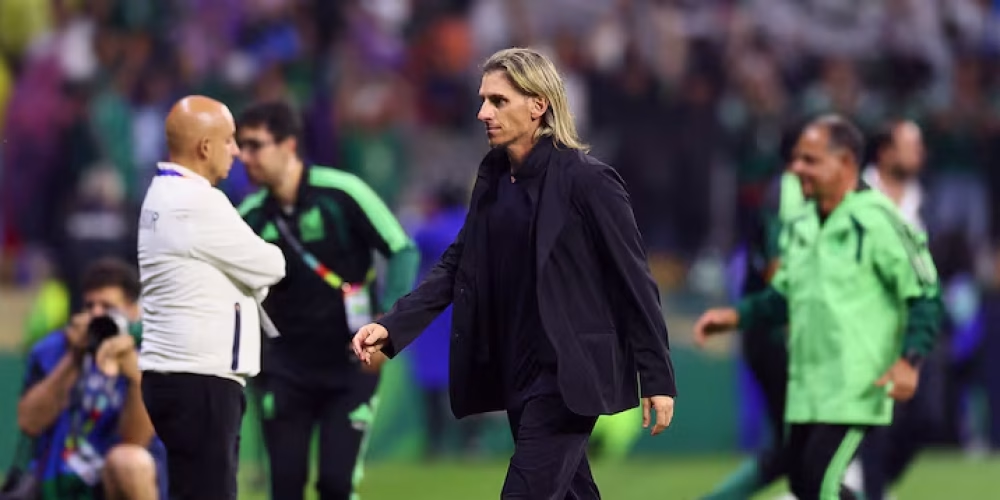
Sebastián Beccacece has officially confirmed his departure as the head coach of Ecuador’s national football team following a heartbreaking elimination from the 2026 World Cup. The 45-year-old Argentine strategist announced his decision immediately after his team suffered a decisive knockout stage defeat. This high-profile resignation concludes a highly dramatic, short-term managerial cycle on the international stage.
What You Need to Know
The life cycle of an international football manager is notoriously unpredictable, often swinging between immense public adoration and severe institutional pressure over the course of a single tournament. When the Ecuadorian Football Federation (FEF) appointed Sebastián Beccacece in August 2024, the primary objective was clear: secure qualification for the expanded 2026 World Cup and build a tactically modern identity around a talented young generation of players. Throughout his tenure, Beccacece brought a high-pressing, possession-dominant philosophy to the South American side, utilizing the world-class capabilities of European-based stars like Moisés Caicedo and Willian Pacho.
However, behind the scenes, the Argentine tactician had always viewed his relationship with the national team as a self-contained, single-tournament project. Contractual agreements and personal ambitions dictated that the current tournament in North America would represent the natural conclusion of his cycle, regardless of how deep the team progressed into the elimination brackets. The federation leadership was well aware of these parameters for months, but the official confirmation was heavily contingent on the team’s live tournament status.
Ecuador’s journey through the global tournament was a tumultuous rollercoaster that captivated international audiences. After a difficult start to the group stage that drew heavy criticism from domestic media, the squad pulled off an unforgettable 2-1 upset victory against Germany to dramatically clinch a spot in the round of 32. That spectacular triumph saw Beccacece famously celebrate by leaping into the stadium stands to embrace traveling fans, temporarily cementing his status as a national hero and delaying any formal announcements regarding his structural future.
Tactical Architect Departs After Knockout Defeat
The official end of the road arrived in Mexico City, where Ecuador faced a daunting round-of-32 clash against tournament co-hosts Mexico at a packed capital stadium. Despite entering the game with immense tactical focus, Ecuador fell behind early in the first half due to defensive vulnerabilities and struggled to match the physical intensity of the home side. A clinical 2-0 defeat ultimately sealed their fate, bringing a sudden and emotional end to their campaign in North America.
In his post-match press conference, a visibly emotional Beccacece confirmed that he was sticking to his original plan and would not seek a contract extension with the Ecuadorian federation. The manager expressed immense gratitude toward the players and the country’s passionate fan base, noting that his staff had given everything to maximize the team’s potential under immense international pressure. He emphasized that the decision was a personal choice, driven by a desire for a fresh challenge in his professional career.
The departure leaves La Tri at a crucial crossroads as they begin to look toward the next cycle of continental qualification and future tournaments. Beccacece’s tenure will be remembered for its emotional intensity and his willingness to fast-track young domestic talent into high-stakes international environments. The federation must now pivot quickly to identify a successor who can sustain the modern, aggressive playing style established over the past two years.
Why This Matters
The sudden managerial vacancy in Ecuador has major ramifications for the competitive landscape of South American football, a region known for its notoriously grueling qualification structures. International federations and corporate sports agencies monitor these high-profile coaching movements closely, as elite South American managers are highly sought after by top-tier European clubs and competing national teams. Beccacece’s availability immediately positions him as one of the most intriguing tactical free agents on the global market.
For global fans and corporate media partners who follow international football development, this transition highlights the immense difficulty small nations face when trying to maintain structural continuity. Ecuador possesses an incredibly bright future given the young age profile of its core roster, but changing the tactical architect at this stage introduces a layer of sporting uncertainty. The incoming coaching staff will inherit a squad capable of competing at the highest level, making the vacancy one of the most attractive positions in international sports.
NCN Analysis
From an editorial perspective, Sebastián Beccacece’s departure represents a calculated exit at the absolute peak of his global marketability. By successfully navigating a highly competitive World Cup group and orchestrating a historic victory over Germany, the Argentine tactician silenced his domestic critics and proved his high-energy system can deliver major tournament results. Leaving the role on his own terms allows him to preserve his professional reputation without enduring the inevitable fatigue of another lengthy qualification cycle.
The Ecuadorian Football Federation must act decisively to ensure that the valuable tactical progress made under Beccacece is not completely squandered. The squad’s core foundation is built to thrive in a modern, transition-based system, meaning a regressive or overly conservative coaching appointment could stifle the development of their young stars. Football executives should look for a dynamic leader who can build upon this foundation and finally guide this talented generation past the round-of-32 barrier in future campaigns.
A dramatic international coaching chapter has closed, leaving Ecuador to plan for a new tactical era after their emotional journey on the world stage.
Reported by the NCN Editorial Team









