

KEY POINTS
- The Atlas Lions twice bounced back from behind to defeat Haiti in a thrilling six-goal spectacle in Atlanta.
- The critical victory guarantees Morocco a place in the coveted round of 32 phase of the international competition.
- Morocco advances as the Group C runners-up, finishing level on total points with group leaders Brazil.
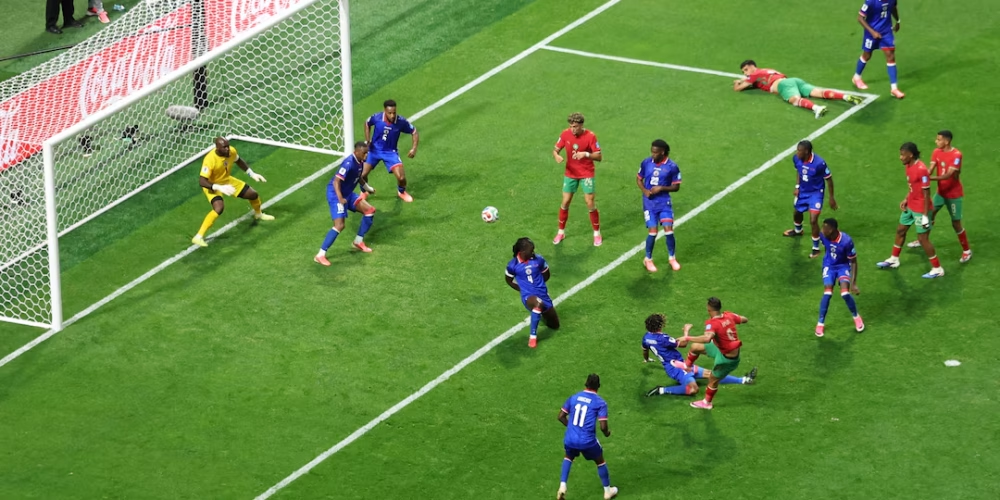
The Moroccan national football team clinched its ticket to the single-elimination knockout stage of the 2026 FIFA World Cup on Wednesday, executing a resilient 4-2 comeback victory over a determined Haitian squad. In an action-packed final Group C encounter hosted at Atlanta Stadium, the North African powerhouse twice trailed their opponents before asserting tactical dominance late in the second half. The hard-fought victory ensures that the 2022 semifinalists keep their dreams alive as they move into the tournament’s next demanding phase.
What You Need to Know
The 2026 FIFA World Cup has introduced an unprecedented level of competition with its expanded 48-team framework, which sees the top two teams from each group seamlessly transition into an all-new round of 32 knockout bracket. For Morocco, arriving at this tournament meant carrying the immense weight of expectation after their historic, barrier-breaking run in Qatar four years ago, where they became the first African nation to reach a World Cup semifinal. Maintaining that elite status requires navigating a tricky transition period under intense international media scrutiny.
Haiti, conversely, entered the final group match with their competitive fate already sealed. Having suffered defeats in their opening two group fixtures, the Caribbean nation had already been mathematically eliminated from progressing further in the tournament. However, playing entirely for national pride and with absolutely nothing to lose, the Haitian squad presented a uniquely dangerous challenge for a Moroccan team that desperately needed maximum points to guarantee their advancement without relying on external variables.
The final standings in Group C highlight the razor-thin margins that define elite international soccer. Morocco finished their group campaign level on seven points with South American titans Brazil, who simultaneously secured a comfortable 3-0 victory against Scotland. Despite matching the five-time world champions in points, Morocco ultimately advanced as the group runners-up due to a slight disadvantage in overall goal difference, setting up a high-stakes encounter against the eventual winners of Group F in the next round.
High-Stakes Thriller Unfolds in Atlanta
The match ignited early with a shocking development in the tenth minute of play when Haiti took an unexpected lead. A swift, coordinated team move caught the Moroccan backline off guard, resulting in a low cross that deflected off Moroccan goalkeeper Yassine Bounou for an agonizing own goal. This early setback sent shockwaves through the stadium, forcing the Atlas Lions to immediately abandon any conservative strategies and commit their defensive lines forward in search of an equalizer.
Morocco’s offensive persistence finally broke through the stubborn Haitian defense in the 39th minute. African Footballer of the Year Achraf Hakimi took control of the situation, bundling the ball past Haitian goalkeeper Johny Placide after an initial save to restore parity for the North African side. However, the celebrations were remarkably short-lived, as Haiti responded just four minutes later with a spectacular, long-range thunderbolt from forward Wilson Isidor that rifled into the top corner, leaving Bounou completely static and restoring Haiti’s advantage at 2-1.
Refusing to enter the halftime interval at a disadvantage, Morocco launched an immediate counter-offensive during stoppage time. Midfielder Ismael Saibari proved to be the savior once again, showing immense composure to slot home a placed finish in the 45th minute, marking his third goal in three consecutive World Cup appearances. The whistle blew on a chaotic 2-2 scoreline, leaving both coaching staffs scrambling to make tactical adjustments for what promised to be a grueling second half.
The second half witnessed a far more disciplined and patient performance from the Atlas Lions, who dominated possession and effectively neutralized Haiti’s transition play. The decisive breakthrough materialized in the 78th minute when substitute forward Soufiane Rahimi capitalizing on a flicked-on corner, thrashing the ball home from close range to give Morocco their first lead of the night. In the final minute of regulation play, 20-year-old rising star Gessime Yassine capped off the performance by tapping in a low cross from Rahimi after a lengthy VAR check confirmed the ball had remained in play, sealing the definitive 4-2 victory.
Why This Matters
For sports fans and casual observers across the United States, the high-scoring spectacle in Atlanta highlights the massive commercial and cultural success of hosting the expanded World Cup on American soil. With more than 68,000 passionate spectators packing Atlanta Stadium, the event demonstrated how international fixtures can generate incredible economic activity and tourism for major American metropolitan hubs. The diverse crowd, split between vibrant Moroccan and Haitian fan bases, perfectly illustrated the multicultural appeal that defines modern athletic tournaments in the United States.
Furthermore, Morocco’s successful progression ensures that one of the most compelling narratives in global soccer continues into the knockout rounds. The Atlas Lions have built an extensive multi-generational following among American soccer purists who appreciate their sophisticated tactical shape and technical prowess. As the tournament shifts into a single-elimination format, the presence of elite African and Caribbean squads enriches the viewing experience for domestic audiences, driving television ratings and expanding the footprint of the sport within the American commercial landscape.
NCN Analysis
Morocco’s ability to navigate this chaotic six-goal thriller speaks volumes about the emotional maturity and competitive resilience embedded within the squad. While their defensive lapses during the first half will undoubtedly cause concern for the technical staff, the composure shown by veteran leaders like Achraf Hakimi prevented an early panic. The second-half adjustments, which emphasized slow-tempo possession and physical midfield containment via Sofyan Amrabat, effectively choked out Haiti’s ability to launch dangerous counter-attacks.
Looking ahead to the round of 32, the Atlas Lions must quickly tighten their defensive shape if they hope to replicate their historic deep run from 2022. Facing the winners of Group F—potentially formidable European or Asian opposition like the Netherlands or Japan—leaves zero room for the structural errors witnessed in the opening 45 minutes against Haiti. However, with dynamic attacking options like Saibari in peak international form and substitute depth provided by Rahimi, Morocco possesses the offensive versatility necessary to break down any elite defensive system in the world.
The true test of Morocco’s championship credentials begins now that the forgiving nature of the group stage is officially behind them.
Reported by the NCN Editorial Team









