

KEY POINTS
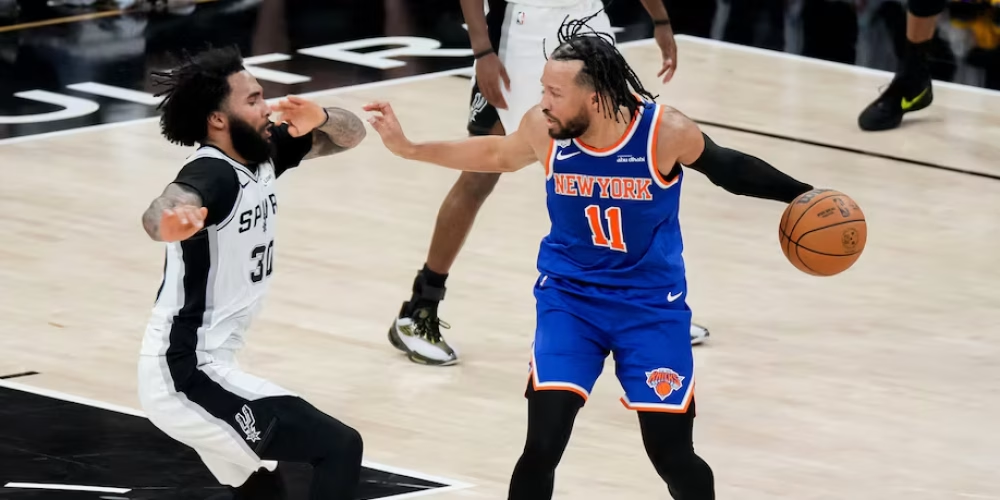
- The New York Knicks secured the Larry O’Brien Trophy by defeating the San Antonio Spurs in the NBA Finals.
- This historic victory marks the franchise’s first NBA championship title in over five decades.
- The championship series concluded with an intense final game that solidified New York’s return to basketball prominence.
The New York Knicks have captured the 2026 NBA championship, ending a 53-year title drought by defeating the San Antonio Spurs in a thrilling conclusion to the basketball season. The historic victory marks the first time the franchise has hoisted the championship trophy since 1973, setting off massive celebrations throughout New York City and across the global sports landscape. Fans packed Madison Square Garden and gathered in public viewings to witness the definitive end of one of the longest championship droughts in professional basketball history.
What You Need to Know
To understand the magnitude of this victory, one must look back to the early 1970s, the era of the franchise’s last basketball dynasty. Led by legendary figures like Willis Reed, Walt “Clyde” Frazier, and coach Red Holzman, the team captured championships in 1970 and 1973. For decades, those teams represented the gold standard of basketball in Manhattan, an increasingly distant memory for generations of supporters who had never seen the franchise win a modern NBA title.
In the intervening five decades, the organization endured numerous heartbreaks, roster overhauls, and rebuilding eras. The most notable close calls occurred during the 1990s, when teams anchored by Patrick Ewing reached the championship series in 1994 and 1999, only to fall short of the ultimate prize. The loss in 1999 was particularly memorable, as it came at the hands of the same San Antonio franchise they faced and defeated in this year’s final series.
In recent years, the front office engineered a deliberate, systematic reconstruction of the roster. By focusing on elite defensive schemes, physical play, and perimeter shooting, the organization built a roster capable of enduring the rigorous postseason schedule. The strategy culminated in this season’s historic playoff run, which challenged the team against the elite franchises of both the Eastern and Western conferences before matching them with a formidable Texas opponent.
Breaking Down the Championship Series
The final round showcased a dramatic clash of basketball philosophies and generational talent. The San Antonio team, featuring a young and highly dynamic core, challenged New York with exceptional length, shot-blocking capabilities, and fluid offensive transitions. However, the championship series ultimately belonged to New York’s disciplined execution, half-court execution, and relentless defensive pressure, which systematically disrupted the opponent’s rhythm across multiple games.
Key roster contributions defined the final matchups of the series. The defensive backcourt consistently forced crucial turnovers, while the frontcourt controlled the defensive glass to limit second-chance scoring opportunities. On offense, precise ball movement and timely perimeter shooting allowed the team to build leads and manage the clock effectively during the high-pressure final minutes of the deciding game.
The final game itself kept viewers on the edge of their seats until the closing whistle. Trading baskets through multiple lead changes in the first half, the teams adjusted their tactical schemes continuously. A decisive third-quarter scoring run gave the Eastern Conference champions a slight cushion, which they successfully defended through defensive resilience and clutch free-throw execution during the final minutes of the fourth quarter.
Why This Matters
This championship shifts the cultural and economic dynamics of professional basketball in the United States. New York City has long considered itself the spiritual home of the sport, yet the lack of a modern championship trophy created a disconnect between that identity and actual league results. This victory re-establishes the city as a central pillar of the league’s competitive hierarchy, driving unprecedented merchandise sales, ticket demand, and commercial investment into local sports markets.
Furthermore, the triumph provides a major economic boost to metropolitan businesses, sports bars, and hospitality venues that benefit heavily from extended postseason success. For global English-speaking audiences, the revival of a foundational franchise adds massive narrative value to international broadcasting contracts. It demonstrates that strategic patience and roster continuity can still triumph over rapidly assembled superstar groups in the modern sporting landscape.
NCN Analysis
The victory positions the organization well for a sustained period of success rather than a brief window of opportunity. The core of this championship roster remains under contract for multiple seasons, allowing the front office to pursue complementary free agents rather than forcing a total rebuild. Observers should expect other front offices around the league to emulate this blueprint, prioritizing perimeter depth and defensive versatility over top-heavy roster structures.
Looking ahead, the challenge shifts from chasing a title to defending one. The Eastern Conference remains highly competitive, and rival organizations will undoubtedly target the newly crowned champions throughout the upcoming season. However, having finally shed the psychological weight of a 53-year drought, the franchise can play with a level of confidence and poise that makes them a favorite to contend for the Larry O’Brien Trophy for years to come.
The long wait is over for the sports world, and a new era of basketball dominance has arrived in Manhattan.
Reported by the NCN Editorial Team









