

KEY POINTS
- MSG Sports canceled the official outdoor fan watch party for Game 4, citing restrictive city security protocols and attendance limits.
- Team owner James Dolan publicly criticized City Hall and police leadership, labeling them the city’s greatest obstacles to fan celebration.
- City representatives maintained they approved the exact attendance capacity requested by the sports organization in its permit application.
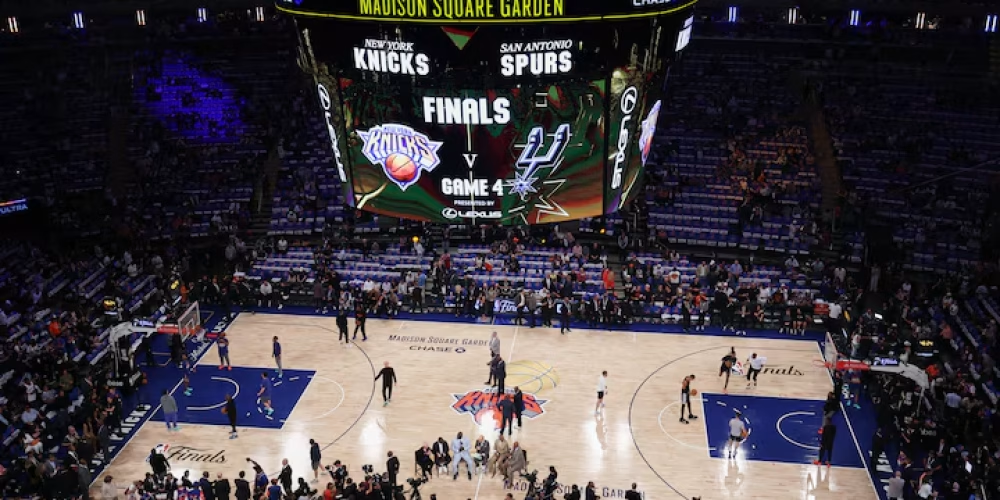
A fierce public dispute erupted between the management of the New York Knicks and local government officials just hours before Game 4 of the NBA Finals. James Dolan, the owner of Madison Square Garden Sports, abruptly canceled a scheduled outdoor fan gathering after criticizing the city’s strict security protocols and crowd restrictions. The decision left thousands of basketball enthusiasts searching for alternative venues to watch the historic playoff matchup against the San Antonio Spurs.
What You Need to Know
The public friction between sports executives and municipal leadership comes at a time when professional basketball interest has reached a fever pitch in Manhattan. The historic team is currently participating in its first championship round home games in nearly three decades, drawing massive crowds to the midtown Manhattan arena. Throughout the current postseason run, large groups of fans have routinely assembled in the streets surrounding the venue to celebrate victories, creating a logistical challenge for urban planners and local law enforcement.
Managing large-scale public assemblies around major transportation hubs like Penn Station requires a delicate balance between public celebration and public safety. Tensions began escalating early in the week following the previous game, which drew heavy security due to high-profile attendees and subsequent post-game crowding in nearby Bryant Park. The city responded by implementing an extensive security perimeter, citing the need to protect pedestrian corridors and maintain order during high-stakes evening entertainment events.
The latest disagreement highlights the operational friction that frequently occurs between major private entertainment entities and metropolitan regulatory bodies during national sporting spectacles. While sports franchises aim to maximize the collective fan experience and brand engagement, municipal administrations prioritize traffic management, resource allocation, and strict crowd control. This classic urban conflict reached a boiling point as both sides exchanged public accusations regarding the cancellation of the highly anticipated viewing event.
Security Standoff Disrupts Fan Traditions
The conflict centered around a special municipal permit required to host the outdoor viewing event on the streets adjacent to the arena. According to local law enforcement representatives, the sports organization submitted an application requesting an event format designed to accommodate between 500 and 1,000 participants. Municipal agencies subsequently approved the maximum limit of 1,000 ticketed attendees, establishing a strict check-point system to manage the perimeter.
However, corporate leadership strongly rejected these parameters, arguing that capping the outdoor assembly at 1,000 people was entirely impractical for an event of this magnitude. Executives stated that a restricted, ticketed zone would inevitably exclude tens of thousands of passionate supporters who intended to travel to midtown Manhattan to support the team. Rather than turning away a massive portion of the fan base at the security gates, the company chose to decline the permit entirely and cancel the outdoor broadcast.
In a rare live radio appearance on Wednesday afternoon, Dolan expressed deep frustration with the administrative decisions handed down by City Hall. He argued that the current security blueprint transformed the bustling commercial sector into an overly restrictive environment resembling a high-security compound. The executive explicitly stated that the municipal constraints were deliberately engineered to suppress large public gatherings around the arena, rather than safely facilitating them.
City officials quickly countered this narrative, expressing disappointment over the sudden cancellation and the impact it would have on the community. Mayor Zohran Mamdani defended the administrative oversight, noting that the police department was prepared to secure the area safely based on the specific numbers provided in the initial paperwork. Law enforcement officials noted that the security architecture, which utilized magnetometers and strict access points, was necessary to prevent the kind of sporadic civil unrest seen in other parts of the city earlier in the week.
Why This Matters
The logistical standoff carries direct economic consequences for businesses, consumers, and municipal operations throughout metropolitan areas. When major public events are suddenly canceled, local hospitality venues, including restaurants, bars, and retail shops, lose out on projected game-day revenue from foot traffic. These small businesses rely heavily on the influx of thousands of auxiliary consumers who gather in commercial districts even if they do not hold tickets to the actual game inside the arena.
Additionally, the incident raises important questions regarding the governance of public spaces during major cultural moments. As sports entertainment properties grow in economic scale, the friction between private commercial interests and public safety oversight becomes more pronounced. For urban residents and commuting professionals, these disputes dictate how major transit corridors are managed, how local tax dollars are allocated for police overtime, and how freely citizens can navigate city centers during national media events.
NCN Analysis
The public blame-game between corporate executives and city administrators reflects deeper systemic tensions that often accompany modern championship sporting events. From a brand management perspective, the decision to cancel the watch party allows the franchise to position itself as a champion of the everyday fan while deflecting logistical accountability onto local politicians. However, the corporate argument loses some leverage given that the city simply approved the specific crowd capacity numbers outlined in the team’s own formal permit request.
Moving forward, both parties will need to establish a more collaborative operational framework if the team continues its successful postseason run. With potential championship-clinching scenarios on the horizon, the demand for public celebration spaces will only intensify. Readers should monitor whether the corporate offices and municipal regulators can negotiate an expanded, multi-block security model that satisfies safety requirements while accommodating the massive crowds eager to participate in a historic moment.
The unresolved dispute leaves a noticeable void in the city’s civic celebration strategy during a historic athletic run.
Reported by the NCN Editorial Team









