

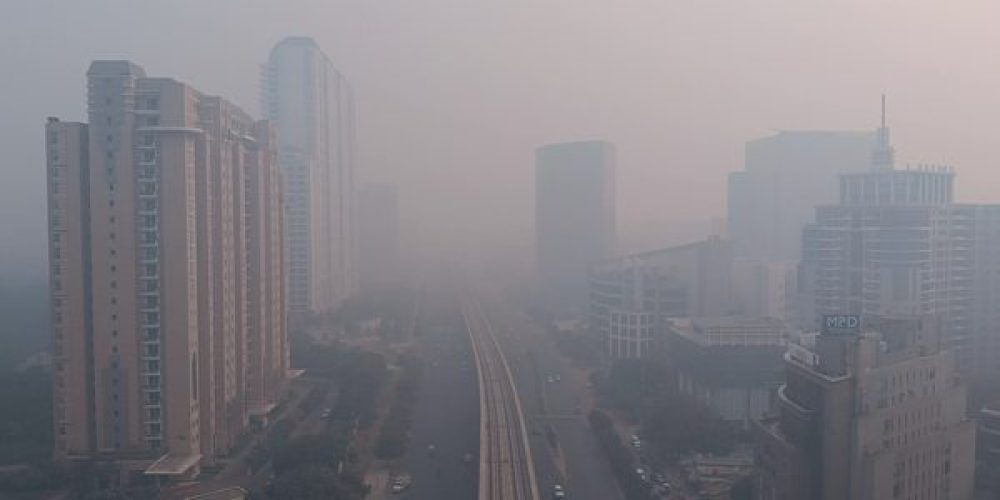
Vietnam’s capital, Hanoi, is experiencing a severe air quality crisis. The government has urgently pressured industrial facilities to scale back production due to heavy, hazardous smog that has blanketed the city for a week. The ongoing pollution episode prompted the Ministry of Health to issue a strong directive. It specifically targets power, steel, and chemical plants, urging them to reduce operational output immediately when air pollution levels become critical.
Air quality monitoring confirms the severity of the situation. The Air Quality Index (AQI) exceeded 243 midday on Thursday. This dangerous reading placed Hanoi fourth on the list of the world’s most polluted cities, according to independent global monitors like AirVisual. An AQI score above 200 signifies “very unhealthy” conditions, where the entire population faces noticeable health risks. The city has ranked among the world’s worst polluters repeatedly during this period, a concerning trend that also occurred earlier in the year.
The persistent smog is the result of multiple factors converging in the rapidly urbanizing Southeast Asian manufacturing hub. Authorities cite a combination of vehicle exhaust, industrial activities, construction dust, and the burning of agricultural residue and garbage as the main contributors.
Hanoi’s widespread reliance on gasoline-powered motorbikes, a common sight on city streets, significantly worsens the air quality problem. A city official confirmed these vehicles represent a primary source of local pollution.
For residents, the air quality decline translates into direct physical distress. One Hanoi local, Pham Thu Giang, 30, noted that her eyes are itchy and a “blanket of smog” constantly obstructs her vision. Many citizens report being forced to wear protective masks constantly when outdoors. The Ministry of Health has also advised vulnerable groups, including the elderly, children, and people with respiratory illnesses, to severely limit time spent outside.
In response to the recurring health crisis, city officials have developed broader, long-term plans. Hanoi is moving toward imposing partial bans on gasoline-powered motorbikes in central districts starting in mid-2026. They plan to gradually expand this ban to other fossil-fuel-powered vehicles over time. This push aims to alleviate traffic congestion and reduce emissions.
Furthermore, the government has begun implementing stricter measures across other pollution sources. Construction sites must now enforce enhanced dust-control protocols, including continuous water spraying and covering building materials. Larger construction projects will require the installation of automatic dust monitoring systems.
Police are also intensifying inspections and penalties for uncovered construction vehicles and illegal waste burning. These actions reflect a growing awareness in Vietnam that rapid economic development must be balanced with urgent environmental and public health protection measures. The challenge remains significant, requiring sustained commitment to clean up the air in one of Asia’s most dynamic, yet polluted, capital cities.









