

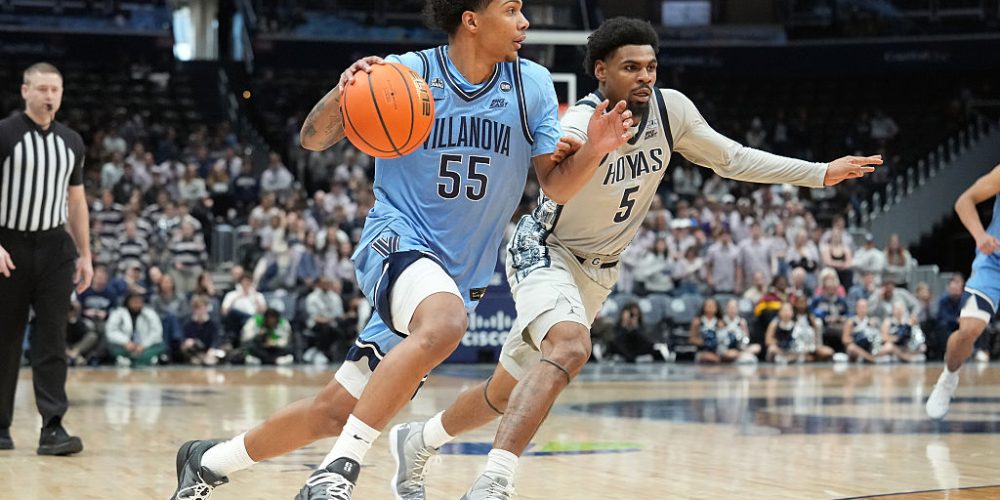
KEY POINTS
- Star guard Acaden Lewis has officially committed to the University of Miami after entering the transfer portal from Villanova.
- The move follows a stellar freshman campaign where Lewis emerged as one of the most explosive playmakers in the Big East.
- Miami beat out several high-profile programs to secure the commitment, signaling a major shift in the ACC’s competitive landscape for the upcoming season.
The University of Miami has secured a massive victory in the high-stakes world of collegiate basketball recruiting, landing highly coveted Villanova transfer Acaden Lewis. The announcement, which sent ripples through the Atlantic Coast Conference, confirms that one of the nation’s most promising young backcourt talents will be moving to Coral Gables. For Hurricane fans, this acquisition is more than just a roster addition; it is a statement of intent that Miami intends to remain a perennial contender on the national stage.
What You Need to Know
The NCAA transfer portal has fundamentally altered the geography of college sports, allowing top-tier talent to move between programs with unprecedented speed. Acaden Lewis, a dynamic guard who initially made a name for himself at Villanova, became one of the most discussed names in the portal due to his rare combination of perimeter shooting and elite ball-handling. His departure from the Wildcats was seen as a significant blow to a program currently in a period of transition.
Historically, the ACC and the Big East have been rivals for dominance in the Eastern United States, and this transfer adds another chapter to that ongoing saga. Miami’s rise under its current leadership has been fueled by a modern approach to roster construction, leaning heavily on the portal to find experienced players who can fit into a high-octane offensive system. Lewis represents the “ideal” modern guard—capable of playing both on and off the ball while providing a defensive edge that often lacks in younger players.
The recruitment process for Lewis was remarkably competitive, with several blue-blood programs and regional rivals vying for his signature. The allure of the South Florida lifestyle, combined with Miami’s recent track record of developing professional-grade talent, ultimately tipped the scales. This move is expected to trigger a series of subsequent roster adjustments across the conference as rival coaches look to counter Miami’s newly bolstered backcourt.
A New Era with Acaden Lewis in Miami
The arrival of Lewis at Miami marks a pivotal moment for the Hurricanes’ backcourt strategy. Known for his ability to break down defenses in transition, he is expected to step into a high-usage role immediately. His statistical profile at Villanova highlighted a player who thrives in the pick-and-roll, a core component of the Miami offensive playbook. By adding Lewis, Miami is doubling down on a strategy that prioritizes speed and spacing, potentially making them the most difficult team to guard in the ACC next winter.
During his time in Philadelphia, Lewis demonstrated a level of maturity that is rare for underclassmen. He was often entrusted with the ball in “clutch” situations, showing a calmness under pressure that will serve him well in the heated environments of Duke’s Cameron Indoor Stadium or North Carolina’s Dean Smith Center. The Acaden Lewis in Miami era will likely see the Hurricanes move away from a traditional “one-guard” set toward a more fluid, multi-creator system that keeps opposing defenses off balance.
The timeline of the transfer suggests that Lewis will be integrated into the team’s summer workout program, allowing for a full pre-season of chemistry building with existing starters. Miami’s coaching staff has expressed excitement about his defensive versatility, noting that his length allows him to guard multiple positions. This “two-way” capability was a primary driver for the Hurricanes’ interest, as they look to improve their defensive efficiency ratings which fluctuated during the middle of the previous season.
For Villanova, the loss of Lewis highlights the challenges facing even the most established programs in the current NIL (Name, Image, and Likeness) era. While the Wildcats have a rich history of guard development, the ability of schools like Miami to offer a different platform and competitive environment is a reality of the modern game. As the dust settles on this commitment, the focus for both programs will be on how they fill the remaining holes in their respective rosters before the summer window closes.
Why This Matters
For American college basketball fans, this transfer is a perfect example of the “free agency” atmosphere that now defines the sport. It shifts the power balance within a major conference and creates immediate championship expectations for a Miami team that was already dangerous. The impact on television ratings and ticket sales for Miami games is expected to be significant, as Lewis brings a “highlight reel” style of play that attracts casual viewers and hardcore analysts alike.
Beyond the box score, this commitment has a real-world impact on the branding of collegiate programs. When a high-profile player chooses a school like Miami over traditional powerhouses, it reinforces the idea that the “old guard” of college basketball is being challenged by schools that have mastered the transfer portal and NIL landscape. For global readers in Ireland or Sweden who follow the sport as a precursor to the NBA Draft, Lewis is now a player to watch as a potential first-round prospect whose draft stock could soar in the Hurricanes’ system.
NCN Analysis
Landing Acaden Lewis is a masterstroke for Miami. They didn’t just get a good player; they got a player who fits their cultural and tactical identity perfectly. While some transfers struggle to adapt to new systems, Lewis’s game is portable. We expect him to lead the team in assists while providing a secondary scoring option that will take the pressure off Miami’s interior players. The Hurricanes are now, at minimum, a top-15 preseason team with the potential to win the ACC regular-season title.
The broader takeaway is the continued erosion of “program loyalty” in favor of “personal development.” Lewis made a business decision to put himself in the best position to succeed, and Miami proved they have the resources and the vision to win those battles. Watch for Miami to be aggressive in pursuing one more veteran “big man” in the portal to complement their new star guard. If they find that missing piece, a return to the Final Four is a very realistic goal for 2027.
The landscape of college basketball is shifting under our feet, and Miami is currently leading the charge.









