

KEY POINTS
- Egypt manager Hossam Hassan launched an explosive post-match tirade, claiming his team suffered massive injustice and was unfairly stripped of a historic victory.
- A disallowed goal in the first half and a rejected late penalty appeal fueled Egyptian anger following their heartbreaking 3-2 loss to Argentina.
- The veteran coach announced an immediate boycott of the tournament broadcasts, declaring he will no longer watch the remainder of the global competition.
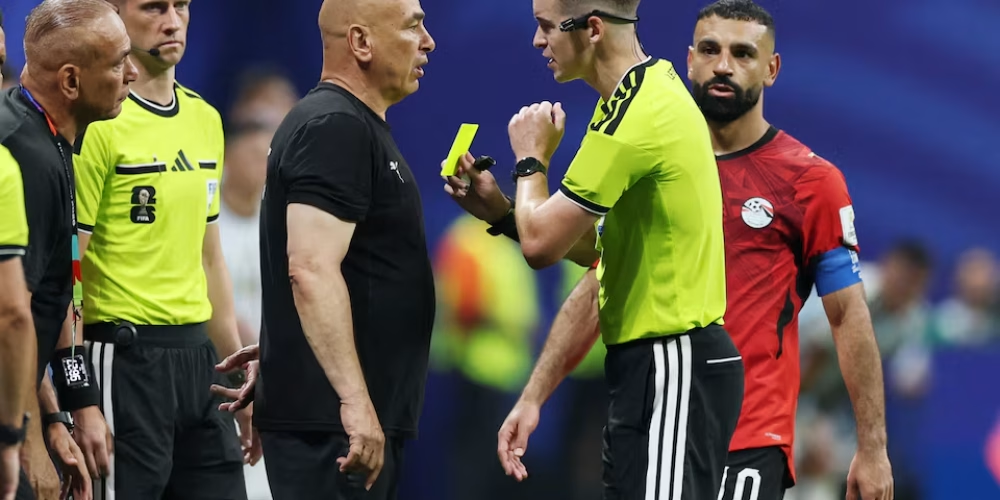
An unprecedented wave of managerial fury hit the knockout stages on Tuesday evening as Egypt manager Hossam Hassan launched a scathing attack on the officiating staff. Following a devastating 3-2 defeat against Argentina, the manager publicly condemned the technical decisions that halted his team’s historic tournament run. Speaking to reporters in an atmosphere thick with tension, the veteran tactician declared that the North African squad had been completely robbed of its rightful place in the quarter-finals.
What You Need to Know
The tournament arrived at its high-stakes round of 16 phase under intense scrutiny, where the implementation of technology continues to be a major point of contention for global soccer enthusiasts. Egypt entered their highly anticipated knockout fixture at Atlanta Stadium as heavy underdogs against the reigning world champions. Despite the odds, the African side executed an incredibly precise tactical strategy, exposing vulnerabilities in the favored squad and establishing a commanding lead that put them on the verge of a historic football achievement.
However, the fixture was ultimately defined by a series of highly volatile interventions from French referee François Letexier and the video assistant refereeing booth. Officiating consistency has been a primary talking point throughout this North American cycle, with several participating countries expressing private frustration over subjective interpretations of physical contact. For a team like Egypt, navigating the fine margins of elite international football requires absolute sporting equity, making any perceived technical error an emotionally explosive issue for the entire delegation.
The fallout from the match extends far beyond standard technical disagreements, threatening to overshadow the narrative momentum of the knockout rounds. Managerial outbursts of this magnitude frequently result in severe institutional sanctions from international governing bodies, yet the Egyptian camp showed no interest in concealing their deep institutional resentment.
Controversial Decisions Spark Outrage at Atlanta Stadium
The core of the Egyptian grievances stems from two critical moments that completely altered the trajectory of the match. The first flashpoint occurred while the African side maintained a 1-0 advantage following an early goal from Yasser Ibrahim. Midfielder Mostafa Ziko appeared to have extended the lead, but the video assistant referee intervened, ordering a review of an isolated physical collision involving Lisandro Martínez that happened much earlier in the build-up phase. The subsequent cancellation of the goal left the Egyptian bench completely astonished and altered the rhythm of the game before Ziko eventually managed to score a legitimate second goal later in the half.
The frustration reached a breaking point during the chaotic final minutes of the match as Argentina mounted their three-goal comeback. In the build-up to the decisive match-winning goal scored by Enzo Fernández, the Egyptian technical staff vehemently argued that a penalty should have been awarded in their favor. Television replays indicated a clear pull by midfielder Alexis Mac Allister on Hamdy Fathy inside the penalty area, which was completely dismissed by the on-field officiating crew without a formal monitorside consultation.
Following the final whistle, the emotional dam broke during the post-match press conference, where Hassan refused to utilize standard diplomatic language. The manager explicitly stated that his players did not experience respect or fair play, suggesting that external pressures influenced the officials to keep the high-profile defending champions active in the competition. The manager concluded his media appearance by confirming that he is turning his back on the tournament entirely and will refuse to watch any subsequent fixtures.
Why This Matters
For sports fans across the United States and the international community, this level of public controversy threatens the integrity of high-profile sporting events. When technical officiating systems like video reviews are perceived as tools that favor traditional global powerhouses over emerging soccer nations, commercial consumer trust begins to erode. Fans who demand transparency and objective rule enforcement are left wondering whether the sport can truly provide a level playing field for every participating nation.
Additionally, this high-profile dispute puts intense pressure on international governing bodies to refine their technical communication structures. As sports entertainment grows more reliant on broadcast data and real-time reviews, sports organizers must ensure that stadium audiences and television viewers receive immediate clarity regarding complex decisions. Without clear communication, match narratives will continue to be dominated by accusations of institutional bias, detracting from the athletic achievements displayed on the pitch.
NCN Analysis
The explosive reaction from the Egyptian manager underscores the immense psychological pressure associated with single-elimination international football. While Hassan’s comments will undoubtedly attract disciplinary action and substantial financial fines from tournament organizers, his frustration reflects a broader systematic issue regarding how review technology is applied in critical moments. The inconsistency surrounding what constitutes a reviewable phase of play continues to be a major flaw that undermines the credibility of the officiating system.
Looking ahead, Argentina moves on to the quarter-finals in Kansas with a significant cloud of controversy trailing behind their dramatic escape. While the historical records will simply show a successful comeback victory, future opponents will certainly look to exploit the defensive gaps exposed by Egypt’s initial strategy. Football enthusiasts should watch closely to see if governing committees issue a formal response to Hassan’s comments, as the federation must balance strict disciplinary standards with the growing demand for officiating accountability.
The African nation exited the tournament under a cloud of immense bitterness, ensuring that technical officiating debates will continue to dominate the discussion surrounding this historic tournament.
Reported by the NCN Editorial Team









