

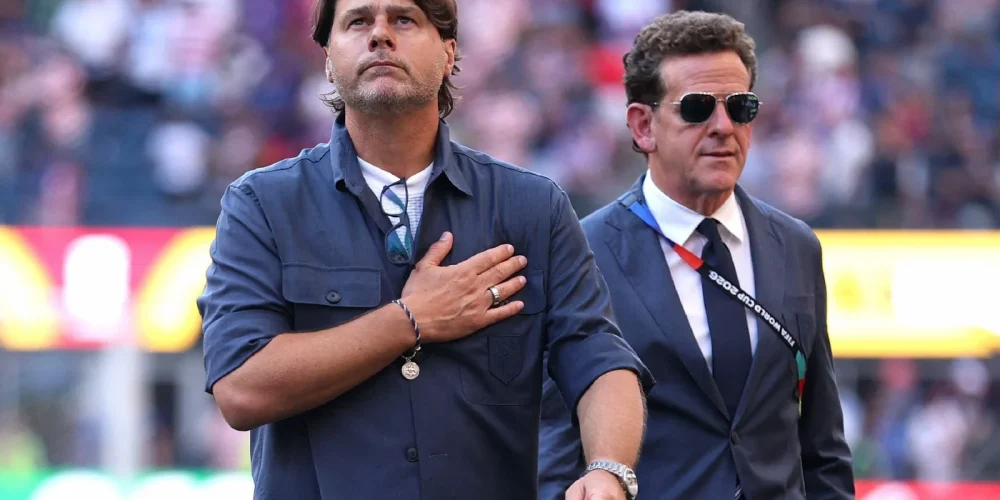
KEY POINTS
- US Soccer announced that leadership will hold critical meetings with head coach Mauricio Pochettino to determine his future role with the national program.
- The formal discussions will take place following a brief period of rest and reflection after the tournament host was eliminated in the Round of 16.
- The 54-year-old manager’s initial short-term contract has expired, sparking heavy speculation regarding whether he will be extended through the 2030 cycle.
The United States Soccer Federation will enter high-stakes discussions with men’s national team head coach Mauricio Pochettino to evaluate the direction of the program following a disappointing tournament exit. Governing executives confirmed that both parties agreed to pause for a brief period of evaluation before resuming formal contract negotiations. The strategic assessment arrives immediately after the host nation failed to advance past the initial knockout phase, casting uncertainty over the leadership structure moving into the next international cycle.
What You Need to Know
The federation appointed the high-profile Argentine tactician in September 2024 with the singular objective of transforming the United States into a formidable global competitor on home soil. Boasting an elite managerial resume that featured prominent stints at European powerhouses Chelsea, Tottenham Hotspur, and Paris Saint-Germain, the coach represented the most expensive and celebrated managerial hire in the history of the domestic program. His arrival generated immense enthusiasm across North America, establishing unprecedented expectations for a deep tournament run.
However, the squad’s campaign concluded abruptly on Monday evening following a decisive 4-1 defeat at the hands of a disciplined Belgian side in Seattle. The heavy loss marked the fourth consecutive tournament appearance in which the American men failed to clear the first single-elimination hurdle, intensifying media scrutiny regarding structural progress. Because the manager’s initial agreement concluded at the end of this cycle, the federation must now decide whether to commit to a long-term extension or seek a new technical leader to steady the ship.
Prior to the start of the competition, reports surfaced that soccer executives had floated an initial contract offer extending through the 2030 cycle, which will be co-hosted across Morocco, Portugal, and Spain. However, both parties ultimately elected to defer any final structural commitments until the conclusion of the summer campaign. The upcoming leadership meetings will analyze all aspects of technical execution, player selection, and overall development metrics achieved during the manager’s 22-month tenure.
Future Contract Extention Debated Following Blowout Loss
The post-match reaction from the coaching staff emphasized a desire for methodical analysis rather than impulsive programmatic changes. Addressing the media after the elimination match, the Argentine manager deflected immediate inquiries regarding his personal contractual desires, emphasizing that the immediate focus should center on recovery and comprehensive player evaluations. The manager defended his collective body of work, arguing that international building processes require four-year windows and that his staff successfully established sustainable tactical principles for the roster.
The federation echoed this collaborative sentiment in an official public statement released on Tuesday afternoon, expressing formal gratitude to the coaching staff while acknowledging the vast operational gap that still remains between the United States and elite international programs. Executive leadership noted that positive preliminary discussions regarding the future had taken place prior to the opening match, but reiterated that a thorough evaluation of all operational tiers is required before finalizing a long-term path forward.
Speculation remains high within inner soccer circles that the manager could look to return to the day-to-day rhythm of European club football if contract negotiations stall. Observers noted the manager’s visible frustration on the sideline during the final stages of the defeat in Seattle, highlighting the immense cultural and systemic difficulties he faced trying to adapt to the unique landscape of American soccer. If an agreement is reached, the manager would assume responsibility for preparing the upcoming under-23 delegation for the 2028 Summer Olympics in Los Angeles, alongside the next iteration of the Copa América.
Why This Matters
For sports enthusiasts and commercial stakeholders across the United States, the outcome of these impending coaching negotiations will directly dictate the competitive viability of the national team for the next four years. Corporate sponsors and broadcast networks have invested hundreds of millions of dollars into domestic soccer infrastructure, relying heavily on a compelling, winning national team to maximize consumer engagement. A prolonged period of administrative instability or a complete managerial overhaul could disrupt corporate synergy and stall the commercial momentum the sport has built domestically.
Furthermore, the decision highlights the immense systemic pressures facing soccer executives as they attempt to validate the sport’s growth to a broader American public. To truly break into the mainstream domestic sports market alongside established leagues like the NFL and NBA, the men’s national program must demonstrate it can consistently compete with elite European and South American nations. Settling the managerial question is the crucial first step in restoring public confidence and defining the technical identity of American soccer ahead of regional qualifiers.
NCN Analysis
The federation finds itself in an incredibly delicate position, balancing the undeniable prestige of a world-class manager against the stark reality of a humiliating knockout elimination. While terminating the relationship after less than two years could be viewed as a panicky overreaction that disrupts squad continuity, extending a manager who failed to improve upon past tournament finishes requires substantial institutional courage. The technical committee must determine whether the tactical shortcomings displayed against Belgium were the result of a flawed managerial game plan or simply a reflection of an underlying talent deficit within the current player pool.
Ultimately, maintaining continuity with the current staff remains the most logical path forward for a program desperate to establish a sophisticated global identity. The Argentine manager has successfully integrated several younger prospects into the senior setup and his candid, demanding leadership style is precisely what this generation requires to shed its complacency. Readers should watch closely for an official announcement before the end of the month, as the federation cannot afford to let this leadership vacuum linger during a critical developmental window.
The upcoming summit between leadership and the head coach will ultimately determine whether American soccer embraces structural stability or initiates another volatile rebuilding phase.
Reported by the NCN Editorial Team









