

KEY POINTS
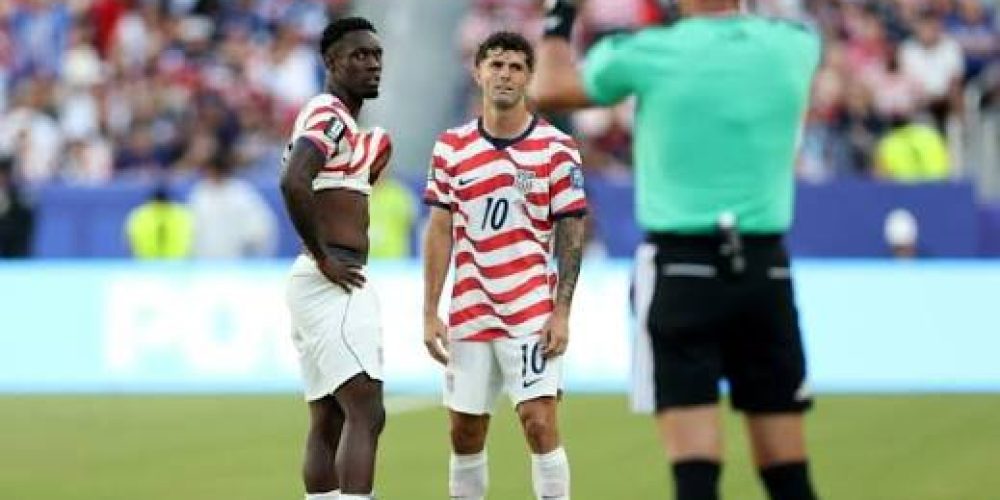
- FIFA has taken the unprecedented step to freeze the automatic one-match ban of United States forward Folarin Balogun.
- The controversial ruling came on the heels of direct telephone lobbying from US President Donald Trump to the head of football’s global governing body.
- The Royal Belgian Football Association expressed outright astonishment, warning that the integrity of the tournament has been deeply compromised.
The United States’ World Cup journey has taken an extraordinary and highly contentious turn ahead of its critical knockout phase. In a move that has stunned the international sporting community, football’s global governing body announced it has cleared star striker Folarin Balogun to play in Monday’s round-of-16 clash against Belgium. The decision comes after intense political intervention from the highest level of the American government, sparking a massive debate over fair play and external influence.
What You Need to Know
In international football, the regulations regarding disciplinary action have long been considered absolute. Under the standard competition guidelines, a player who receives a straight red card during a match is handed an automatic minimum one-game suspension for their team’s subsequent fixture. This rule has historically been applied uniformly across all participating nations during the tournament to ensure competitive equity and preserve the authority of on-field officials.
The controversy stems from the United States’ recent round-of-32 victory over Bosnia and Herzegovina. During the second half of that match, Balogun, who had already scored his third goal of the tournament to help secure a 2-0 win, was dismissed following a Video Assistant Referee (VAR) review. The match official determined that the 25-year-old forward had planted his boot dangerously into the ankle of Bosnian defender Tarik Muharemovic, resulting in an immediate ejection and what should have been a mandatory seat on the sidelines for the next round.
However, the fallout from the red card quickly escalated beyond the pitch. US head coach Mauricio Pochettino immediately labeled the decision overly harsh, a sentiment echoed by several prominent American political figures. Rather than letting the traditional bureaucratic appeal process run its course, the executive branch of the host nation decided to intervene directly, altering the trajectory of the tournament’s disciplinary framework.
The Reversal That Shocked the Football World
Following multiple telephone conversations between US President Donald Trump and FIFA President Gianni Infantino, the governing body’s disciplinary committee executed a stunning U-turn on Sunday morning. Invoking a rarely used clause in its regulatory framework, the committee decided to hold Balogun’s punishment in abeyance. The ruling means the striker remains eligible for selection in the high-stakes encounter scheduled to take place in Seattle.
To justify the unprecedented reprieve, the judicial panel cited Article 27 of the FIFA Disciplinary Code. This specific rule grants the committee the legal discretion to fully or partially suspend the implementation of a disciplinary sanction, provided the offense does not involve severe misconduct such as match manipulation. Under the terms of the decision, Balogun has been placed on a one-year probationary period. If he commits a similar serious infraction over the next 12 months, the one-match ban will be instantly reinstated alongside any new penalties.
The reaction from the opposing camp was swift and fiercely critical. The Royal Belgian Football Association issued an official statement condemning the decision, calling it a direct violation of the tournament’s foundational regulations. Belgian coach Rudi Garcia did not hide his anger, mockingly questioning whether the international soccer federation had mistaken the month of July for April Fool’s Day, and emphasizing that the ruling sets a dangerous precedent where political muscle can override established sporting laws.
Within the American camp, the news was received with a mix of relief and surprise. Players reportedly learned of their teammate’s availability via social media while traveling on the team bus to a training session at the University of Washington. Captain Christian Pulisic expressed his excitement but admitted the squad initially questioned whether the reports were genuine. Meanwhile, President Trump took to social media to celebrate the verdict, publicly thanking the governing body for reversing what he characterized as a great injustice against the American team.
Why This Matters
This unprecedented intervention has profound implications for global sports governance and the future of international athletic competitions. By allowing political pressure from a world leader to influence a standard match suspension, football’s governing body has opened the door to accusations of favoritism and geopolitical bias. For corporate sponsors, broadcasting networks, and millions of international fans, this incident threatens to overshadow the athletic achievements on the pitch, shifting the focus toward backroom diplomacy.
Furthermore, the decision directly impacts the competitive integrity of the tournament. The United States enters the knockout stage with its most potent attacking threat available, drastically altering the tactical preparations for Belgium. For international viewers and sports organizations, this case sets a benchmark that could see future host nations or powerful governments demanding similar custom interventions, fundamentally weakening the universal application of athletic rules.
NCN Analysis
The manipulation of Article 27 in this specific context represents a watershed moment for international football. While American soccer fans will undoubtedly welcome the presence of their leading goal scorer on Monday night, the long-term reputational damage to the sport’s administrative bodies could be severe. The timing of the decision, coming just 24 hours before kickoff, leaves the tournament open to intense scrutiny regarding how it manages relationships with powerful host nations.
Moving forward, the international community will be watching to see if Belgium attempts a formal escalation to the Court of Arbitration for Sport, or if this ruling creates a fractured atmosphere for the remainder of the knockout rounds. On the field, the pressure on Balogun will be immense. Having been granted an extraordinary political lifeline, his performance against Belgium will be dissected by critics worldwide, making this match one of the most highly anticipated and politically charged fixtures in modern World Cup history.
The intersection of global statecraft and tournament discipline has forever altered the boundaries of modern sports.
Reported by the NCN Editorial Team









