

KEY POINTS
- Thousands of traveling Scotland soccer fans brought bagpipes and kilts to a Miami Marlins game.
- The festive takeover at loanDepot park provided a massive economic boost for a Monday night matchup.
- Injured international star Billy Gilmour threw the ceremonial first pitch to honor the visitors.
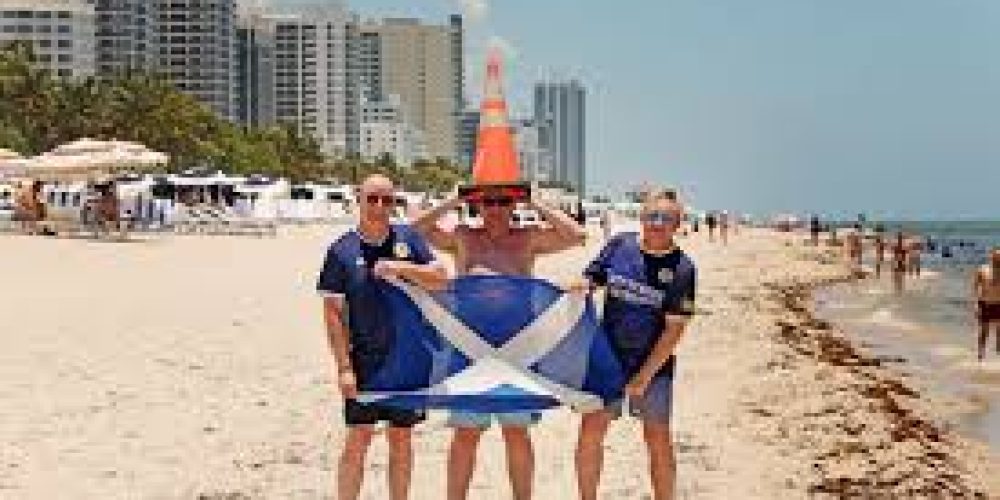
Thousands of passionate Scotland soccer supporters, affectionately known as the Tartan Army, completely transformed a standard Monday night Major League Baseball game into a raucous, beer-fueled celebration at loanDepot park in Miami, Florida. In town ahead of their national team’s highly anticipated World Cup group stage match against Brazil, the traveling contingent flooded the stadium in traditional kilts and jerseys, filling the air with the unfamiliar echoes of bagpipes. The spectacular cultural crossover offered a unique glimpse into how the expanded global football tournament is reshaping the daily sporting realities of American host cities.
What You Need to Know
The migration of Scotland’s famously exuberant fan base across North America has become one of the defining human-interest storylines of the tournament cycle. Known globally for their unwavering loyalty, good-natured humor, and unmatched capacity for celebratory drinking, the Tartan Army treats international tournaments as massive cultural festivals. With the expanded 48-team format bringing matches to several premier metropolitan markets across the United States, foreign supporter groups are finding creative ways to immerse themselves in authentic American sports culture during gaps in the tournament schedule.
This latest stadium takeover in South Florida follows a similarly high-profile friendly invasion at Boston’s historic Fenway Park just last week. Recognizing the massive economic windfall and electric atmosphere that follows these supporters, various Major League Baseball organizations have actively rolled out the welcome mat for international visitors. These efforts highlight a clever cross-promotional strategy designed to fill seats during the lengthy, 162-game domestic baseball season while introducing uninitiated foreign tourists to the distinct pacing and traditions of America’s pastime.
For the host franchise in South Florida, the influx of international energy arrived at a perfect moment for a local fan base accustomed to quiet weeknight matchups. Operating in a highly competitive sports market, the organization seized the opportunity to engage with the visiting Europeans by adapting their standard stadium presentation to reflect Scottish heritage. The resulting spectacle demonstrated the profound, unpredictable ways that hosting a mega-event like the World Cup can temporarily alter the cultural fabric of an entire municipality.
Scotland Fans Bring Historic World Cup Energy to loanDepot Park
The festive atmosphere began hours before the official first pitch, as a vibrant parade of supporters marched from the historic neighborhood of Little Havana toward the stadium gates. Dressed in a sea of blue jerseys, tartan kilts, and novelty cone hats, the fans chanted anthems celebrating national head coach Steve Clarke and star midfielder John McGinn while managing the oppressive South Florida summer heat. Once inside the stadium concourse, the visitors immediately broke stadium records for weeknight concession consumption, thoroughly surprising stadium staff who scrambled to keep up with the unprecedented demand for cold beverages.
On the diamond, the game featured a highly competitive matchup between the hometown team and the visiting Texas Rangers—the exact same opposition that had faced the Boston Red Sox during Scotland’s previous ballpark takeover. To honor the massive traveling contingent, stadium organizers arranged for injured Scottish midfielder Billy Gilmour, who was tragically ruled out of tournament play due to a late physical setback, to throw out the ceremonial first pitch. The club’s on-field host even donned a kilt for the evening, earning deafening roars of approval from the thousands of newly minted baseball enthusiasts in the upper decks.
While many of the traveling supporters freely admitted to having absolutely no understanding of baseball’s intricate rulebook, their enthusiasm never wavered throughout the nine innings of play. The Scots reacted to routine defensive plays, such as an opening-inning groundout by the opposition’s Joc Pederson, with the type of explosive, synchronized stadium roars usually reserved for a critical goal in an international football match. Local Floridian spectators looked on with sheer amazement, marveling at the unprecedented noise levels and welcoming the energetic reinforcements to an arena that rarely sees such passionate outbursts on a Monday evening.
However, the long day of travel, intense climate conditions, and the methodical pacing of the American sport eventually began to take a toll on some of the visiting contingent. As the game progressed into the later innings, several fans from West Lothian and Glasgow could be seen stifling yawns, openly noting that while the hospitality was magnificent, the sport simply lacked the relentless, fluid drama of their beloved football. Ultimately, the Scots brought little luck to their adopted team for the night, as the Texas Rangers managed to edge out the hometown side in a tight 4-3 victory, mirroring their success from the previous week in Boston.
Why This Matters
The spectacular takeover of a Major League Baseball arena by foreign soccer enthusiasts carries substantial economic and strategic implications for sports franchises across the United States. For domestic businesses, hospitality vendors, and stadium operators, the massive influx of international consumers represents an immediate financial windfall during what is traditionally a slower summer commercial period. The ability of an international sporting event to drive thousands of high-spending tourists into secondary sports venues underscores the vast cross-promotional potential inherent in modern sports tourism.
Furthermore, this unique fan integration highlights the expanding cultural literacy of the American sports consumer base, as local residents actively embrace the traditions, music, and chaotic energy of global football culture. The positive interactions between the traveling European supporters and American stadium crowds help dismantle long-standing stereotypes while solidifying soccer’s position as a powerful mainstream cultural force in North America. These organic moments of international camaraderie serve as the ultimate validation for organizers who sought to bring the tournament to diverse American metropolitan hubs.
NCN Analysis
From an editorial perspective, the Tartan Army’s journey through America’s historic ballparks illustrates the profound soft-power impact of international sports culture. While the action on the World Cup pitches will dominate tactical headlines, the true legacy of this tournament is being written in the streets, bars, and stadiums of the host cities. The Scottish supporters have successfully humanized the massive, corporate structure of the tournament, proving that authentic fan culture cannot be manufactured by marketing executives.
Looking ahead, the incredible energy generated by these traveling supporters will face its ultimate competitive test when Scotland takes the field against the legendary Brazilian national team. The emotional high of their American ballpark tour must be quickly channeled into intense tactical focus if they hope to upset the South American powerhouse on Wednesday. Regardless of the final scoreline on the pitch, the Scottish fans have already left an indelible, highly entertaining mark on the American sporting landscape that locals will talk about for years to come.
The grand experiment of hosting the world’s game in America’s historic venues is officially yielding unforgettable cultural spectacles.
Reported by the NCN Editorial Team









