

KEY POINTS
- New York Knicks backup center Mitchell Robinson is expected to be available for Game 1 of the NBA Finals against the San Antonio Spurs.
- Robinson underwent recent surgical intervention to fix a fractured fifth metacarpal bone inside his right shooting hand.
- The defensive big man fully participated in a key team practice session and individual drills before traveling to San Antonio.
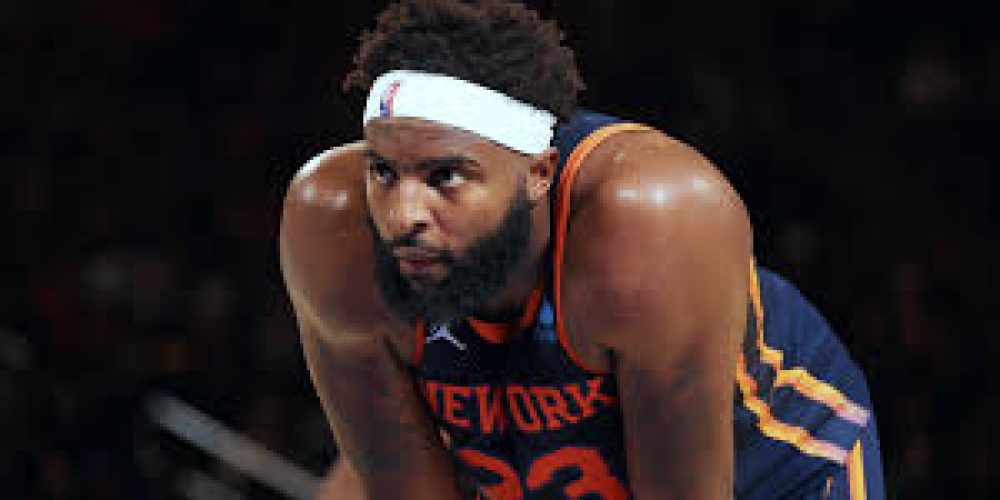
The New York Knicks have received a major defensive boost ahead of the ultimate series of the basketball season. Backup center Mitchell Robinson has progressed through medical evaluations and is expected to suit up for Game 1 of the NBA Finals against the San Antonio Spurs. The news provides a massive sigh of relief for a frontcourt tasked with slowing down an incredibly unique opposing offense.
What You Need to Know
The physical status of Mitchell Robinson had been the single biggest question mark hanging over the team following their Eastern Conference championship victory. Initial reports circulating around the league suggested the veteran big man had suffered an injury to his right pinky finger. However, subsequent medical disclosures clarified that the damage was far more extensive, involving a broken hand rather than a minor finger ailment.
Specifically, Robinson suffered a fracture of the fifth metacarpal bone in his right shooting hand. This necessitated immediate surgical intervention last week to properly repair the bone structure. Remarkably, the procedure took place just days before the team was scheduled to tip off their championship series in Texas, sparking intense speculation about whether New York would have to navigate the opening games without its primary interior anchor off the bench.
What makes the situation particularly unusual is the mystery surrounding how the injury occurred. Team officials confirmed that the fracture did not happen during any official game action or a team practice session. Reports later indicated that the center sustained the injury at his personal residence shortly after New York secured its spot in the championship series. Despite the off-court mishap, the center remained determined to return to the floor without missing an entire game.
Navigating the Frontcourt Battle Against San Antonio
The path to Robinson’s quick return became clearer during open practice sessions, where he demonstrated significant physical progress. Observers noted that the center participated in light shooting and dribbling routines while sporting a protective wrap over his right wrist and shooting hand. Head coach Mike Brown carefully managed the big man’s workload, ensuring he completed necessary individual conditioning drills in New York before the organization boarded its flight to San Antonio.
Although listed as questionable on official league injury designations leading up to tip-off, insider updates confirmed that Robinson’s internal resolution to play never wavered. He consistently pushed the medical staff for clearance, showcasing an ability to handle and pass the basketball despite the lingering soreness from his recent operation. The determination highlights his importance to a team that won 11 consecutive postseason games on its march through the Eastern Conference bracket.
Throughout the current postseason run, Robinson has filled a highly specific and vital role as the direct substitute for starting center Karl-Anthony Towns. Across 13 playoff appearances as a reserve, the 28-year-old big man has averaged 5.3 points and 5.5 rebounds in roughly 14 minutes of action per contest. While his historical struggles at the free-throw line remain a vulnerability that opponents try to exploit, his efficiency from the floor is undeniable, as he converted a league-best 73.7% of his field-goal attempts during the postseason.
Why This Matters
For basketball fans across the United States and the global sports community, the physical availability of a elite rim protector alters the strategic landscape of the sport’s biggest stage. Modern professional sports championship series are frequently decided by minor depth advantages, and having a physical interior force available completely changes how coaches can draw up their defensive game plans.
Furthermore, Robinson’s presence directly influences the physical toll of the game. Frontcourt depth allows a team to absorb heavy contact, manage foul counts, and keep their primary stars rested during grueling, high-stakes games. For the broader sports ecosystem, including casual viewers and analytical analysts, having both rosters as close to full strength as possible ensures that the ultimate champion is decided by tactical execution rather than an unfortunate string of physical absences.
NCN Analysis
From an editorial perspective, Robinson’s return is less about his offensive production and entirely about matching up with San Antonio’s generational talent, Victor Wembanyama. The Spurs’ young star presents a coverage nightmare due to his unprecedented combination of height, length, and perimeter skill. Karl-Anthony Towns is an elite offensive weapon, but he historically encounters trouble with personal fouls when forced to defend highly active, physical interior players over extended stretches.
Having a seven-foot, heavy-contact defender like Robinson available for 12 to 15 minutes a game is a massive luxury for Coach Brown. Robinson does not need a perfectly healed shooting hand to alter shots around the rim, set crushing baseline screens, or block out opposing rebounders on the glass. Moving forward, readers should closely monitor how effectively Robinson can catch passes on rolling drives and whether opposing coaches will deliberately foul him to disrupt New York’s offensive rhythm.
The physical resilience shown here sets a gritty tone for the rest of the series. If Robinson can protect the rim effectively without aggravating his hand, New York possesses the interior rotation necessary to push this championship series to the absolute limit.
Reported by the NCN Editorial Team









