

KEY POINTS
- World football’s governing body FIFA has appointed a disciplinary and ethics prosecutor to investigate the post-match brawl following the 2026 World Cup final.
- The melee involved key players and coaching staff from both Argentina and Spain immediately after the final whistle at MetLife Stadium in New Jersey.
- Potential sanctions for the Argentine Football Association and individual players include extended international suspensions and substantial organizational fines.
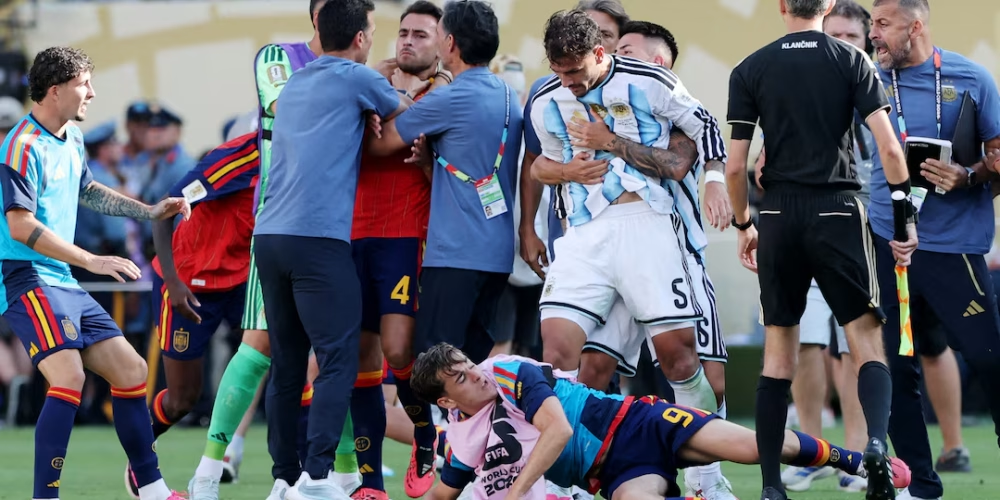
World football governing body FIFA has formally launched a disciplinary and ethics investigation into the physical melee that erupted following Spain’s 1-0 extra-time triumph over Argentina in the 2026 FIFA World Cup final. The confrontation broke out moments after the final whistle at New York New Jersey Stadium, tarnishing what had been an electric conclusion to the expanded 48-team tournament. With global broadcast feeds capturing players, substitutes, and coaching staff trading shoves and aggressive gestures, international sports officials moved swiftly on Monday to appoint a specialized prosecutor to establish accountability.
What You Need to Know
The 2026 FIFA World Cup final represented the pinnacle of international sport, featuring a tense tactical showdown between reigning champions Argentina and European powerhouses Spain. After ninety minutes of scoreless regulation play that saw Argentina midfielder Enzo Fernández dismissed following a second yellow card, substitute forward Ferran Torres netted a decisive 106th-minute goal in extra time to secure Spain’s second world title.
However, emotional intensity inside the stadium boiled over the moment match referee Szymon Marciniak blew the final whistle. While several Spanish players fell to the turf in celebration, heated altercations broke out nearby involving frustrated Argentine players and celebrating Spanish substitutes. Midfielder Leandro Paredes, who had entered the match as a second-half substitute, engaged in physical confrontations with Spanish defenders Eric García and Gavi, pulling players by the throat and sparking a wider World Cup final brawl on the pitch.
The post-match confrontation represented the second disciplinary controversy involving the Argentine delegation during the tournament’s knockout rounds. FIFA’s Disciplinary Committee had already opened a separate inquiry into political messaging displayed by Argentine squad members following their semi-final victory over England. The convergence of on-field physical violence and off-field regulatory scrutiny has forced soccer’s governing authority to take decisive institutional action.
FIFA Disciplinary Inquiry into World Cup Chaos
The official FIFA investigation will center on video evidence, referee match logs, and official delegate reports recorded during and immediately after the final whistle in East Rutherford. Investigators are tasked with evaluating individual acts of physical misconduct under Article 36 of the FIFA Disciplinary Code. Key incidents under review include Paredes shoving Spanish opponents, defender Nahuel Molina making physical contact toward Spanish captain Rodri, and reported altercations involving assistant coaching staff members from both sidelines.
In addition to individual player infractions, the Argentine Football Association faces potential organizational penalties for failing to maintain team discipline during a major international broadcast. Under FIFA protocols, national associations hold ultimate responsibility for the conduct of their credentialed players, technical personnel, and bench officials. Disciplinary panels have the authority to impose heavy monetary fines, ban support personnel from sideline access, or dock administrative hosting privileges for future international fixtures.
Retrospective disciplinary action could carry severe competitive consequences for Argentina as the team transitions into its next cycle of competitive international football. Players found guilty of violent conduct face mandatory suspensions ranging from three matches to extended month-long bans applicable to both international qualifiers and club competitions. With several senior stars facing mandatory sit-outs, Argentina’s upcoming qualification campaign for subsequent international tournaments could be severely compromised.
While Spanish players eventually raised the iconic World Cup trophy during the post-game ceremony, the atmosphere remained visibly strained throughout the official presentations. Portions of the Argentine squad turned away during the trophy lift, an act of protest that draws additional regulatory scrutiny regarding sporting conduct and ceremonial decorum. FIFA officials confirmed that all aspects of team decorum during the official trophy presentation fall within the scope of the ongoing prosecutor’s review.
What This Means for Americans
For American sports fans, event promoters, and stadium operators across the United States, the post-match brawl highlights the immense security challenges associated with hosting high-stakes international sporting events. As North America prepares to host upcoming global events—including the 2028 Summer Olympics in Los Angeles—venue security teams and local law enforcement must refine crowd control, bench isolation, and post-game field safety protocols to prevent volatile confrontations between competing international delegations.
From a broadcast and commercial perspective, major North American networks and corporate sponsors investing billions in international soccer coverage require pristine event execution to protect brand value. Unchecked physical altercations on field level present reputational risks for domestic broadcasters and corporate partners seeking family-friendly entertainment. Strong, transparent disciplinary enforcement by FIFA reassures American commercial stakeholders that international soccer remains committed to elite sportsmanship and structural integrity.
NCN Analysis
The immediate launch of a disciplinary probe reflects FIFA’s urgency to protect the commercial and institutional reputation of its marquee product. Allowing high-profile physical altercations to go unpunished after a global final watched by hundreds of millions would set a dangerous precedent for player behavior across lower tiers of international soccer. FIFA leadership understands that severe, transparent sanctions are necessary to signal zero tolerance for violent conduct on the sport’s biggest stage.
Moving forward, this investigation will likely result in multi-match suspensions for several key South American stars, creating significant roster headaches for Argentina as they enter competitive continental qualifiers. For soccer governance at large, the incident underscores the need for stricter sideline protocols, enhanced security buffers between team benches, and clearer guidelines regarding post-game behavior during high-stress championship matches.
FIFA’s disciplinary investigation ensures that while Spain claims world championship glory, those responsible for overshadowing soccer’s biggest moment will face firm institutional accountability.
Reported by the NCN Editorial Team









