

KEY POINTS
- Lionel Messi expressed that Argentina’s 1-0 extra-time World Cup final defeat to Spain leaves an “immense pain” that will require considerable time to heal.
- The 39-year-old team captain praised his squad for reaching two consecutive FIFA World Cup finals and thanked the nation for its unwavering unity and support.
- Messi made history during the match by joining Brazil’s Cafu as the only players to appear in three men’s World Cup finals.
Argentina captain Lionel Messi has spoken out for the first time since his team’s heartbreaking 1-0 extra-time loss to Spain in the 2026 FIFA World Cup final at New York New Jersey Stadium. Breaking his silence on social media on Monday, the 39-year-old icon acknowledged the emotional toll of the defeat while emphasizing his pride in leading La Albiceleste to consecutive tournament deciders.
What You Need to Know
Argentina entered the 2026 tournament aiming to become the first men’s side since Brazil in 1962 to retain the trophy. Following a thrilling knockout run that included extra-time victories over Switzerland and Cape Verde alongside victories against England and Egypt, Lionel Scaloni’s squad reached their second straight final following their triumph in Qatar in 2022.
The final match in East Rutherford proved to be a grueling battle. After ninety goalless minutes where Argentina was reduced to ten men following Enzo Fernández’s red card, Spanish substitute Ferran Torres netted the winning goal in the 106th minute. The defeat ended Argentina’s pursuit of back-to-back world titles and marked Messi’s second World Cup final loss, having previously finished as runner-up in 2014.
Despite the result, Messi achieved another milestone in his international career. By stepping onto the field for Sunday’s decider, he became only the second male player in football history—after Brazilian legend Cafu—to play in three separate World Cup final matches (2014, 2022, and 2026).
Messi Addresses Supporters After World Cup Heartbreak
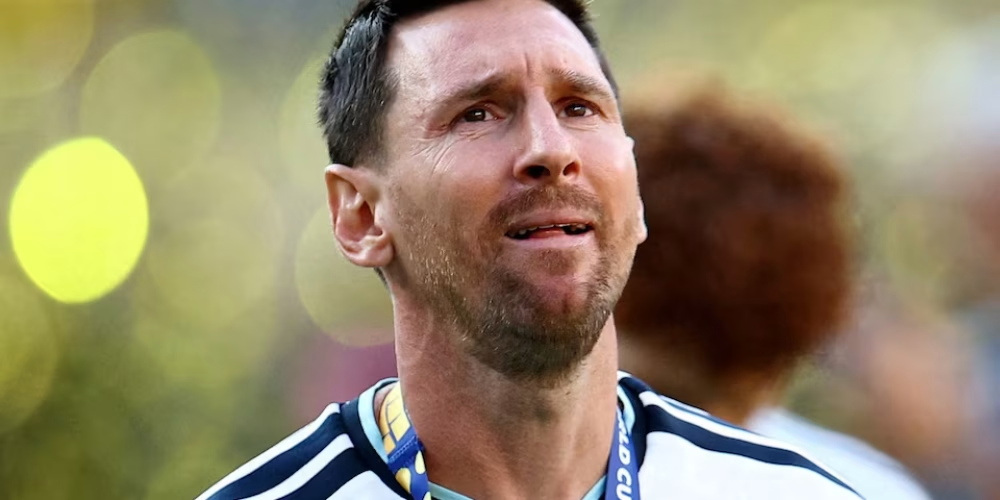
Writing on his official social media channels alongside an image of himself wearing his runner-up medal, Messi shared a candid message reflecting on the match. He admitted that overcoming the defeat would be a slow process while offering congratulations to the Spanish side.
“The pain is immense and it’s going to take a long time for this wound to heal,” Messi stated. “But I’ll also hold on to all the good memories… the support of an entire country which, together with the hard work and effort of this squad, led us to be, once again, amongst the best in the world.”
The eight-time Ballon d’Or winner highlighted the togetherness of the squad and praised the supporters for rallying behind the national team throughout the six-week tournament in North America. “Today it’s hard to evaluate what we did, but this group reached two consecutive World Cup finals,” he added, expressing deep gratitude for the encouragement received from fans across Argentina and around the world.
Reports from Argentina indicate that Messi did not immediately fly back to Buenos Aires with the rest of the squad, choosing instead to spend time with family following an intense tournament where he scored eight goals for his national team.
What This Matters
Messi’s comments highlight the end of a era in international football. As the 39-year-old icon reaches the twilight of his global playing career with Inter Miami CF and the national team, his leadership has cemented a period of success for Argentina, including the 2021 and 2024 Copa América titles alongside the 2022 World Cup trophy.
For American sports fans and global audiences, Messi’s presence in the 2026 final provided a historic moment in U.S. sports history. His individual performance throughout the tournament helped drive interest and commercial engagement for soccer across North American host venues, establishing a foundation for the sport’s ongoing domestic growth.
NCN Analysis
Lionel Messi’s public reaction balances the sorrow of a high-stakes defeat with a realistic perspective on his team’s broader achievements. Reaching consecutive World Cup finals in the modern era is a rare tactical and athletic feat, particularly amidst an expanded 48-team tournament structure that added fixture congestion and travel demands across three host nations.
As Argentina prepares for the next international cycle, the focus will inevitably shift toward squad transition. While Messi has proven capable of performing at the highest level well into his late thirties, La Albiceleste must begin integrating young talent to build a team capable of sustaining success beyond the era of its greatest captain.
Lionel Messi’s legacy remains secure as one of the game’s greatest figures, even as Argentina absorbs the sting of a hard-fought final loss.
Reported by the NCN Editorial Team









