

KEY POINTS
- A two-year-old domesticated duck named Merlin becomes the breakout social media star of the tournament.
- Dressed in a miniature national team kit and custom socks, the fowl captured millions of views overnight.
- Local street vendors and international fans rally behind the feathered symbol as an unofficial mascot.
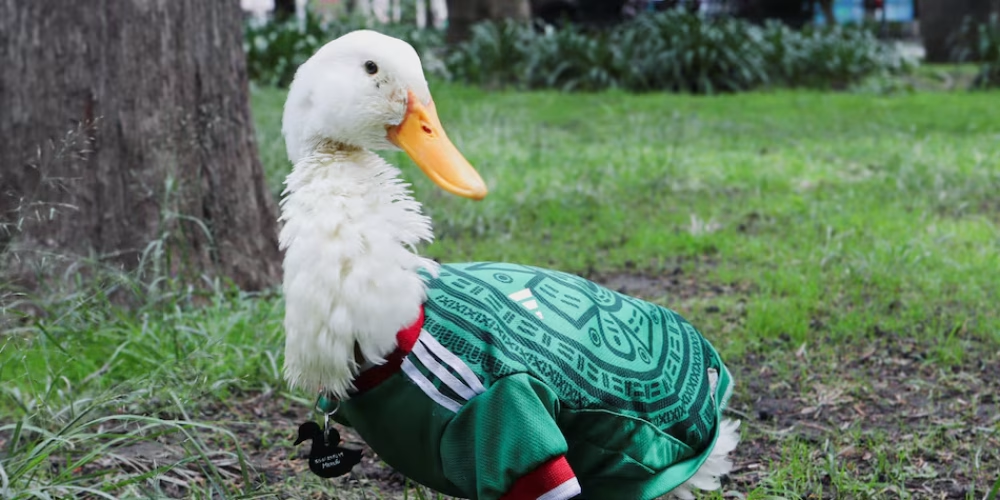
A domesticated duck named Merlin has waddled his way into the center of the global football conversation, transforming from a humble sidewalk companion into the breakout viral sensation of the summer tournament. Dressed in a custom-tailored green Mexican national team jersey and tiny protective socks, the two-year-old mallard captured the imagination of millions after wandering through ecstatic crowds during opening-week match celebrations. For sports fans seeking a lighthearted break from intense on-field drama, this extraordinary bird has provided the ultimate feel-good narrative of the tournament.
What You Need to Know
Major international sporting events frequently produce unexpected cultural icons that transcend the tactical boundaries of the pitch. While official corporate mascots are meticulously engineered by marketing committees, the most enduring tournament symbols often emerge organically from local communities. In the past, animals like Paul the Octopus captured global attention by predicting match outcomes, demonstrating a unique human desire to inject playful pageantry into high-stakes athletic competitions.
This summer, the cultural spotlight has unexpectedly shifted to the historic center of Mexico City, where the host nation’s passionate football culture has merged with a heartwarming family backstory. Long before gaining international internet fame, Merlin was a familiar fixture at weekend street markets, accompanying his owners through a disciplined routine designed to acclimate him to dense urban environments. The transition from a local novelty to a global digital phenomenon highlights the unpredictable power of social media during premier sporting spectacles.
As Mexico co-hosts the expanded tournament alongside Canada and the United States, the intense local enthusiasm has spilled out of the stadiums and directly into public squares. Amid the sea of waving flags, honking car horns, and chanting crowds, the sight of a calm, well-dressed duck navigating the chaotic celebratory environment provided a surreal moment that resonated deeply with casual observers and seasoned soccer traditionalists alike.
The Rapid Rise of a Feathered Football Icon
The journey to internet stardom began immediately following Mexico’s commanding 2-0 opening victory over South Africa, courtesy of clinical goals from Julián Quiñones and Raúl Jiménez. As thousands of jubilant supporters flooded the capital’s iconic Reforma Avenue to celebrate the three points, Merlin’s owner, local street merchant Karla Gómez, was operating her weekend beverage stand alongside her young son, Cristian. Rather than leaving their beloved pet isolated at home, the family dressed Merlin in a custom El Tri jersey—complete with a tiny set of socks gifted by neighboring street vendors to shield his webbed feet from the blistering hot asphalt.
As the dressed-up duck confidently waddled among the sea of fans, onlookers immediately whipped out their smartphones to record the astonishing spectacle. The resulting footage spread across digital platforms like wildfire, accumulating millions of views within a matter of hours and prompting widespread calls for Merlin to be recognized as the host country’s definitive talisman. Despite the overwhelming media frenzy, Gómez remains remarkably grounded, emphasizing that the family values their pet as an irreplaceable household member rather than a commercial asset. The sudden rise to fame even caught the attention of global soccer executives, leading to an official promotional photoshoot and media commercial.
Why This Matters
For international marketing executives and media networks, Merlin’s viral explosion underscores how human-interest micro-stories help sustain tournament momentum beyond traditional match windows. While hardcore soccer enthusiasts remain fixated on tactical analysis and group-stage standings, casual viewers are drawn to the shared joy and quirky pageantry that define host-nation fan culture. This unique digital engagement expands the tournament’s overall demographic reach, generating positive publicity for host cities and boosting tourism visibility.
Moreover, the phenomenon showcases the rich, communal fabric of street commerce in Mexico City, where local merchants actively look out for one another’s well-being—even extending that care to a pet duck’s footwear. The heartwarming interplay between grassroots community traditions and a multi-billion-dollar global sporting event offers a refreshing counterpoint to the commercialized nature of modern athletics. It proves that the true spirit of the game is still dictated by the people in the streets.
NCN Analysis
The viral emergence of Merlin provides an invaluable psychological boost to Mexico’s tournament atmosphere, injecting an element of pure fun into a high-pressure campaign. While a feathered mascot cannot influence team selection or technical execution on the pitch, the unifying energy generated by such a beloved figure fosters an immense sense of national pride and local morale. Pundits should watch closely to see if this lighthearted momentum carries over to the squad’s upcoming matches.
Looking ahead, Merlin has already begun channeling the legacy of past psychic animals by utilizing his beak to predict future group outcomes, recently selecting the Mexican flag over South Korea ahead of their highly anticipated Group A match. Whether the magical mallard can maintain his perfect streak of luck remains to be seen, but his position as the undisputed king of tournament fan culture is completely secure. Expect to see his likeness replicated on fan banners and digital memes as long as Mexico remains in contention.
The tournament has found its most delightful breakout star, reminding everyone that soccer is ultimately a game meant to inspire shared happiness.
Reported by the NCN Editorial Team









