

KEY POINTS
- The US-Iran truce talks in Islamabad seek to secure maritime trade, but Iran is demanding protections from Israeli strikes that the U.S. cannot currently guarantee.
- Jerusalem has moved toward a “forever war” doctrine, prioritizing continuous military attrition over long-term ceasefires, creating a rift with U.S. de-escalation goals.
- A successful truce is vital for stabilizing global energy markets and reducing the inflationary pressures that have impacted American households throughout 2026.
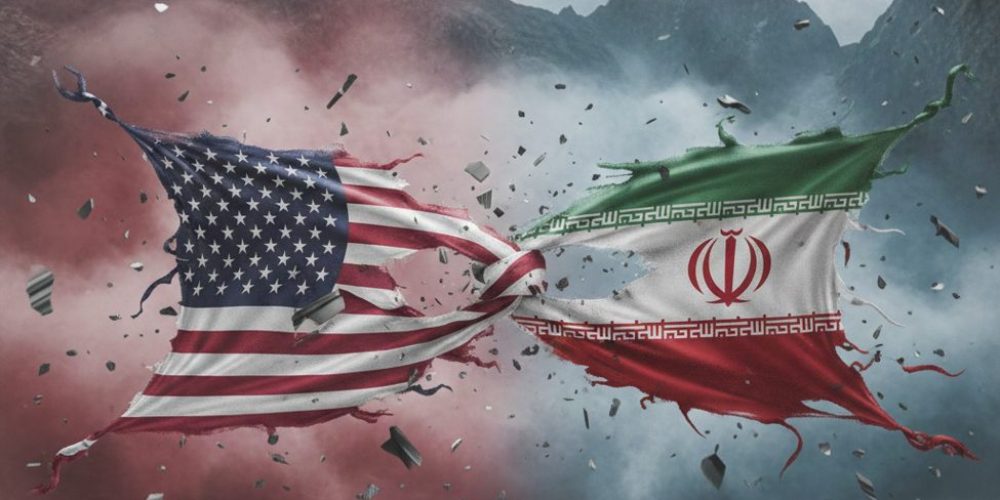
A high-stakes diplomatic gamble is unfolding in Pakistan as American and Iranian officials attempt to turn a fragile ceasefire into a lasting peace. This week’s summit represents the most significant effort to halt the escalating regional violence that has defined the early months of 2026. However, the path to a broader regional settlement is being challenged by a hardening military posture in Jerusalem, where leadership is increasingly signaling a commitment to an indefinite, low-intensity conflict.
What You Need to Know
The current geopolitical landscape is dominated by the fallout from the intense military exchanges of early 2026. Following the direct strikes between Washington and Tehran in February, the Middle East entered a state of heightened volatility that threatened to draw in global superpowers. The subsequent disruption of maritime trade through the Strait of Hormuz and the Red Sea sent shockwaves through the global economy, forcing a reluctant diplomatic pivot. This shift led to the “Islamabad Protocol,” a mediation framework where Pakistan serves as the essential bridge between two nations that have lacked formal diplomatic ties for decades.
In contrast to the diplomatic activity in Islamabad, Israeli military doctrine has undergone a tectonic shift. For decades, the Israeli Defense Forces (IDF) operated under a philosophy of “mowing the grass”—short, high-intensity operations designed to degrade enemy capabilities before returning to a period of relative calm. However, the events of the past two years have led to the emergence of a “forever war” strategy. This new approach prioritizes a permanent military presence along multiple borders and a continuous cycle of pre-emptive strikes, fundamentally rejecting the notion of a formal, long-term truce with regional adversaries.
The friction between these two divergent paths—American-led de-escalation and Israeli-led attrition—has created a diplomatic vacuum. While the United States remains the primary security guarantor for Israel, the Biden-Vance administration is facing intense domestic pressure to avoid another open-ended entanglement in the Middle East. This has led to a visible decoupling of strategic goals: Washington is seeking an exit ramp to focus on domestic economic stability and the Indo-Pacific, while Jerusalem views the current regional chaos as a window of opportunity to permanently reshape its security perimeter.
Navigating the US-Iran Truce Talks
The current round of US-Iran truce talks in Islamabad is centered on a complex 10-point roadmap aimed at neutralizing the immediate threats to global energy security. At the heart of the negotiations is a proposal to create a “Sanctified Corridor” for commercial shipping, which would see Iran withdraw its fast-attack craft from key chokepoints in exchange for the partial release of frozen oil revenues. The American delegation, reportedly emphasizing the need for a verifiable reduction in uranium enrichment levels, is testing whether the new Iranian leadership is willing to trade its “shadow war” leverage for a desperate injection of liquidity into its struggling domestic economy.
Despite the procedural progress, the ghost at the table remains the Israeli government’s refusal to recognize the legitimacy of any deal that leaves Iranian proxy networks intact. Israeli officials have made it clear that they are not bound by the Islamabad negotiations, asserting that a “forever war” is a necessary survival mechanism in a region where ceasefires are often used as periods for rearmament. This stance has led to a series of uncoordinated strikes in Lebanon and Syria even as the diplomats in Pakistan were reviewing draft agreements, highlighting the fragility of the current “quiet period” and the limits of American influence over its closest regional ally.
The Iranian delegation has seized on this internal Western friction, arguing that the United States cannot guarantee the behavior of its partners. Tehran’s representatives have demanded that any formal truce must include “security assurances” that would protect their domestic infrastructure from third-party strikes—a condition that the U.S. is currently unable to fulfill without creating a major diplomatic rift with Jerusalem. This impasse has slowed the momentum of the talks, turning what was hoped to be a swift signing ceremony into a grueling exercise in linguistic gymnastics and incremental concessions.
As the talks enter their final sessions, the focus has shifted to the role of regional monitors. One proposal being discussed involves a joint naval task force—potentially including units from Pakistan, Turkey, and Oman—to oversee the maritime ceasefire. This move would theoretically lower the temperature by removing direct U.S.-Iranian naval friction, but it remains to be seen if Israel will accept an international security architecture that it does not directly control. The outcome of these discussions will determine whether the 2026 ceasefire is a genuine turning point or merely a tactical pause in a much larger, more destructive cycle of violence.
What This Means for Americans
For the American public, the success or failure of these talks has a direct impact on the national “war-weariness” that has come to define contemporary politics. A formalized truce would allow for a significant reduction in the U.S. carrier presence in the region, potentially saving billions in annual defense expenditures and allowing thousands of sailors and marines to return home. Furthermore, a stable Middle East is the only permanent solution to the energy-driven inflation that has burdened American families since the Strait of Hormuz was first contested. A breakthrough in Islamabad would likely lead to a sustained drop in domestic gas prices, easing the cost of living for millions.
However, the “forever war” stance adopted by Israel presents a unique risk to American long-term interests. If the U.S. enters into a truce with Iran while Israel continues to engage in active hostilities, the U.S. could find itself caught in a “security trap,” where it is forced to choose between its diplomatic commitments to Tehran and its historic alliance with Jerusalem. This could lead to a scenario where American troops are stationed in the region not to deter Iran, but to act as a buffer between two allies that no longer share a common strategic vision. This potential for “mission creep” is a primary concern for voters who are increasingly skeptical of foreign interventionism.
NCN Analysis
The Islamabad summit is a classic example of a “negotiation in the dark.” Both the U.S. and Iran are operating with limited information about the other’s internal political stability, and both are looking over their shoulders at a defiant Israel. Our analysis suggests that while a “truce of convenience” is likely in the short term, it will be a “hollow peace.” The fundamental issue is that the United States is trying to solve a 20th-century geopolitical problem with 21st-century diplomacy, while the regional actors are increasingly moving toward a pre-modern “war of all against all” mentality.
Moving forward, readers should watch for the “de-dollarization” of any oil deals that emerge from the talks. If Iran and its neighbors begin trading energy in regional currencies as part of a truce deal, it could signal a long-term erosion of American financial hegemony in the Middle East. Additionally, the role of Pakistan as a “super-mediator” cannot be overstated. If Islamabad successfully brokers this deal, it will have effectively replaced traditional Western capitals as the “Geneva of the East,” a shift that will have profound implications for U.S. influence in Central Asia for the next decade.
The success of the US-Iran truce talks depends entirely on whether Washington can convince its allies that a difficult peace is more profitable than a permanent war.
Reported by the NCN Editorial Team









