

KEY POINTS
- The WNBA league office officially rescinded the technical foul assessed to Dallas Wings rookie guard Paige Bueckers.
- The penalty occurred during the third quarter of Sunday’s closely contested matchup against the Minnesota Lynx.
- Despite the controversial whistle being overturned, the short-handed Wings ultimately fell to the Lynx in a narrow two-point defeat.
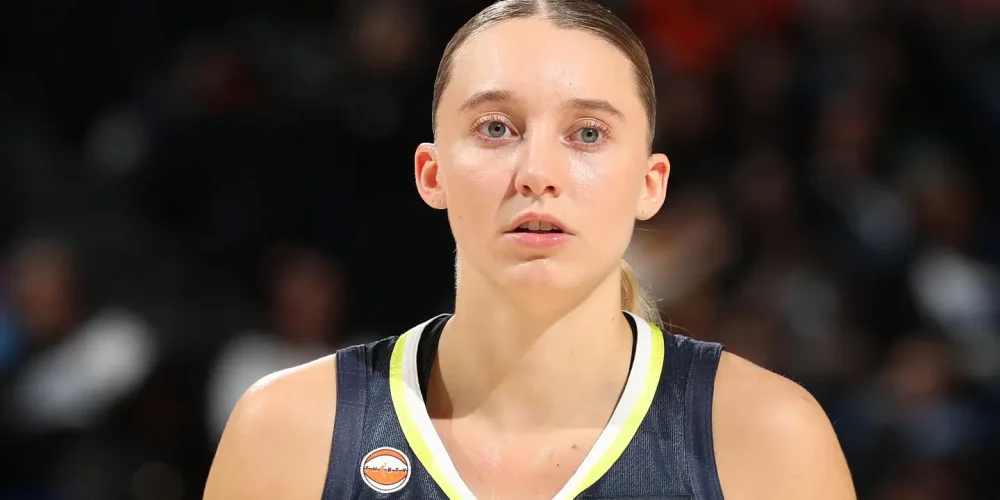
The WNBA league office moved swiftly on Monday to rectify an officiating misstep, officially rescinding a controversial technical foul assessed to Dallas Wings rookie standout Paige Bueckers. The disciplinary correction follows an intense sequence from Sunday night’s competitive matchup against the Minnesota Lynx. For American women’s basketball fans tracking the highly publicized rookie transition of the former collegiate national player of the year, the league’s rapid administrative reversal highlights the intense margin for error defining early-season professional basketball.
What You Need To Know
The collegiate excellence of the current rookie class has driven unprecedented mainstream media coverage and commercial expansion for the WNBA over the past several months. Having completed a stellar, high-profile collegiate career at the University of Connecticut, the dynamic guard entered the professional ranks with immense expectations on her shoulders. Her arrival in the league has intensified fan engagement, resulting in elevated national television ratings and sold-out arenas across the country.
Managing the developmental trajectory of a premier franchise cornerstone is a central priority for the Dallas organization. The team entered the current campaign attempting to build upon previous playoff appearances while simultaneously integrating elite collegiate prospects into their core rotation. Navigating the highly physical, high-tempo landscape of professional basketball requires extensive mental and physical adjustments for any first-year player, making every regular-season minute an invaluable learning opportunity.
Furthermore, officiating accuracy has become an increasingly scrutinized topic within the professional sports ecosystem, as rapid high-definition replays and immediate social media commentary amplify individual floor decisions. The league’s administrative process allows for a thorough review of all disciplinary whistles post-game to ensure regulatory consistency across the board. This mechanism serves as a vital safety net to protect players from accumulating unfair penalties that carry financial fines and potential future suspensions.
Officiating Call Corrected Following Controversial Clapping Sequence
The specific on-court sequence occurred midway through the third quarter of Sunday’s game, which ultimately concluded in a tight 86-84 victory for the visiting Minnesota Lynx. With the game finely balanced, the young guard was whistled for an offensive foul after attempting to navigate a defensive screen. Expressing immediate frustration with the turnover ruling, she turned away from the official and executed an intense clapping motion directed entirely toward her own bench area.
The nearest game official interpreted the demonstrative gesture as an act of open defiance or direct criticism leveled against the officiating crew, promptly whistling the rookie for a technical foul. The automated penalty surprised the Dallas coaching staff and the local home crowd, who viewed the emotional reaction as a routine display of self-directed competitive passion rather than an aggressive confrontation with the floor staff.
Despite the temporary distraction of the technical free throw, the short-handed Texas franchise displayed immense resilience throughout the remainder of the evening. Operating without the services of injured multi-time All-Star forward Satou Sabally and veteran guard Odyssey Sims, the roster leaned heavily on their young perimeter core to stay within striking distance of a veteran Minnesota squad. The narrow final margin of defeat underscored the high stakes of every single possession and whistle over the course of the 40-minute contest.
Following a comprehensive post-game video analysis on Monday morning, league executives determined that the initial on-court interpretation did not meet the strict criteria required for a behavioral technical foul. By verifying that the rookie’s emotional expression was not directed toward an official, the WNBA erased the penalty from her season statistics. This intervention provides significant relief for the Dallas organization, as the accumulation of seven technical fouls over the course of the regular season triggers an automatic one-game suspension under current league guidelines.
Why This Matters
This swift administrative intervention holds significant relevance for sports fans and corporate entertainment investors across the United States. Women’s professional basketball is currently experiencing an unprecedented economic boom, with corporate sponsorships, broadcast rights valuations, and ticket marketplaces reaching historic highs. The commercial success of the product is deeply intertwined with the weekly availability and unhindered marketing visibility of its most recognizable young stars.
Additionally, ensuring structural fairness and accurate disciplinary boundaries is essential for maintaining the competitive integrity of a rapidly growing sports league. Casual American sports fans who are tuning into professional women’s basketball for the first time expect a premium product where outcomes are decided transparently by elite athletic execution rather than overly sensitive officiating interventions. The league’s willingness to publicly correct mistakes reinforces a standard of accountability that benefits players, coaches, and viewers alike.
NCN Analysis
The league’s prompt decision to rescind the penalty is a rational victory for common-sense officiating in an era increasingly dominated by intense player emotion. Modern professional basketball thrives on high-stakes competitive intensity, and penalizing players for harmless displays of self-frustration risks sterile, passionless games that alienate fans. The former collegiate star plays with a highly visible competitive fire, and maintaining that authentic emotional edge is crucial for her long-term development into an elite professional perimeter generator.
Looking forward, the Dallas coaching staff must focus heavily on structural perimeter rotation strategies to maximize their young star’s efficiency while weathering their current roster depletion. The physical absence of veteran spacing threats means opposing defensive units can comfortably deploy aggressive blitz schemes and physical trapping coverages against the rookie playmaker. Observing how effectively she adjusts her late-game decision-making over the upcoming road stretch will offer definitive clues regarding her trajectory toward securing Rookie of the Year honors.
The essential takeaway from this early-season administrative correction is that while on-court human error is an inevitable component of live sports, maintaining a transparent mechanism for structural correction ensures the game’s integrity remains unblemished.
Reported by the NCN Editorial Team









