

KEY POINTS
- The United States national average for gasoline exceeded 4.00 dollars per gallon for the first time since 2022.
- President Trump suggested a possible withdrawal from the conflict within weeks despite the ongoing blockade of the Strait of Hormuz.
- Stock markets rallied as investors reacted to reports of a nearing conclusion to the month-long military campaign.
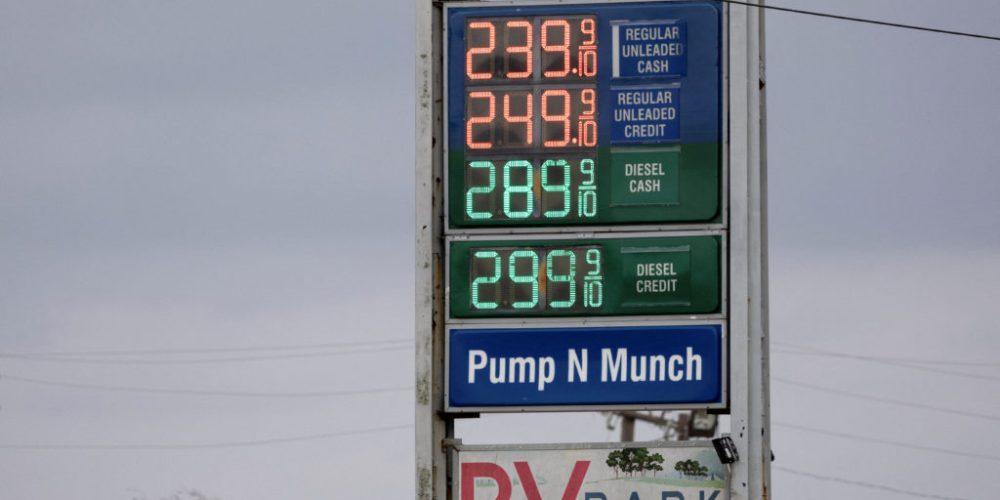
American motorists are facing a sharp increase in energy costs as the war between the United States and Iran continues. The national average price for a gallon of gasoline reached 4.02 dollars this week. This mark represents the highest fuel cost for drivers in nearly four years. Only one month ago, the average price sat much lower at 2.98 dollars.
Regional price disparities are becoming more extreme as the conflict impacts global supply chains. Drivers in California are currently paying an average of 5.89 dollars per gallon. Washington state also reported high costs with an average of 5.35 dollars. These spikes follow the total disruption of shipping through the strategic Strait of Hormuz.
President Donald Trump recently addressed the rising economic pressure during a series of public statements. He expressed confidence that fuel prices will drop significantly once the military operations conclude. The president also indicated that American forces might leave the region sooner than many analysts expected. He suggested the war could wrap up within two to three weeks.+1
Wall Street reacted positively to the news of a potential de-escalation in the Middle East. The Dow Jones Industrial Average jumped nearly 1,100 points following reports of a possible withdrawal. The S&P 500 and the tech-heavy Nasdaq also posted substantial gains. Investors appear to be prioritizing an end to the war over the specific terms of a peace deal.
However, energy experts remain concerned about the long-term impact on global oil markets. Iran continues to harass vessels and disrupt trade in the Persian Gulf using drones and small boats. Approximately one-fifth of the global oil and liquefied natural gas supply typically flows through this narrow waterway. Some reports suggest Trump is willing to exit the conflict even if the strait remains closed.
Economists warn that leaving the strait under Iranian control could keep energy prices elevated for a long period. Without a return to pre-war shipping norms, the global supply shortfall remains severe. The world is currently missing roughly 11 percent of its daily crude oil supply. High energy costs are also expected to drive up inflation for groceries and household utilities.+2
The political stakes for the current administration are rising as the November midterm elections approach. Historical trends show that high prices at the pump often prove costly for the party in power. Public opinion polls indicate increasing negativity regarding the state of the American economy. Two-thirds of citizens in a recent poll claimed current policies have degraded financial conditions.+1
The conflict has also strained international relationships within the NATO alliance. Several European member states have moved to distance themselves from the American-led military campaign. Countries like Spain and Italy have reportedly restricted the use of their airspace for combat missions. This friction has led the administration to suggest a reexamination of the value of these long-standing alliances.









