

KEY POINTS
- Perennial college basketball powers Kentucky and Gonzaga have canceled the remaining two years of their nonconference series.
- The sudden decision eliminates highly anticipated home matchups scheduled for Rupp Arena and the McCarthey Athletic Center.
- Shifting conference realignments and name, image, and likeness financial strategies prompted both athletic departments to seek calendar flexibility.
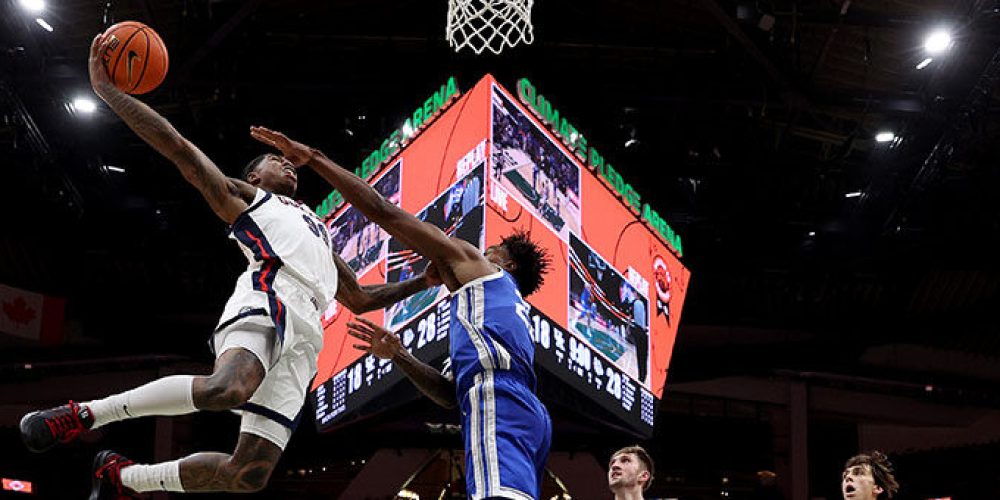
The Kentucky and Gonzaga men’s basketball programs have officially agreed to terminate their high-profile nonconference scheduling agreement two seasons ahead of schedule. Athletic administrators from both universities issued a coordinated announcement declaring that the final two games of what was originally a six-year commitment have been completely removed from the calendar. The administrative pivot marks the abrupt conclusion of one of college basketball’s most prominent cross-country rivalries.
What You Need to Know
The scheduling agreement originally materialized in October 2022 during a public video call between Gonzaga head coach Mark Few and former Kentucky manager John Calipari. Designed as a sweeping six-year series, the contract aimed to challenge both elite programs while generating massive television ratings and lucrative ticket revenue during the early winter months. The series intentionally utilized unique venue environments, alternating between true home courts, major regional arenas, and neutral-site metropolitan centers across the country.
Over the past four seasons, the Bulldogs firmly controlled the competitive narrative of the matchup, compiling an impressive 3-1 record against the Wildcats. The most recent encounter took place on December 5, 2025, at the Bridgestone Arena in Nashville, where Gonzaga delivered a definitive 94-59 blowout victory. That lopsided result represented one of the most severe nonconference defeats suffered by the historic Kentucky program in over three decades, fundamentally shifting how local administrators viewed the utility of the matchup moving forward.
The cancellation completely erases two highly anticipated matchups that fans had circled on their long-term calendars. Kentucky was originally locked in to host the Bulldogs at Rupp Arena in Lexington during the upcoming 2026-27 campaign. Concurrently, the final game of the contract would have brought the Wildcats to the McCarthey Athletic Center—Gonzaga’s legendary home arena affectionately known as “The Kennel”—for the first time in program history during the 2027-28 season.
Shifting Priorities and Conference Realignment
The joint executive statement released by UK Athletics and Gonzaga framed the cancellation as a mutual strategic decision aimed at reclaiming institutional freedom. Both athletic departments emphasized an immediate need to reevaluate future scheduling priorities, citing a rapidly changing collegiate landscape defined by expanding conference obligations and evolving nonconference opportunities. By dissolving the contract now, both coaching staffs gain immediate flexibility to reshape their winters around more modern commercial and competitive incentives.
For Gonzaga, the scheduling calculation has been deeply altered by major structural changes within collegiate athletic associations. The Bulldogs are officially set to join the newly rebuilt Pac-12 Conference on July 1, 2026, transitioning away from their long-standing home in the West Coast Conference. Entering a re-engineered league structure brings a balanced, highly demanding 16-game conference schedule that naturally reduces the number of open windows available for nonconference cross-country travel.
Kentucky faces its own unique logistical pressures under the leadership of second-year head coach Mark Pope. The Wildcats operate within an elite Southeastern Conference that continues to expand its own media footprint and scheduling demands. Furthermore, the program remains locked into mandatory multi-year commitments with premium media properties, including the annual CBS Sports Classic, leaving minimal breathing room on a maximum 32-game regular-season schedule.
The financial realities of the modern Name, Image, and Likeness (NIL) era have also impacted how athletic directors view traditional home-and-home series. Elite programs are increasingly abandoning traditional campus-site games in favor of multi-team tournaments or neutral-site exhibitions hosted in entertainment capitals like Las Vegas or Detroit. These premium destination showcases maximize corporate sponsorship payouts and generate massive influxes of collective capital required to attract and retain top-tier student-athletes in the modern market.
Why This Matters
For college basketball enthusiasts, sports business professionals, and television executives across the United States, the sudden termination of the Kentucky-Gonzaga series serves as a stark reminder of the volatile nature of modern collegiate sports. The traditional scheduling models that relied on multi-year, campus-to-campus contracts between elite brands are rapidly dissolving. American fans are adjusting to an ecosystem where historical matchups are easily sacrificed to accommodate corporate realignments, shifting media rights agreements, and regional conference expansions.
Additionally, the cancellation removes major economic drivers from local campus communities. High-profile matchups at venues like Rupp Arena inject millions of dollars into regional hospitality industries, drawing thousands of out-of-state travelers to local hotels, restaurants, and retail establishments. By shifting these marquee dates away from collegiate towns and toward permanent neutral-site professional arenas, the financial windfall of elite college sports is increasingly concentrated in major metropolitan commercial markets.
NCN Analysis
The early termination of the Kentucky-Gonzaga series is a logical, albeit disappointing, corporate concession to the realities of 2026 college athletics. While purists will lament the loss of what would have been an electric atmosphere inside “The Kennel” in 2027, athletic directors can no longer afford to prioritize fan nostalgia over structural flexibility. For Mark Pope and the Kentucky administration, escaping a series where they had dropped three out of four games allows them to reset their nonconference strength-of-schedule metrics under less punitive conditions.
Conversely, Gonzaga’s impending migration to the Pac-12 means Mark Few must completely recalibrate how his program constructs its tournament resume. Even without the Wildcats on the docket, the Bulldogs have built a robust winter schedule, featuring premium matchups against Purdue in Las Vegas, Michigan State in Palm Springs, and a highly anticipated showdown with Duke in Detroit. The era of the fixed six-year series is dead; in its place is a fluid, year-by-year matchmaking system designed to maximize television revenue and NIL opportunities.
University officials noted that ticket holders who previously purchased packages inclusive of the 2026-27 home schedule will receive updated details regarding replacement opponents in the coming weeks. The formal release of the finalized nonconference schedules for both institutions is expected to filter through official athletic channels by mid-August.
Reported by the NCN Editorial Team









