

KEY POINTS
- Millions of fans across South America are mourning the abrupt end of their national team’s title defense.
- The elimination shatters hopes of securing consecutive global championships following their historic 2022 triumph.
- Streets in the capital fell silent as a devastated populace absorbed the harsh reality of the tournament exit.
The dream of back-to-back global football supremacy has officially ended for one of the sport’s most passionate nations. Following a devastating Argentina World Cup defeat, the vibrant streets of Buenos Aires transformed from scenes of intense anticipation into quiet arenas of collective mourning. For a country that views soccer as a religion, the loss marks the abrupt and painful conclusion of a deeply emotional summer campaign across North America.
What You Need to Know
To understand the depth of this despair, one must look back to the historic triumph in Qatar four years ago. That victory delivered a third star to the iconic blue and white crest, elevating the current generation of players to mythical status alongside past legends. The nation entered the North American tournament not just as defending champions, but as a squad carrying the overwhelming expectation that they could sustain their absolute dominance on the global stage.
For citizens navigating complex domestic economic challenges, the national team has long served as a vital source of unity and escapism. During major tournaments, daily life in the South American country essentially halts. Schools adjust schedules, businesses close their doors, and millions of people gather around television screens in plazas, cafes, and living rooms. The players are acutely aware that they carry the psychological weight of the entire populace every time they step onto the pitch.
In domestic club football, rivalries fiercely divide the nation throughout the year. Yet, the national team acts as the ultimate unifier. The legendary jersey erases regional boundaries and local club loyalties, creating a singular, focused entity. This absolute unification makes the sting of a tournament exit infinitely sharper, as there is no divided attention—only a shared, collective heartbreak. The defense of their crown was supposed to be a triumphant tour across the United States, Mexico, and Canada. Instead, the campaign has ended in tears, forcing the fan base to grapple with the harsh reality that maintaining supremacy in international sports is extraordinarily difficult.
Reactions to the Tournament Exit
The atmosphere in the capital city shifted violently in the immediate aftermath of the final whistle. Hours earlier, the area surrounding the iconic Obelisco in central Buenos Aires was a chaotic sea of celebration. Supporters had amassed by the tens of thousands, setting off flares, beating drums, and chanting traditional stadium anthems in full voice. The collective belief in another title run was palpable across every generation of fans present in the historic plaza.
When the decisive moments of the match sealed the Argentina World Cup defeat, that roaring energy evaporated into stunning silence. Broadcast footage showed supporters weeping openly in the streets, holding their heads in their hands, and embracing one another in shared grief. The sudden realization that the tournament was over sent a shockwave through the massive crowds, prompting a slow, somber dispersal as millions retreated to their homes under a cloud of disappointment.
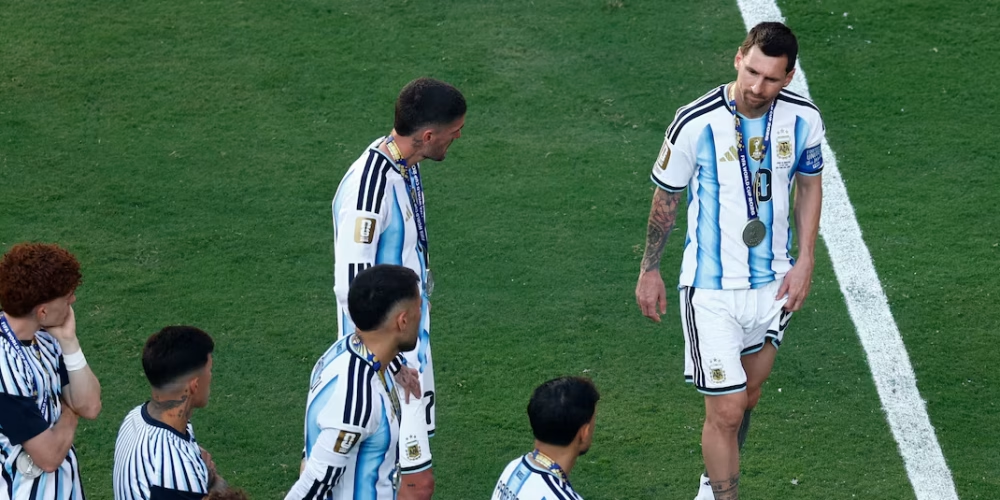
Reports from the locker room indicated a similarly devastated scene. Players who had previously lifted the heaviest trophies in the sport were left speechless, grappling with the physical and emotional exhaustion of the demanding campaign. The connection between the squad and the supporters is famously symbiotic; when the fans hurt, the players feel it acutely. The post-match environment reflected a group that knew they had let down a nation that expected a different outcome.
The emotional toll extended far beyond the immediate viewing parties. Across social media, sports radio broadcasts, and neighborhood corners, the post-mortem analysis began immediately. Fans debated tactical decisions, player fatigue, and the brutal, unforgiving nature of knockout-stage soccer. Despite the overwhelming sadness, many supporters still expressed deep gratitude for a squad that had brought them unparalleled joy over the past several years, acknowledging that their recent golden era could not last forever.
Why This Matters
For American audiences and the broader sports industry, this Argentina World Cup defeat highlights the unmatched cultural power of international soccer. In the United States, franchise sports dominate the landscape, but the emotional investment rarely paralyzes an entire nation in the way it does in South America. Observing this intense reaction provides American sports fans with a stark example of what soccer means to the rest of the world—it is deeply tied to national identity, cultural pride, and community survival.
Commercially, the exit of this massive fan base significantly alters the landscape of the remaining tournament in North America. Argentine supporters are famous for traveling in massive numbers, filling host cities with lucrative tourism dollars, booking out hotels, and driving massive food and beverage sales around stadiums. Broadcasters and sponsors will also feel the shift, as one of the most reliable and passionate television demographics is suddenly removed from the final weekend of competition. Host cities will undoubtedly notice the quiet absence of the singing, drumming contingents that bring unparalleled atmosphere to global events.
NCN Analysis
Looking forward, the Argentine federation faces a monumental rebuilding phase. Navigating the aftermath of an Argentina World Cup defeat requires a delicate balance between honoring outgoing veterans and ruthlessly integrating fresh talent. The immediate priority will be managing the psychological fallout of this tournament while identifying the next crop of young players capable of wearing the heavy jersey without being crushed by the expectations.
The coaching staff must evolve their tactical approach, moving away from systems built around aging superstars and establishing a new identity suited for modern, high-intensity international play. Rival nations will view this vulnerability as an opportunity to shift the balance of power in global soccer. As the sport looks ahead to the 2030 tournament, the standard has been reset. The federation must rebuild intelligently without losing the intense competitive edge that defines their footballing culture.
While the sting of elimination remains fresh, the unmatched passion of these supporters guarantees they will return with renewed ferocity on the next global stage.
Reported by the NCN Editorial Team









