

KEY POINTS
- The Mexican national football team has been eliminated from the 2026 World Cup following a devastating defeat on home soil.
- Estadio Azteca, historically a fortress for El Tri, became the site of immense national grief as fans witnessed the end of their tournament run.
- The early exit sparks immediate questions regarding the future direction of Mexican football management and player development.
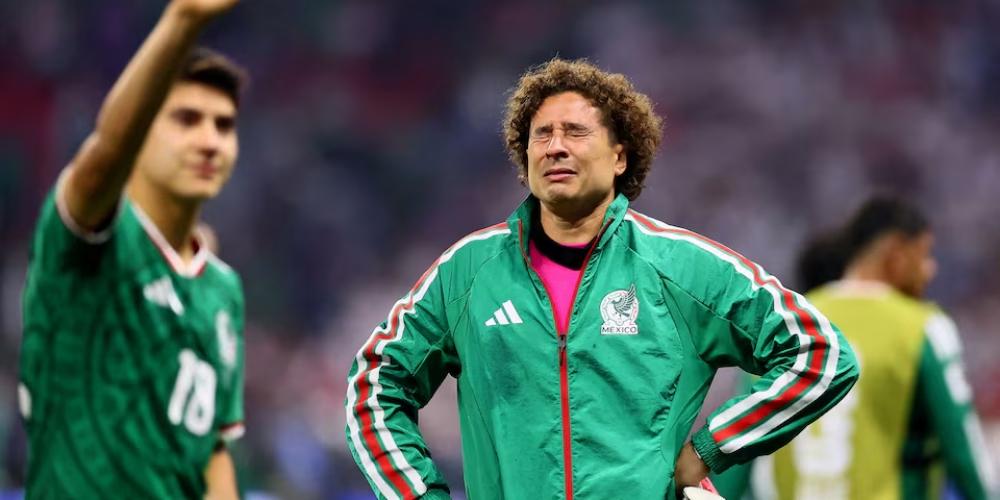
The co-hosts of the 2026 World Cup suffered a crushing blow as Mexico’s national team was knocked out of the tournament, leaving millions of fans in disbelief. The high-stakes fixture at the iconic Estadio Azteca ended in tears, abruptly halting what many hoped would be a historic deep run on home soil. For a soccer-crazed nation that had spent years preparing for this global showcase, the premature exit marks a bitter chapter in their sporting history.
What You Need to Know
The 2026 World Cup represents a monumental milestone for North American soccer, being the first iteration of the tournament jointly hosted by three nations: the United States, Canada, and Mexico. For Mexico, the event carried a profound cultural weight. Having previously hosted the tournament in 1970 and 1986, the country boasts a rich soccer lineage, with Estadio Azteca serving as the legendary backdrop for iconic moments featuring legends like Pelé and Diego Maradona.
Entering the tournament, the expectations placed upon the Mexican national team, affectionately known as El Tri, were astronomical. Playing in front of deeply passionate home crowds was supposed to provide a distinct competitive advantage. Historically, the altitude and intense atmosphere of Mexico City have intimidated visiting squads, making the venue one of the most feared environments in international sports.
However, the pressure of hosting can also become a heavy burden. In the years leading up to 2026, the Mexican football federation underwent numerous structural changes, managerial shifts, and squad overhauls in a desperate bid to elite status on the world stage. Despite these efforts, inconsistent performances in continental tournaments raised lingering doubts among analysts about whether the team was truly prepared to challenge the world’s elite soccer powerhouses.
Mexico World Cup Campaign Collapses
The decisive match showcased the harsh realities of tournament football, where minor errors dictate grand outcomes. From the opening whistle, the tension inside the stadium was palpable. Mexico attempted to establish dominance early through aggressive wing play and high-pressing tactics, looking to feed off the energy of over 80,000 roaring spectators. Yet, their opponents remained disciplined, absorbing the initial pressure and exploiting gaps left in the Mexican midfield.
As the match progressed, tactical vulnerabilities began to plague the home side. A failure to convert critical goal-scoring opportunities in the final third left the team exposed to counter-attacks. When the opposing side broke the deadlock, a wave of anxiety seemed to paralyze the Mexican squad. Defensive miscommunications, which had occasionally surfaced during the group stage matches, proved fatal at this elite level of competition.
Substitutions in the second half did little to alter the momentum of the game. The tactical adjustments implemented by the coaching staff failed to break down a resilient, low-blocking defense. As the final seconds ticked away, desperation turned into frantic long balls that were easily cleared by the opposition. The referee’s final whistle signaled not just the end of the match, but the absolute deflation of a national party that had been years in the making.
In the immediate aftermath, scenes of despair filled the stadium. Players collapsed onto the pitch, burying their faces in their jerseys, while stands once filled with vibrant green shirts and joyous chanting fell into a stunned, emotional silence. The post-game analysis quickly shifted toward systemic critique, with commentators pointing toward a lack of top-tier European experience among the younger squad members as a decisive factor in the defeat.
Why This Matters
For American sports fans and the broader North American sports market, the elimination of Mexico from the 2026 World Cup carries significant commercial and cultural implications. The tournament was designed to maximize cross-border fan engagement, capitalizing on the massive Mexican-American demographic residing in the United States. With Mexico out of the running, broadcast networks and tournament sponsors may see a shift in viewership dynamics, particularly for Spanish-language media coverage across major US metropolitan areas.
Furthermore, the exit alters the competitive landscape of the tournament as it moves into its later stages. Millions of fans who were expected to travel between US and Mexican host cities may now alter their plans, impacting local hospitality, tourism, and ticket resale markets in American border states. The shared hosting duties meant that the momentum of one nation inherently fueled the excitement of the others, and losing a host country so early dampens the regional enthusiasm that organizers heavily relied upon.
NCN Analysis
This dramatic exit underscores a broader crisis within Mexican football that has been brewing for nearly a decade. While Major League Soccer (MLS) in the United States has seen rapid growth and an influx of international talent, Mexico’s Liga MX has faced criticism for its structural rules, including the suspension of promotion and relegation, which critics argue stifles the development of young domestic talent. The failure on the grandest stage will likely force an aggressive reevaluation of how youth academies operate within the country.
Looking forward, the immediate casualty of this campaign will almost certainly be the national team’s technical staff. In international soccer, a failure of this magnitude on home soil necessitates accountability, meaning a complete overhaul of the coaching staff and management is imminent. Football fans should watch closely to see if Mexico will pivot toward hiring an established international tactician or if they will attempt to rebuild the program from the ground up utilizing domestic coaches who understand the unique pressures of the environment.
The road to redemption for El Tri will be long, arduous, and filled with intense public scrutiny.
Reported by the NCN Editorial Team









