

KEY POINTS
- The Cape Verde national soccer team has secured an unprecedented spot in the upcoming 2026 World Cup, marking the country’s first-ever qualification for the global tournament.
- With a population hovering under 600,000 residents, the island archipelago stands as the third smallest country by population to ever compete in the event’s history.
- The historic qualification was powered by an impressive preliminary run, which included seven victories out of ten matches and a major upset victory over continental giants Cameroon.
The national soccer team of Cape Verde has defied all statistical probabilities to claim a coveted place at the 2026 World Cup in North America. The island nation, normally celebrated for its deep cultural connection to traditional folk music, is transitioning its collective passion into an athletic celebration. For a country of its geographical size and isolation, entering the grandest stage in international sport represents a staggering achievement that has captured the attention of global soccer fans.
What You Need to Know
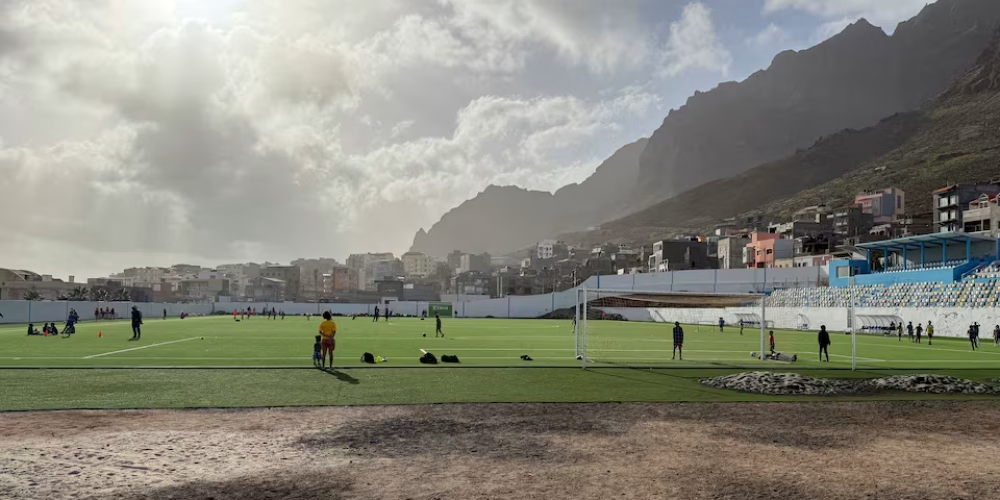
Cape Verde, an archipelago positioned off the western coast of the African continent, has historically faced immense logistical and financial hurdles in developing its athletic infrastructure. Home to fewer than 600,000 inhabitants, the nation has traditionally seen its global footprint defined by its rich musical heritage, notably the soulful sounds of morna popularized by the late Cesária Évora. However, over the past decade, a deliberate restructuring of the country’s football federation has sought to maximize both domestic development and ties to the massive global Cape Verdean diaspora.
By successfully punching its ticket to the 48-team tournament, Cape Verde writes itself into the sports history books alongside Iceland in 2018 and fellow 2026 debutants Curaçao as the smallest populations to ever participate in a World Cup. The breakthrough comes after years of near-misses in continental qualification cycles. This success marks a monumental evolution for a footballing program that, just two decades ago, struggled to consistently field teams for international fixtures due to budgetary constraints and travel limitations.
The architectural foundation of this current roster rests on an innovative approach to player recruitment, blending homegrown island talent with second- and third-generation athletes born across Europe and the Americas. Because of a long history of outward migration driven by economic factors, there are more people of Cape Verdean descent living abroad than there are residents on the islands themselves. This diaspora has created a unique talent pool that the national team has meticulously tapped into, offering elite professionals a chance to represent their ancestral home.
The Blue Sharks Rise to the Global Stage
Affectionately known by their supporters as the Blue Sharks, Cape Verde navigated an incredibly demanding qualification campaign to book their flight to North America. Under the precise leadership of head coach Pedro Leitão Brito—widely known as Bubista—the squad displayed a tactical discipline that caught major regional powerhouses completely off guard. The Blue Sharks managed to win seven of their ten qualification fixtures while dropping only a single match along the way, demonstrating a level of consistency that few pundits anticipated from a lower-seeded side.
The defining moment of their qualification journey arrived during a thrilling home fixture against Cameroon, a traditional giant of African football with multiple historical appearances in the World Cup knockout stages. Cape Verde executed a flawless defensive counter-attacking strategy to secure a massive upset victory, a result that injected immediate belief into the squad and shifted the dynamics of their entire group. The team’s roster showcases this brilliant blend of international experience, featuring seasoned professionals who ply their trade in top-flight European leagues.
Among the standout figures anchoring the defense is center-back Roberto Lopes, who was born in Dublin to an Irish mother and a Cape Verdean father. He is joined in the defensive line by Logan Costa, a physical and composed French-born defender currently playing for Villarreal in Spain’s La Liga. This international pedigree has provided the Blue Sharks with the tactical versatility required to absorb pressure against elite offensive units.
The reward for their historic qualifying run is a challenging placement in the World Cup group stage, where they are scheduled to match up against former world champions Spain and South American heavyweights Uruguay, alongside an ascendant Saudi Arabian squad. Currently holding a global ranking of 69th, the Blue Sharks will enters every single match as a heavy statistical underdog. Yet, the mood within the camp remains fiercely optimistic, with players and coaching staff publicly embracing their status as a dangerous spoiler capable of disrupting the plans of established soccer superpowers.
Why This Matters
The unprecedented arrival of Cape Verde on the world stage holds direct significance for millions of sports fans and cultural communities across the United States. While the tournament itself will draw hundreds of thousands of international visitors to American cities, the specific emergence of the Blue Sharks resonates deeply with the extensive Cape Verdean-American communities established throughout New England. Municipalities such as Providence, Rhode Island, and various communities across Massachusetts maintain centuries-old historical connections to the islands, initially forged during the height of the 19th-century whaling industry.
For these diaspora communities, the presence of their ancestral national team on American soil provides an unmatched cultural bridge and a profound source of collective visibility. Local business owners, community centers, and cultural organizations across the Northeast are already preparing for massive viewings, transforming regional venues into hubs of international celebration. Furthermore, the single direct commercial flight route currently connecting the island nation to the United States lands directly in Providence, ensuring that thousands of traveling fans will funnel directly through regional American infrastructure.
From a broader sporting perspective, the inclusion of a micro-nation like Cape Verde highlights the expanding democratic nature of the newly redesigned 48-team World Cup format. American sports executives, corporate sponsors, and media networks are realizing that compelling underdog narratives often drive the highest consumer engagement and television ratings. The presence of a true Cinderella story inside American stadiums injects an unpredictable element that enriches the tournament’s narrative, proving to domestic audiences that soccer’s global hierarchy is becoming increasingly fluid.
NCN Analysis
The qualification of Cape Verde is more than just a heartwarming sports story; it represents a blueprint for how smaller, resource-constrained countries can achieve elite sporting success through strategic talent identification. By actively embracing their diaspora, the Cape Verdean Football Federation has effectively bypassed the limitations of their small domestic population. The real test for the organization will be ensuring that this sudden influx of global visibility and FIFA tournament revenue is effectively reinvested into grass-roots infrastructure across the islands of São Vicente and Santiago.
Moving forward into the tournament, the Blue Sharks are uniquely positioned to surprise defensive lines that may underestimate their technical capability. Under Bubista, they do not play like a typical defensive minnow; they retain possession confidently and utilize the European league experience of their backline to manage the tempo of the game. Audiences should watch closely to see if Cape Verde can secure points in their opening matches. Doing so would not only validate their presence in North America but could spark a radical rethinking of how small nations approach international sports development.
The long-term impact on the country’s tourism and global branding could be transformative, far outlasting the final whistle of the tournament. As millions of viewers tune in to watch the Blue Sharks compete against the world’s most expensive athletes, the tiny island nation will enjoy an unprecedented level of international marketing. This exposure could drive significant future economic investments and tourism interest to the archipelago, permanently altering its global trajectory.
The journey of the Blue Sharks proves that geographic size does not dictate the scope of a nation’s athletic destiny.
Reported by the NCN Editorial Team









