

KEY POINTS
- A pet duck named Merlin has captured global attention as the unofficial breakout star of the tournament.
- Mexican President Claudia Sheinbaum hosted the famous bird and his owners at a high-profile press conference.
- The family-owned pet has highlighted the daily realities and struggles of local working-class vendors.
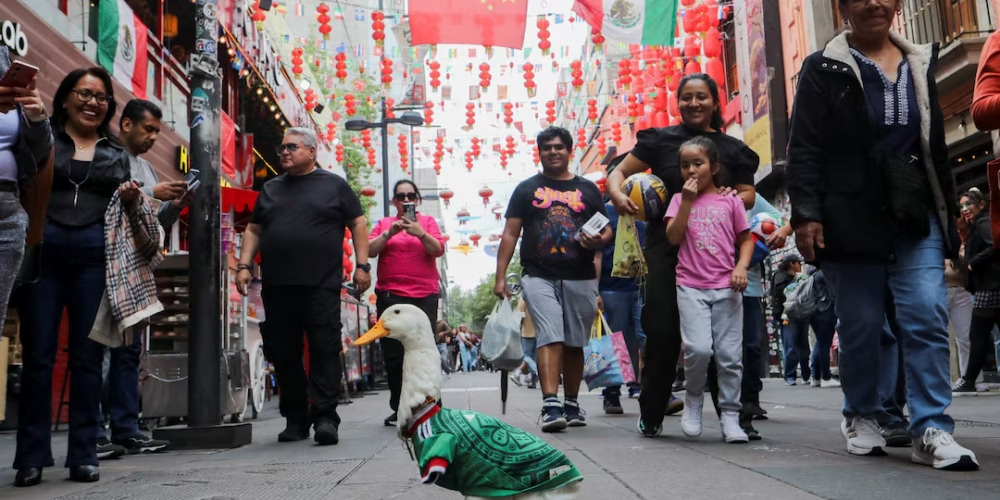
Mexico’s viral sensation has officially reached the highest halls of government as Merlin, the feathered sensation taking social media by storm, stepped into the political spotlight. Dressed in a miniature national team jersey complete with a tailored tie, the celebrity bird joined Mexican President Claudia Sheinbaum during her live morning broadcast. The unusual appearance stunned international viewers and solidified the animal’s status as the definitive icon of the host nation’s tournament culture.
What You Need to Know
The tournament, co-hosted by Canada, Mexico, and the United States, has generated spectacular sports moments on the pitch, but few stories have resonated as deeply as the rise of this unlikely viral sensation. For decades, major international sports tournaments have used highly corporate, heavily marketed cartoon figures to represent their cultural identities. However, modern football fans frequently gravitate toward organic, fan-led symbols that capture the true, unvarnished spirit of the host community.
Merlin first achieved global prominence following a spectacular street celebration on Mexico City’s historic Reforma Avenue. After the home side secured a thrilling victory in their opening group stage match against South Africa, hundreds of thousands of ecstatic supporters flooded the streets to celebrate. Amidst the sea of cheering fans, cameras caught a small, calm domestic duck waddling fearlessly through the crowds while proudly wearing a custom-made green kit.
The initial video clip spread exponentially across major digital networks, transforming an ordinary family pet into the premier Mexico World Cup mascot overnight. International broadcasters quickly picked up the story, and international fans arriving in the capital city began searching the streets hoping to catch a glimpse of the famous bird. This grassroots phenomenon has provided a heartwarming, distinctly local counter-narrative to the massive commercial infrastructure that typically dominates international sports competitions.
Viral Sensation Discharges Press Room Protocol in Mexico City
The unusual political intersection occurred during President Claudia Sheinbaum’s standard Monday morning press briefing, a venue typically reserved for intense geopolitical debate and legislative announcements. Members of the domestic and foreign press corps looked on with amusement as Merlin walked confidently across the stage, completely unbothered by the flashing cameras and blinding television lights. The duck even took a seat at the main table, a spot usually occupied by senior cabinet members, letting out a few timely quacks that disrupted the otherwise formal governmental atmosphere.
The duck’s owner, Carla Gomez, addressed the gathered media representatives with a mix of pride and humility, using the platform to share her family’s background. Gomez operates as a streetside vendor in the historic center of Mexico City, selling water and soft drinks to make a living in a highly competitive urban economy. She explained that Merlin is not just a beloved companion but a functional partner who accompanies the family daily, jokingly labeling him the manager of their small retail operation.
President Sheinbaum welcomed the family warmly, highlighting that the unique pet embodies the resilience, warmth, and hard-working nature of ordinary citizens. The administration indicated that the sudden global attention directed at the family presents a unique opportunity to provide them with structural support, though specific policy details were not disclosed. The event concluded with the head of state attempting to pet the avian celebrity before posing for a series of official photographs with the family.
However, the high-profile meeting has also attracted significant domestic political scrutiny and debate from various civic groups. Critics on social media pointed out that the administration granted immediate access to a viral internet sensation while continually delaying meetings with advocacy groups representing families of missing persons. Furthermore, local wildlife conservation agencies issued public statements warning that the romanticization of exotic or domestic pets on television can trigger dangerous waves of impulse purchasing and subsequent animal abandonment.
Why This Matters
The sudden rise of a viral animal sensation carries significant implications for the broader North American sports landscape, particularly for corporate marketers and media executives in the United States. Modern sports audiences are increasingly cynical of forced, multi-million-dollar advertising campaigns, preferring authentic cultural phenomena that arise organically from communities. A beloved Mexico World Cup mascot like Merlin demonstrates how grassroots internet culture can completely overshadow traditional, corporate-approved branding strategies.
For American businesses and tourism boards operating across the co-hosting nations, these viral moments offer powerful insights into consumer engagement during massive sporting events. The immense public interest in a working-class family’s pet underscores a growing consumer appetite for human-interest stories that bridge the gap between elite athletics and everyday life. Capitalizing on these authentic cultural touchpoints allows media corporations to maintain high viewer engagement even during gaps between major matches.
NCN Analysis
From an editorial perspective, Merlin’s journey from a bustling marketplace to the presidential palace perfectly illustrates the unpredictable nature of modern digital media. In an era where sports narratives are highly controlled by public relations teams, an autonomous, jersey-wearing bird represents a refreshing break from the script. The phenomenon has successfully humanized the host nation’s tournament experience, showcasing the vibrant street life that makes the capital city a legendary cultural hub.
Moving forward, it will be fascinating to observe how corporate entities attempt to commercialize this organic cultural milestone. The family’s stated intent to secure a formal trademark for their pet suggests a savvy understanding of modern digital monetization. However, the true value of the iconic Mexico World Cup mascot lies in its independence from corporate sponsorship, a factor that the owners must carefully preserve to maintain the public’s genuine affection.
The world will continue to watch the tournament on the pitch, but the true spirit of the fans remains firmly rooted in the streets.
Reported by the NCN Editorial Team









