

KEY POINTS
- French international defender Ibrahima Konate has candidly revealed his recent battle with clinical depression following profound personal losses over the past year.
- The elite soccer player experienced back-to-back tragedies with the sudden passing of his close teammate Diogo Jota and the subsequent death of his father.
- Konate is actively challenging the public stigma surrounding mental health in professional sports, emphasizing that financial wealth does not shield athletes from emotional trauma.
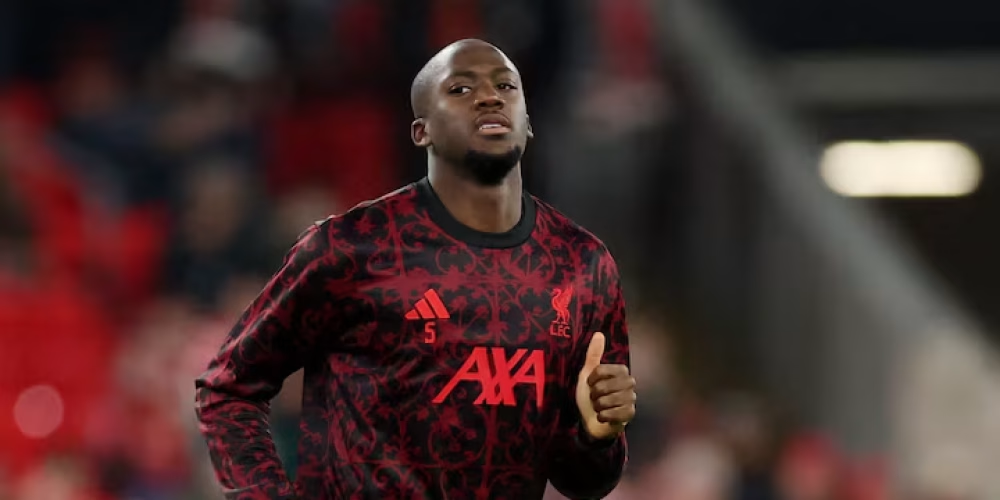
French national team star Ibrahima Konate has broken his silence regarding a grueling internal battle with depression brought on by consecutive personal heartbreaks. Speaking openly while at the national team training camp, the elite center-back detailed how a pair of devastating losses completely destabilized his mental well-being over the past twelve months. His emotional disclosure comes at a critical juncture as elite athletes face mounting pressure to balance personal grief with high-stakes professional obligations.
What You Need to Know
In the highly competitive arena of global soccer, the personal lives of athletes are frequently overshadowed by their on-field performances and multi-million dollar contracts. The modern sports landscape often expects players to maintain peak physical and mental condition regardless of outside circumstances. However, Konate’s recent revelations shed light on the profound psychological burdens that can accumulate behind the scenes, even for individuals performing at the absolute pinnacle of European football.
The first massive shock arrived last summer when Portuguese forward Diogo Jota, Konate’s close friend and neighboring teammate, tragically lost his life in a severe automobile accident. The unexpected loss sent shockwaves through the global football community, but it had an intensely localized impact on those who shared daily routines with the forward. For Konate, processing the sudden absence of a peer who lived just next door proved to be an overwhelming emotional hurdle right before the competitive calendar resumed.
Compounding this immense grief, Konate was simultaneously monitoring the failing health of his father, Hamady, who was enduring a long-term medical battle. The patriarch passed away a few months later in January, leaving the defender to navigate a secondary wave of profound bereavement while maintaining a rigorous match schedule. The swift succession of these two monumental losses ultimately triggered a deep depressive episode that the player hid from the public eye for months.
Breaking the Silence on Mental Health
During a raw interview broadcast on French radio, the twenty-seven-year-old athlete explained that clinical depression is a deeply internal reality that completely alters a person’s physical and emotional state. He directly criticized the common public narrative that elite sports stars are somehow immune to psychological suffering simply because of their substantial financial earnings. The defender noted that true emotional despair originates deep within the heart and mind, completely independent of commercial success or professional status.
The center-back admitted that the initial news of his teammate’s fatal accident left him entirely shattered, causing him to temporarily lose all enthusiasm for his daily professional activities. Because top-tier football clubs operate under strict corporate schedules, players are frequently required to return to competitive duties almost immediately to fulfill structural obligations to ownership, fans, and sponsors. Konate noted that while athletes have no choice but to step back onto the pitch, the process of truly adapting to such severe trauma is a slow, non-linear journey.
During the height of his father’s medical crisis, the athlete experienced severe internal conflict regarding whether he should step away from the sport entirely to support his family or remain available to assist his short-staffed team. He confessed that his primary mistake during this turbulent period was choosing to keep his immense grief entirely isolated rather than leaning on professional counseling or external support systems. By opening up now, he hopes to encourage young people and fellow professionals to communicate openly when facing psychological distress.
Despite enduring this severe emotional weight, the resilient defender managed to compete in over fifty fixtures during the grueling domestic campaign. While he acknowledged that his overall consistency on the pitch experienced a noticeable drop compared to previous years, his determination earned him a spot in France’s official twenty-six-man squad for the upcoming global tournament. The athlete credited his immediate family, dressing room peers, and loyal supporters for providing a steady foundation that helped him gradually rebuild his emotional strength.
Why This Matters
This open acknowledgment of mental illness by a prominent international athlete provides a crucial reference point for fans and sports organizations across the United States and global markets. It serves as a stark reminder that the rigorous demands of professional entertainment often come at a massive human cost, challenging corporate stakeholders to reconsider the adequacy of emotional support systems available to players. The story emphasizes that comprehensive player welfare must extend far beyond basic physical therapy and injury prevention.
Furthermore, Konate’s willingness to speak out helps dismantle the culture of stoicism that has traditionally dominated masculine sporting environments. By using his massive global platform to normalise discussions around clinical depression, he provides valuable validation for millions of ordinary sports fans who may be quietly battling similar mental health struggles in their own lives. This public dialogue encourages a more empathetic approach to evaluating public figures when their professional output is visibly impacted by private trauma.
NCN Analysis
Konate’s decision to vocalize his struggles just ahead of a major international tournament represents a defining shift in how modern athletes manage their public personas. Historically, players would go to great lengths to hide any perceived psychological vulnerability out of fear it could jeopardize future transfer negotiations or commercial partnerships. By addressing his struggles head-on, Konate is taking control of his own narrative during a major transition period in his professional career.
Moving forward, the sporting community will be watching closely to see how national team managers and club executives integrate robust mental health resources into their daily training regimens. As calendar schedules become increasingly congested and public scrutiny intensifies via social media, the psychological resilience of players will become just as critical as their tactical or physical capabilities. Konate’s brave testimony could serve as the catalyst needed for institutional governing bodies to mandate comprehensive emotional counseling infrastructure across all professional tiers.
Ultimately, the true measure of success for the sport will not just be found in silverware, but in how effectively it protects the human beings wearing the jerseys.
Reported by the NCN Editorial Team









