

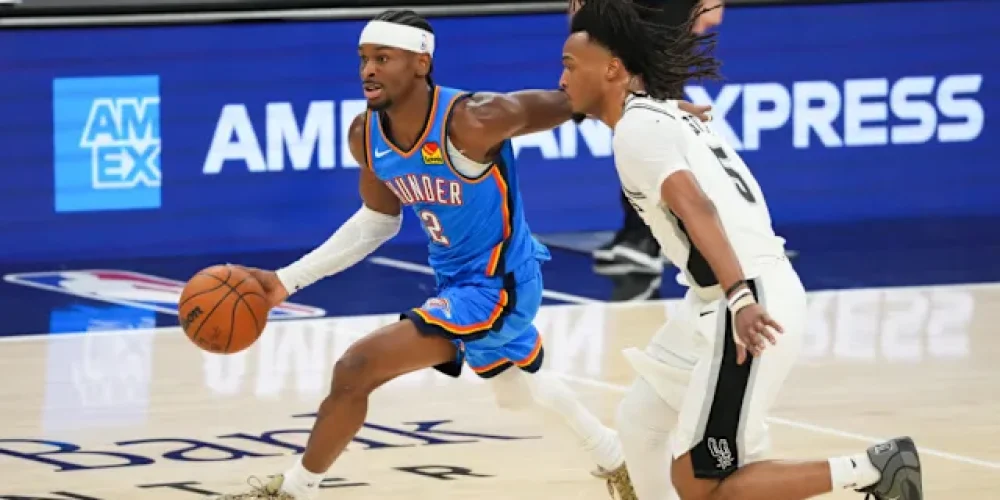
KEY POINTS
- Oklahoma City Thunder franchise star Shai Gilgeous-Alexander expressed deep personal disappointment following his team’s elimination from the postseason.
- The elite guard emphasized that individual accolades and regular-season statistical milestones mean very little without capturing a championship.
- Despite the abrupt exit, the young Thunder roster established itself as a foundational powerhouse in the Western Conference.
Oklahoma City Thunder superstar Shai Gilgeous-Alexander did not mince words when evaluating the conclusion of his team’s remarkable competitive run. Following a hard-fought elimination game that dashed the franchise’s championship aspirations, the dynamic playmaker offered a remarkably candid self-assessment of the campaign. In a sports landscape where athletes frequently lean on comforting platitudes, the MVP finalist made it clear that falling short of the ultimate team destination constitutes an outright failure of his primary objective.
What You Need to Know
The Oklahoma City Thunder entered the basketball calendar as one of the most intriguing and mathematically fascinating rosters in the entire global sporting landscape. Built through a meticulous collection of high-value draft assets and precise player development by the front office, the squad defied traditional rebuilding timelines by ascending to the absolute upper echelon of a brutal Western Conference. Their fast-paced style of play, anchored by elite defensive versatility and historic perimeter efficiency, transformed them from a promising young group into a genuine title contender much faster than external analysts anticipated.
At the center of this basketball renaissance was Gilgeous-Alexander, whose steady evolution into an unstoppable offensive engine captivated basketball enthusiasts worldwide. Operating with an unorthodox, highly methodical rhythm, the guard dominated opponents through precise mid-range scoring, elite driving ability, and an uncanny knack for drawing defensive contact. His individual statistical brilliance solidified his status as a perennial All-NBA First Team selection and an annual fixture in the most intense most valuable player discussions, establishing him as the unquestioned face of the franchise.
However, modern professional basketball culture is fiercely defined by postseason performance and championship silverware. Despite capturing the admiration of the domestic sports media and securing crucial home-court advantages during the initial rounds of the tournament, navigating the extreme physical adjustments and strategic countermoves of a seven-game playoff series presents a completely different level of difficulty. The sudden finality of a postseason exit often forces elite franchise leaders to confront the massive gap between regular-season praise and the grueling execution required to win sixteen games in the spring.
Confronting Elimination and the Weight of Franchise Leadership
The final moments of Oklahoma City’s campaign highlighted the razor-thin margins that decide greatness at the highest level of professional athletics. Throughout their final series, the Thunder battled structural matchup difficulties and inconsistent offensive production from their secondary rotations, putting an immense burden on their leading scorer to carry the offensive load. While Gilgeous-Alexander continuously delivered spectacular individual scoring performances, the defensive schemes deployed by their opponents systematically choked off the ball movement and transition opportunities that had made the Thunder so potent during the winter.
In the immediate aftermath of the decisive defeat, the franchise cornerstone sat before the media and deflected any attempts to find moral victories in the team’s youth or rapid developmental trajectory. He explicitly noted that his singular goal entering the season was to bring a world championship to Oklahoma City, and since that objective was not achieved, the entire campaign fell short of the internal standard he sets for himself. This uncompromising mentality reflects the heavy psychological burden carried by modern superstar athletes who understand that their ultimate legacies are weighed strictly in championship rings.
Despite the personal disappointment voiced by their leader, the statistical reality of what the Thunder accomplished provides an incredibly bright outlook for the organization’s future. The young roster gained invaluable, high-intensity playoff experience that cannot be replicated in regular-season play, exposing specific structural areas that require refinement during the upcoming summer months. The challenge now shifts to the coaching staff and front office to supplement their superstar creator with the precise roster adjustments necessary to convert raw potential into a championship reality.
Why This Matters
The raw accountability displayed by prominent cultural figures like Gilgeous-Alexander resonates deeply across the modern sporting consumer market, particularly for fans in the United States and global English-speaking territories. Modern media consumers have grown increasingly weary of carefully engineered corporate public relations statements from multi-millionaire athletes. When a global sports icon shows authentic emotional vulnerability and demands absolute excellence from himself, it creates an intense psychological connection with a fan base that appreciates genuine athletic passion and elite competitive drive.
Additionally, the long-term trajectory of the Oklahoma City franchise carries immense economic weight for mid-market sports cities across North America. The commercial viability, local tourism revenue, and regional media rights valuations of these franchises are entirely dependent on sustained competitive relevance and deep postseason runs. By establishing an elite, accountability-driven culture at the absolute top of the roster, the organization ensures that it will remain a primary driver of sports entertainment engagement, merchandise sales, and television viewership for the foreseeable future.
NCN Analysis
The public declaration of failure by Oklahoma City’s superstar is exactly what you want to hear if you are a stakeholder or a fan of the franchise. It signals that the individual accolades, maximum-salaried contract extensions, and widespread media praise have not dulled the competitive edge of a truly special basketball mind. History shows that almost every legendary champion in the modern era had to endure agonizing, highly public postseason heartbreaks before finally unlocking the strategic adjustments required to scale the mountain.
Looking forward to the upcoming offseason, the Thunder possess an unparalleled chest of draft capital and significant financial flexibility to aggressively upgrade their roster. The primary objective for management must be identifying elite floor-spacing threats and physical interior depth to alleviate the immense structural pressure placed on their primary ball-handler. If the front office can execute a calculated, high-impact transaction while their core young talent naturally matures, this painful postseason exit will likely be remembered as the crucial turning point that sparked a historic championship era.
The heartbreaking conclusion of the season serves as a powerful reminder that the journey to professional athletic immortality is paved with necessary, deeply instructive failures.
Reported by the NCN Editorial Team









