

KEY POINTS
- FIFA has announced the first-ever Super Bowl-style halftime show for a World Cup Final, scheduled for July 19, 2026.
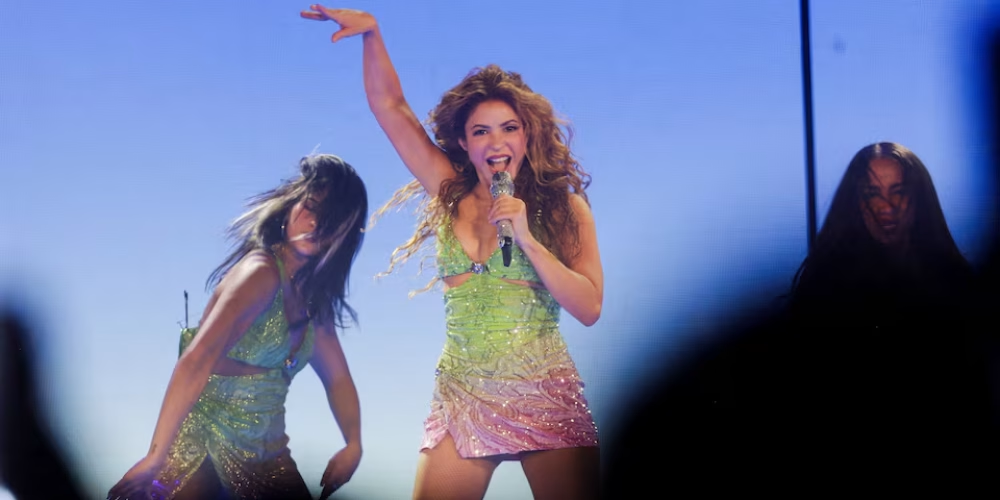
- Global icons Madonna, BTS, and Shakira will co-headline the performance at MetLife Stadium in New Jersey.
- The event aims to raise $100 million for the FIFA Global Citizen Education Fund to improve global schooling and sports access.
FIFA is breaking decades of tradition by introducing a high-octane halftime show for the 2026 World Cup Final, featuring a triple-threat lineup of Madonna, Shakira, and BTS. This unprecedented move aims to blend the world’s most-watched sporting event with the massive cultural spectacle typically associated with the NFL’s championship game. The performance will take place in the heart of the New York metropolitan area at MetLife Stadium, marking a significant shift in how the organization markets the tournament to a global audience.
What You Need to Know
For nearly a century, the FIFA World Cup has adhered to a strict format focused almost exclusively on the sport of football. Halftime periods have traditionally been reserved for tactical analysis, athlete recovery, and pitch maintenance, with musical performances usually limited to the opening or closing ceremonies. However, as the tournament returns to North America in 2026, organizers are looking to embrace the “entertainment-first” philosophy that has made American sports leagues so commercially successful.
MetLife Stadium in East Rutherford, New Jersey, has been selected as the venue for this historic final. The stadium is no stranger to massive musical events, having hosted multiple Super Bowls and international concert tours. The choice of location reflects a desire to capitalize on the proximity to New York City, a global hub for media and music, ensuring that the first World Cup Final halftime show receives maximum international exposure.
This initiative is not just about entertainment; it is tied to a significant philanthropic goal. FIFA has partnered with Global Citizen to launch a dedicated education fund. The partnership intends to utilize the massive viewership of the final—projected to reach billions of people—to secure $100 million in donations. These funds are earmarked for building schools and providing soccer equipment to underserved communities across Africa, Asia, and Latin America.
World Cup Entertainment Transformation
The selection of Madonna, Shakira, and BTS represents a strategic effort to appeal to diverse demographics across every continent. Madonna brings a legacy of pop dominance that resonates with Western audiences, while Shakira is a veteran of major sporting events, famously performing “Waka Waka” at the 2010 World Cup. The inclusion of BTS, the South Korean K-pop juggernaut, ensures that the show will capture the attention of younger fans and the massive Asian market, which is a critical growth area for the sport.
Coldplay frontman Chris Martin has been appointed as the creative curator for the production. Martin’s involvement suggests a focus on immersive, high-tech stagecraft and a cohesive narrative that links the three diverse acts. While the technical logistics of setting up and striking a massive stage in under 15 minutes have long been a hurdle for FIFA, the organization has reportedly consulted with American production teams experienced in the rapid-fire transitions required for the Super Bowl.
The integration of such a high-profile concert mid-match has raised some eyebrows among football purists. Critics argue that the 15-minute halftime break is essential for the integrity of the game and that a lengthy musical distraction could disrupt the focus of the players. To address these concerns, FIFA officials have indicated that the break may be slightly extended for the final, though the exact timing remains a subject of negotiation with the participating teams and broadcast partners.
The show is expected to feature a medley of hits from all three artists, culminating in a collaborative performance designed to symbolize global unity. Beyond the live audience of over 82,000 in New Jersey, the broadcast will be the primary vehicle for the Global Citizen fundraising campaign. QR codes and digital donation links will be integrated into the television feed, allowing viewers to contribute in real-time as the pop stars perform on the pitch.
Why This Matters for Americans
For the American public, this announcement confirms that the 2026 World Cup will be the most “Americanized” version of the tournament ever held. By adopting the halftime show format, FIFA is acknowledging the power of the US sports-entertainment model. This is a major win for the New York and New Jersey regional economy, as the “Super Bowl-plus” atmosphere will drive even higher demand for local hospitality, transportation, and tourism services during the weeks surrounding the final.
Moreover, the presence of BTS and Shakira in a US-hosted final reinforces the country’s status as a melting pot of global culture. For American businesses, the event provides a unique marketing goldmine. Brands that usually spend millions for a 30-second Super Bowl spot now have the opportunity to engage with a truly global audience that is multiple times larger than any domestic American broadcast. This shift in the sporting landscape suggests that future major events hosted in the US, including the Olympics, will increasingly rely on this blend of elite athletics and pop-culture spectacles.
NCN Analysis
The decision to introduce a halftime show is a calculated risk that reflects FIFA’s desire to compete with the NFL for the title of the world’s most sophisticated sports brand. While the core “football” product remains the draw, the inclusion of Madonna, BTS, and Shakira turns a 90-minute match into a four-hour cultural event. We expect this to significantly boost viewership numbers in the United States, where “casual” fans are often lured by the entertainment value rather than the technical nuances of soccer.
Looking forward, the success of this event will likely dictate the future of all FIFA tournaments. If the 2026 halftime show generates the projected $100 million for charity and breaks streaming records, it will become a permanent fixture of the World Cup. However, the production team faces an immense challenge in ensuring that the musical spectacle does not damage the turf or interfere with the world-class playing conditions required for a championship final. Fans should watch for further announcements regarding the guest list, as rumors of additional surprise performers are already beginning to circulate in the industry.
This historic performance marks the moment that the World Cup fully transitions from a sports tournament into a global entertainment powerhouse.
Reported by the NCN Editorial Team









