

KEY POINTS
- New scientific research warns that athletes and fans could face life-threatening temperatures during the upcoming tournament in North America.
- The study identifies several host cities where “wet-bulb” temperatures may exceed safety thresholds for strenuous outdoor activity.
- Organizers are under increasing pressure to implement advanced cooling protocols and flexible scheduling to mitigate health emergencies.
As the 2026 World Cup approaches, a comprehensive climate study has sounded the alarm on the potential for dangerous heat conditions across the United States, Canada, and Mexico. The report suggests that the mid-summer timing of the tournament coincides with record-breaking heatwaves, creating a high-risk environment for both high-performance athletes and millions of traveling spectators. With matches scheduled in some of the continent’s hottest corridors, the findings raise critical questions about the feasibility of traditional afternoon kick-offs.
What You Need to Know
The 2026 World Cup is set to be the largest in history, featuring 48 teams and matches spread across 16 host cities. Unlike previous tournaments held in more temperate climates or during winter months—such as the 2022 event in Qatar—this iteration returns to the traditional Northern_Hemisphere summer window. This period frequently sees peak temperatures in host regions like Texas, Florida, and Monterrey, Mexico, where heat indexes often climb well into the triple digits.
Climatologists are specifically monitoring “wet-bulb” temperatures, a metric that combines heat and humidity to determine how effectively the human body can cool itself through sweat. When this measurement hits certain levels, physical exertion becomes physically impossible without risking heatstroke or organ failure. Previous international sporting events have utilized “cooling breaks,” but researchers argue these may be insufficient if ambient conditions reach the extremes projected for July 2026.
Historically, heat has influenced major sporting decisions, but the scale of the 2026 event presents unique logistical hurdles. With 104 matches to be played over several weeks, the geographic diversity of the host venues means that while one match in Vancouver might be played in mild conditions, another in Arlington or Miami could be occurring under a hazardous heat dome. The study emphasizes that climate change has made these extreme weather events more frequent and more intense than they were even a decade ago.
Managing the 2026 World Cup Climate Risks
The heart of the concern lies in the physical toll on players who are expected to maintain elite levels of intensity for 90 minutes or more. The study highlights that even fit, young athletes are susceptible to heat illness when the body’s internal cooling mechanisms are overwhelmed by environmental humidity. If the air is too saturated with moisture, sweat does not evaporate, causing core temperatures to rise to dangerous levels. Researchers suggest that without significant intervention, the quality of play could suffer, and the risk of medical emergencies on the pitch will escalate.
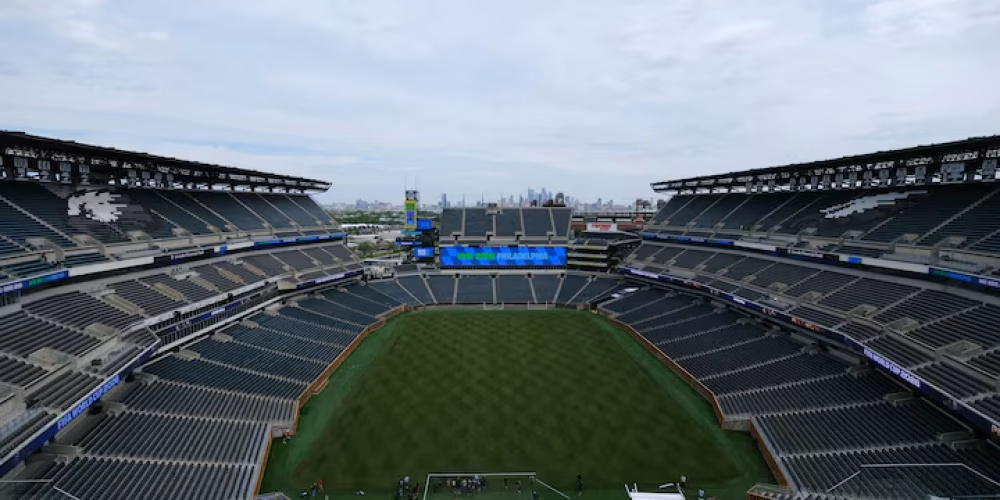
For the organizing committees, the challenge extends beyond the players to the fan experience. Millions of supporters are expected to congregate in outdoor fan zones and stadiums, many of which are not fully enclosed or climate-controlled. The study points out that “stadium microclimates”—where concrete and steel trap heat—can make the temperature inside a venue significantly higher than the official forecast. Public health experts are calling for a massive expansion of “cool zones,” free water stations, and medical staff trained specifically in heat-related illnesses.
A potential solution discussed in the report involves shifting match times to late evening or early morning to avoid the peak solar radiation of the afternoon. However, such shifts create a ripple effect on global broadcasting schedules, particularly for European and Asian markets which represent a massive portion of the tournament’s revenue. FIFA and local organizers are currently evaluating high-tech cooling technologies, including localized air-conditioning for benches and spectator areas, but the environmental cost of such measures also draws scrutiny from sustainability advocates.
Why This Matters
This warning holds significant weight for US consumers and businesses, particularly those in the travel and hospitality sectors. If extreme heat leads to match cancellations or restricted fan movements, the projected multi-billion dollar economic impact of the tournament could be compromised. Furthermore, for American parents and amateur athletes, the high-profile nature of this heat crisis serves as a critical education point regarding “Play Guidelines” during summer months. It underscores a growing reality in the US: the window for safe outdoor summer activities is narrowing in many states.
From a global perspective, the study highlights the increasing difficulty of hosting mega-events in an era of climate volatility. As the world’s most popular sport, soccer is the “canary in the coal mine” for how international commerce and entertainment must adapt to rising temperatures. For US host cities, the investments made now in heat-resilient infrastructure—such as better public transit and shaded urban corridors—will be a lasting legacy of the tournament, far outlasting the final whistle of the championship match.
NCN Analysis
The findings of this study suggest that the 2026 World Cup will be the most logistically challenging sporting event ever held on American soil. While FIFA has successfully managed heat in the past, the sheer geographic spread of this tournament makes a “one size fits all” policy impossible. We expect to see a significant push toward night matches, which may frustrate international broadcasters but is a biological necessity for player safety.
Moving forward, the focus will likely shift to the “Heat Action Plans” required for each individual venue. Readers should watch for announcements regarding stadium modifications and potential changes to the match calendar as the tournament draws closer. The ultimate success of 2026 will not just be measured by goals scored, but by the ability of the organizers to keep people safe in an increasingly hostile climate.
The safety of fans and athletes must become the primary metric for success as climate risks continue to grow.
Reported by the NCN Editorial Team









