

KEY POINTS
- FIFA is implementing a strict face-value resale policy for World Cup tickets to curb price gouging.
- The official FIFA ticket marketplace will serve as the exclusive platform for secondary transactions.
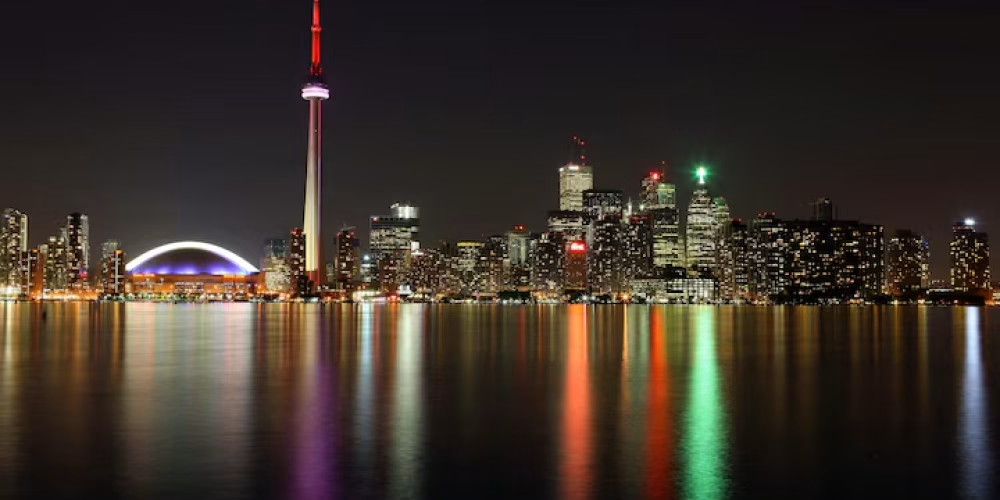
- Toronto officials are working closely with international soccer leadership to ensure fair access for local fans.
The 2026 FIFA World Cup is introducing a rigid defensive play against the secondary ticket market, mandating that all tickets for matches in Toronto can only be resold at their original purchase price. This policy is designed to dismantle the massive profit margins typically seen on third-party resale sites and ensure that genuine fans aren’t priced out of the historic tournament. By centralizing all secondary sales through an official FIFA-controlled platform, organizers are taking direct aim at the speculative “scalping” that often plagues global sporting events.
What You Need to Know
The 2026 World Cup represents a monumental shift in the scale of international soccer, being the first to feature 48 teams across three host nations: the United States, Canada, and Mexico. Toronto is set to host six matches at BMO Field, including Canada’s opening match. Historically, World Cup tickets have been some of the most sought-after commodities in sports, often leading to a chaotic secondary market where prices inflate by thousands of percent within minutes of a public sale.
FIFA‘s decision to enforce a face-value cap is not just a gesture toward affordability; it is a logistical necessity to manage the unprecedented demand across North America. In previous tournaments, the lack of a unified resale system led to widespread fraud and counterfeit ticketing. For 2026, the governing body is leveraging digital-only ticketing systems to lock seats to specific user accounts, making it technically difficult to bypass the official marketplace without losing the validity of the ticket itself.
This move also aligns with Toronto’s city-level goals for the tournament. Local organizers are keen to avoid a scenario where the “beautiful game” becomes a luxury experience reserved only for the elite. By capping the resale price, the city hopes to foster a diverse atmosphere in the stands, reflecting the multicultural makeup of Canada’s largest metropolis.
Securing the FIFA World Cup Ticket Marketplace
The core of this strategy is the FIFA World Cup ticket marketplace, a proprietary digital ecosystem that will handle every legal transfer of ownership for seats. If a fan finds they can no longer attend a match, they cannot simply list their seat on a general classified site or a high-fee ticket aggregator. Instead, they must post the ticket back into the FIFA pool, where it is sold to another verified buyer at the exact price originally paid, potentially plus a small administrative fee to cover processing costs.
Toronto officials have emphasized that this system is vital for maintaining the integrity of the event. The goal is to create a transparent environment where the “sold-out” status of a game actually means the stadium is full of fans, rather than empty seats held by brokers waiting for a last-minute payout. The digital infrastructure being deployed will require attendees to use the official FIFA app for entry, featuring rotating QR codes that prevent static screenshots from being used as entry tokens.
Furthermore, the partnership between the City of Toronto and FIFA involves a rigorous monitoring phase to track unauthorized listings on external platforms. While FIFA cannot technically stop someone from posting a listing on a third-party site, they have warned that tickets identified as being sold outside the official channel may be canceled without a refund. This creates a high-risk environment for “black market” buyers, effectively pushing the majority of the volume back into the regulated marketplace.
Why This Matters
For American fans and travelers planning to cross the border for matches, these regulations change the financial math of attending the tournament. In the United States, the secondary ticket market is often seen as a “wild west” where market demand dictates the price, regardless of the face value. Many American consumers are accustomed to paying steep premiums for NFL or NBA playoff games. The 2026 World Cup ticket resale policy serves as a culture shock, ensuring that the cost of a seat remains static from the moment of the first draw until kick-off.
This matters globally because it sets a precedent for how major international events handle the intersection of technology and fan access. If the Toronto model proves successful in eliminating scalping, it could become the standard for future Olympics or UEFA championships. For the average family, it means that if they miss out on the initial lottery, they still have a legitimate, affordable chance to see a match later in the year. It levels the playing field between the professional broker with high-speed bots and the individual fan looking for a single seat.
NCN Analysis
The enforcement of face-value resales is a double-edged sword that will test FIFA’s technological capabilities. While the intent is noble, the primary challenge will be the “gray market”—transactions that happen in person or via private bank transfers where the digital ticket is simply “transferred” through the app as a gift, while cash changes hands elsewhere. FIFA will need to implement strict “transfer” limits to ensure that gifting isn’t used as a loophole for off-platform profiteering.
Looking forward, we expect to see a significant amount of friction between FIFA and established ticket resale giants. These platforms stand to lose millions in transaction fees from the World Cup, and they may challenge the legality of these restrictions in different jurisdictions. However, by holding the keys to the stadium entry via the official app, FIFA holds the ultimate leverage. For readers, the takeaway is clear: do not buy from unauthorized sites. The risk of being denied entry at the gate is higher for 2026 than for any previous sporting event in North American history.
The success of this policy in Toronto will likely determine how strictly these rules are applied in high-volume U.S. host cities like New York and Los Angeles.
The strict face-value mandate for Toronto matches ensures that the 2026 World Cup remains accessible to true fans while striking a significant blow against the predatory secondary ticket market.
Reported by the NCN Editorial Team









