

Key Takeaways
• Trump stops threatened tariffs on European NATO allies after agreeing on a proposed Arctic “framework” deal.
• NATO chief says talks focused on Arctic cooperation, not transferring Greenland’s sovereignty.
• European leaders and Denmark maintain Greenland’s status remains unchanged; broader Arctic security discussions continue.
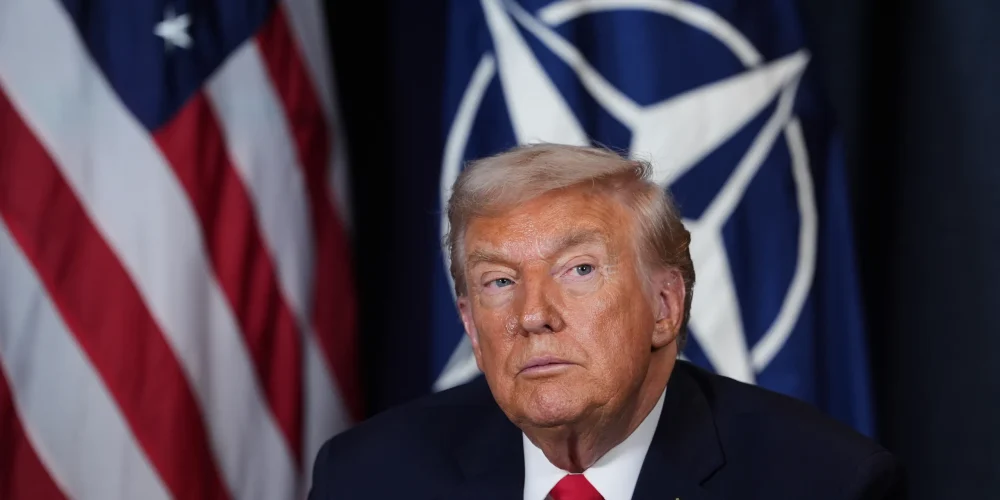
After days of rising diplomatic tension over Greenland, President Donald Trump abruptly dropped planned tariff threats on eight European NATO allies. The reversal came after high-level talks with NATO leaders about a proposed “framework of a future deal” on Arctic cooperation announced at the World Economic Forum in Davos. Trump’s earlier threats had sparked concern among allies, rattled markets and united European leaders in opposition to the U.S. stance on Greenland and regional security.
Trump had threatened steep tariffs on goods from countries including Denmark, Germany, France and the United Kingdom unless negotiations began over U.S. objectives in the Arctic. That aggressive posture reflected Trump’s insistence that the U.S. needed a stronger strategic foothold in the region, particularly for defense against perceived Russian and Chinese influence. Many European allies reacted sharply, saying Greenland’s status as part of the Kingdom of Denmark was non-negotiable.
In Davos, however, Trump said he had reached an understanding with NATO Secretary-General Mark Rutte on a broad framework for future cooperation in the Arctic. He quickly announced that the pending tariffs would not be imposed. According to Trump, the deal puts in place the groundwork for joint work on security challenges in the region without harming alliance unity.
Despite Trump’s description of the agreement, Rutte later clarified that the discussion did not include transferring sovereignty of Greenland from Denmark to the United States. The NATO chief emphasized that talks focused on strategic cooperation, reinforcing the alliance’s long-standing goal of maintaining collective security in the Arctic amid increased activity by Russia and China.
Denmark and Greenland both welcomed the pause in tariff threats, reiterating that Greenland is not for sale. Danish Foreign Minister Lars Løkke Rasmussen stressed that Denmark’s sovereignty and the island’s autonomous status would remain intact. Local leaders in Greenland also expressed relief and urged continued respect for the will of Greenland’s citizens.
European Union officials voiced strong support for Denmark and underlined the importance of collaborative security efforts in the Arctic. EU Commission President Ursula von der Leyen said Brussels is preparing a package to strengthen Arctic security, which could include European investments in defense capabilities and regional infrastructure. She labeled unilateral tariff threats a strategic error that could have undermined cooperation between longstanding allies.
Trump’s initial tariff announcement had targeted eight European nations, raising duties on imports up to 25% unless Greenland issues were resolved to U.S. satisfaction. That stance drew widespread criticism from European leaders who warned such a trade dispute could harm transatlantic relations and international cooperation.
Political analysts say the rapid policy shift underscores deep unease among NATO members about fracturing alliance unity over a single territorial dispute. European capitals quickly coordinated responses to Trump’s tariff threats, arguing that joint Arctic security requires shared commitment rather than economic coercion. The backlash reflected broader concerns about the future of U.S.–European ties under Trump’s second term.
Greenland’s geopolitical importance has grown as climate change transforms the Arctic, increasing navigable sea routes and exposing rich mineral resources. NATO has repeatedly stressed the need for allied cooperation in the area to counter strategic competition from Russia and China. While the newly announced framework is preliminary and lacks detailed specifics, it signals a willingness among allies to find common ground on these shared security concerns.
Trump’s reversal on tariffs is likely to ease immediate tensions and stabilize markets unsettled by fears of a transatlantic trade conflict. Yet policymakers agree that much work remains to translate the broad framework into concrete agreements. NATO leaders and European diplomats have indicated that further negotiations will be necessary to shape a durable and jointly supported Arctic strategy.
As the situation evolves, Greenland’s status as an autonomous territory within the Kingdom of Denmark remains central to diplomatic discussions. All parties reaffirmed their commitment to respecting Greenlandic sovereignty, while quietly acknowledging the island’s rising strategic value in a shifting global landscape.









