

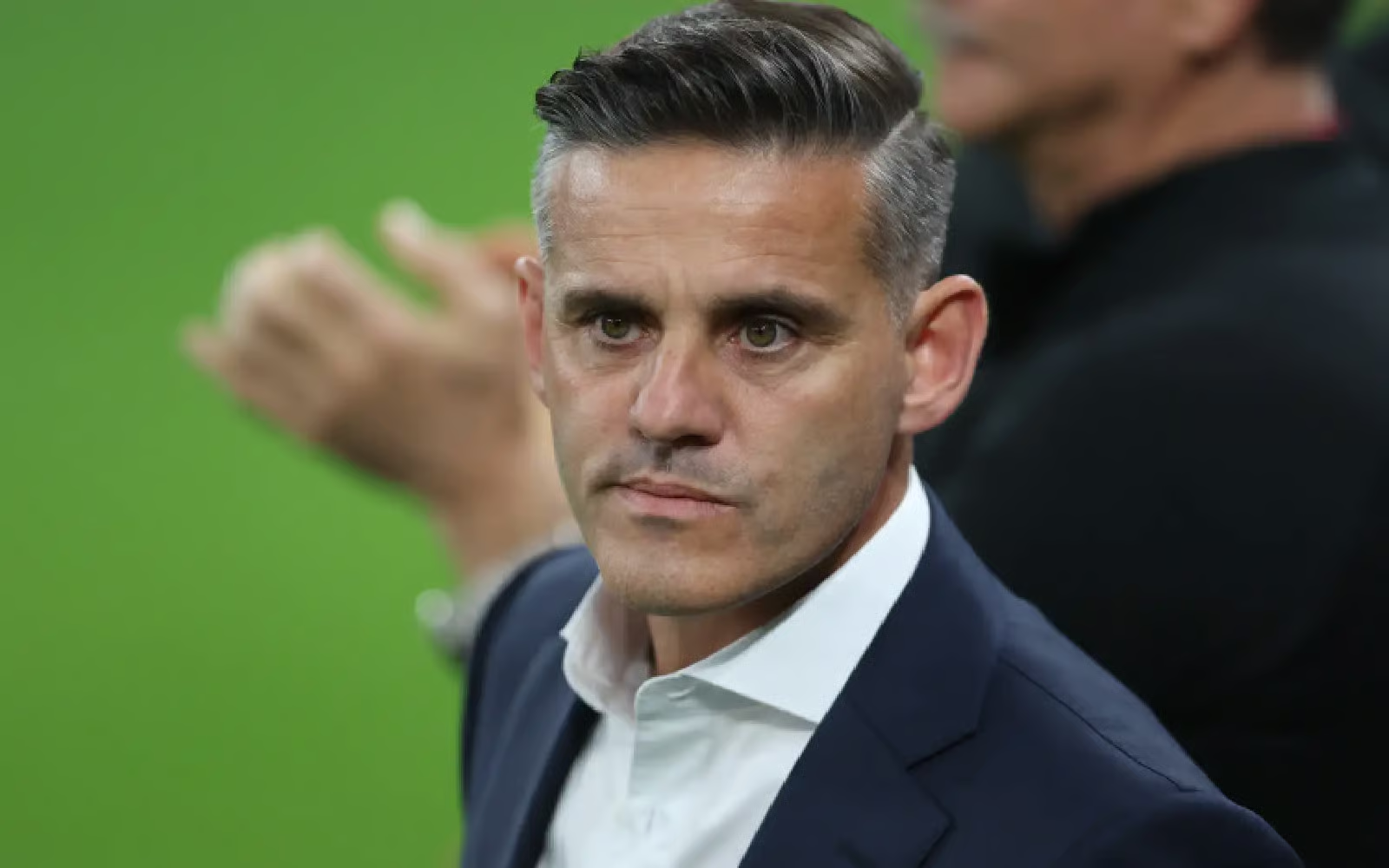
Key Points:
- New head coach John Herdman aims to transform Indonesia’s recent competitive setbacks into a psychological foundation for future success.
- The 50-year-old Englishman targets a historic qualification for the 2030 World Cup after the team missed out on the 2026 tournament.
- Herdman will also oversee the Under-23 national team to ensure a unified tactical philosophy across all levels of Indonesian football.
John Herdman arrived in Jakarta this week with a reputation for breaking long-standing droughts in international soccer. He famously led the Canadian men’s team to their first World Cup in 36 years during the 2022 cycle. Now, he faces the monumental task of reviving an Indonesian program that hasn’t reached the world stage since 1938.
During his first official press conference, Herdman addressed the heavy expectations of the country’s 280 million football-mad citizens. He described the intense pressure of the role as a “privilege” rather than a burden. He urged his players to embrace the “suffering” of past defeats to build a more resilient collective character.
The coaching transition follows the departure of Patrick Kluivert, whose tenure ended after Indonesia’s elimination in the 2026 qualifying rounds. Herdman’s immediate strategy involves a “listen, understand, and act” framework. He has already contacted over 60 players to evaluate the strengths and weaknesses of the current roster.
One of the new manager’s primary goals is to harmonize the senior squad with the youth developmental pathways. By leading the Under-23 side, Herdman intends to create a “plug-and-play” system for emerging talents. This continuity is essential for building a sustainable football culture that survives beyond individual tournament cycles.
The Indonesian Football Association (PSSI) has backed Herdman with a two-year contract and an option for an extension. President Erick Thohir emphasized that this appointment represents a long-term commitment to structural reform. The focus remains on narrowing the gap with Asia’s elite teams like Japan and Saudi Arabia.
Herdman also expressed an openness to continuing the federation’s strategy of utilizing naturalized players. He noted that competing at the highest level requires athletes who understand the intensity of top-tier leagues. His priority is simply finding the best individuals willing to commit to the national vision.
The first test for the new regime will come during the FIFA Series matches in Jakarta this March. These friendlies will provide Herdman with his first look at the squad in a competitive match environment. It serves as a vital warm-up before the ASEAN Championship begins later this summer.
Long-term targets include a strong showing at the 2027 Asian Cup in Saudi Arabia. Herdman believes that consistent success in regional competitions is the only way to build the “qualification habits” the team lacks. He wants his players to view themselves as pioneers for a new generation of Indonesian athletes.
The road to the 2030 World Cup is long, but Herdman insists there are no more excuses. He believes the passionate fan base deserves to see their team winning on the world stage. With a clear plan and a proven track record, the Englishman is ready to lead.
The global soccer community will be watching closely to see if Herdman can repeat his North American success in Southeast Asia. For now, the focus remains on turning disappointment into determination. The journey toward 2030 starts with a single, unified step under new leadership.









