

KEY POINTS
- James Harden delivered 12 points in the final quarter, including the go-ahead jumper with less than ten seconds remaining.
- The Detroit Pistons led by as many as eight points in the third period before Los Angeles mounted a disciplined defensive comeback.
- The victory marks the fourth consecutive win for the Clippers, moving them closer to securing home-court advantage in the opening round of the postseason.
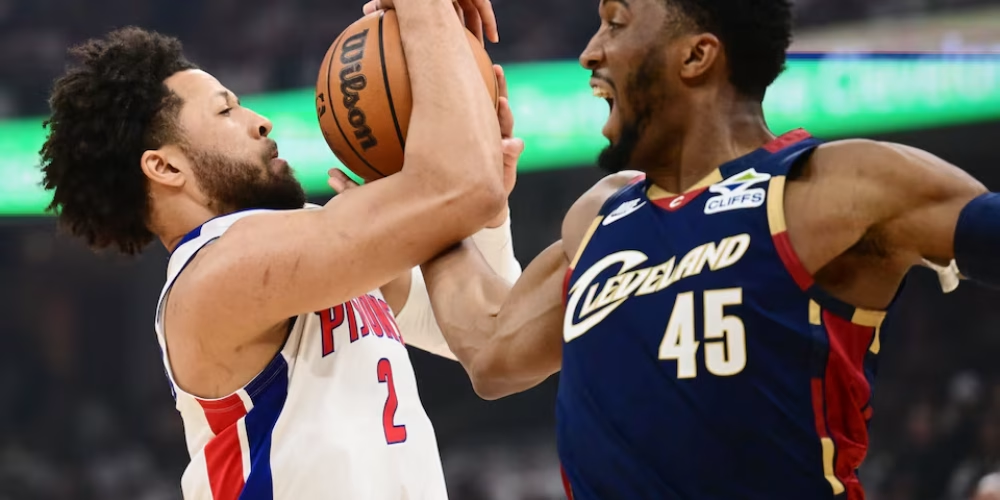
James Harden took over in the final moments to propel the Los Angeles Clippers to a 112-110 victory over the Detroit Pistons on Saturday night. The veteran guard silenced a raucous Detroit crowd with a series of difficult step-back jumpers and high-pressure free throws during the final two minutes of play. While the Pistons showed flashes of brilliance from their young core, they were unable to contain the methodical offensive execution of a Clippers squad led by their experienced floor general.
What You Need to Know
The NBA postseason landscape is currently a game of musical chairs, with every win carrying massive implications for seeding and potential matchups. For the Los Angeles Clippers, this season has been a test of chemistry and health. Since the acquisition of James Harden, the team has transitioned from a collection of superstars into a cohesive unit that relies on Harden’s unique ability to oscillate between a primary scorer and a facilitator. This victory is a testament to that evolution, showing that even on nights when shots aren’t falling early, the veteran presence can stabilize the ship.
Historically, the Detroit Pistons have been in a rebuilding phase, focusing on developing top-tier draft talent like Cade Cunningham. While their record may not reflect it, the Pistons have become a “trap team” for Western Conference contenders. Their length, athleticism, and lack of pressure often allow them to play loose, making them a dangerous opponent for teams like the Clippers who are managing the physical toll of a long season. Entering this game, Los Angeles knew that a lack of focus could result in a damaging loss against a hungry, younger roster.
The clash in Detroit underscored the disparity between experience and potential. The Clippers arrived in Michigan needing to maintain their momentum to stay clear of the play-in tournament bracket. With several key players sidelined for rest throughout the month, the burden has fallen on Harden to carry the offensive load during high-leverage situations. This game was a microcosm of the Clippers’ broader strategy: stay within striking distance through three quarters and allow their elite individual talent to close the door in the fourth.
The Clippers’ Strategic Late-Game Execution
The game began as a defensive struggle, with both teams shooting under 40% in the first half. The Pistons utilized their size advantage in the paint to harass Los Angeles at the rim, leading to several blocked shots and fast-break opportunities for Detroit. At halftime, the score was deadlocked, signaling that the night would be decided by whoever could find their rhythm in the closing minutes. The third quarter saw Detroit take control, fueled by a 12-2 run that left the Clippers searching for answers on the perimeter.
As the fourth quarter commenced, the atmosphere shifted. James Harden, who had been relatively quiet in the first half, began to manipulate the Pistons’ pick-and-roll defense with precision. He repeatedly drew fouls on Detroit’s younger defenders, forcing his way to the free-throw line to stop the clock and chip away at the lead. His ability to draw the double-team also opened up lanes for his teammates, though it was his own scoring that eventually took center stage. With five minutes remaining, Harden accounted for nearly every Clippers point, either through direct scoring or assists.
The final sixty seconds provided the most drama of the evening. After a Detroit turnover, the Clippers found themselves down by one point. Harden isolated at the top of the key, used a screen to create a sliver of space, and buried a signature fadeaway to put Los Angeles up. Detroit had one final chance to win or force overtime, but a stifling defensive sequence by the Clippers’ perimeter defenders forced a contested three-pointer that bounced off the rim. The win was secured, but it served as a reminder of how thin the margin for error is in the modern NBA.
Beyond the box score, the chemistry between Harden and the Clippers’ coaching staff was evident. During timeouts, Harden was seen directing traffic and adjusting the defensive assignments. This leadership is exactly what the front office envisioned when they traded for the former MVP. The Clippers’ ability to remain calm under duress is a trait they will need to lean on heavily as they prepare for a playoff run that will likely involve facing some of the most potent offenses in the Western Conference.
Why This Matters
For American sports fans and basketball enthusiasts, this game highlights the enduring value of veteran superstars in an era increasingly defined by young, athletic talent. James Harden’s performance is a case study in “basketball IQ,” proving that speed can be overcome by timing and positioning. For the city of Los Angeles, the Clippers’ success provides a compelling alternative to the storied history of the Lakers, as the franchise seeks its first-ever NBA championship. A win like this builds the “clutch” reputation necessary to attract more fans and sponsors to the team’s new arena.
Globally, the NBA remains a massive cultural export. Audiences in Ireland, Sweden, and the UK follow these games closely, often staying up into the early morning hours to watch live broadcasts. Seeing a global icon like Harden perform at an elite level maintains international interest in the league. Furthermore, the competitive nature of the Pistons, despite their record, shows the depth of talent across all 30 teams, reinforcing the NBA’s status as the premier professional basketball league in the world.
NCN Analysis
The Los Angeles Clippers are playing a dangerous but effective game. By relying so heavily on James Harden’s late-game heroics, they risk exhausting their primary playmaker before the playoffs even begin. However, the confidence gained from winning close games on the road cannot be overstated. From a tactical standpoint, the Clippers need to find a way to start games with more intensity to avoid these fourth-quarter deficits. If they can pair their elite closing ability with more consistent first-half defense, they will be a formidable threat to any opponent in the West.
Looking forward, the Detroit Pistons are clearly a team on the rise. While they lacked the poise to finish the game, the talent of their roster is undeniable. In the next two seasons, as their young core matures and gains experience in these high-pressure scenarios, they will likely shift from being a “trap team” to a legitimate playoff contender in the Eastern Conference. For now, the narrative remains centered on the veterans: as long as James Harden can summon this level of play, the Clippers are never truly out of a game.
The Los Angeles Clippers continue their march toward the postseason, proving once again that veteran experience is the ultimate equalizer in professional sports.
Reported by the NCN Editorial Team









