

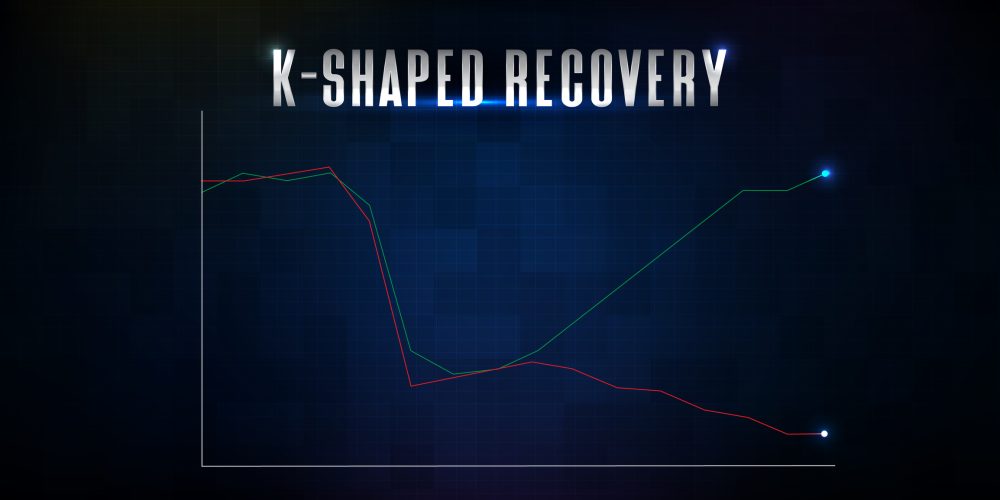
The United States economy is currently moving in two very different directions. While top-tier earners see their wealth grow, lower-income families face increasing financial pressure. Financial experts often call this phenomenon a K-shaped recovery. Recent data suggests that the Federal Reserve’s stance on interest rates is widening this gap. This economic split creates a difficult challenge for policymakers in Washington.
High interest rates generally help people who own assets like stocks and houses. These individuals often see their net worth climb as investment returns stay strong. Many wealthy households also locked in low mortgage rates years ago. Consequently, they remain insulated from the current high-rate environment. For this group, the economy feels stable and prosperous.
The experience is vastly different for the bottom half of the population. These households often rely on credit cards and auto loans to manage daily life. High interest rates make this debt much more expensive to carry. Many families now spend a larger portion of their income just on interest payments. This leaves less money for essential goods like food and healthcare.
Lower-income workers also face a cooling job market. While unemployment remains low overall, hiring has slowed down in many sectors. Wages are no longer keeping pace with the rising cost of borrowing. Many Americans feel that the official inflation numbers do not reflect their reality. They see high prices at the grocery store and feel the sting of expensive rent.
The Federal Reserve must balance these two conflicting realities. If they cut rates too quickly, inflation might surge again. This would hurt the poor the most. However, keeping rates high for too long could trigger a sharp recession. Such a downturn would likely hit low-wage earners first. It is a delicate act of economic brinkmanship.
Consumer spending patterns clearly show this growing divide. Luxury brands and high-end travel services continue to report strong profits. Meanwhile, discount retailers and fast-food chains see customers pulling back. People are making tough choices about where to spend their limited dollars. This shift suggests that the middle class is shrinking under the weight of current policies.
Small businesses are also struggling in this high-rate climate. They often lack the cash reserves of large corporations. Taking out a loan to expand or cover payroll is now much costlier. Many local entrepreneurs are pausing their growth plans to save money. This caution could slow down local economies across the country.
Economists worry about the long-term social impact of this trend. A persistent K-shaped economy can lead to social unrest and political polarization. People who feel left behind often lose faith in financial institutions. Addressing this inequality may require more than just adjusting interest rates. It could demand broader fiscal changes from the government.









