

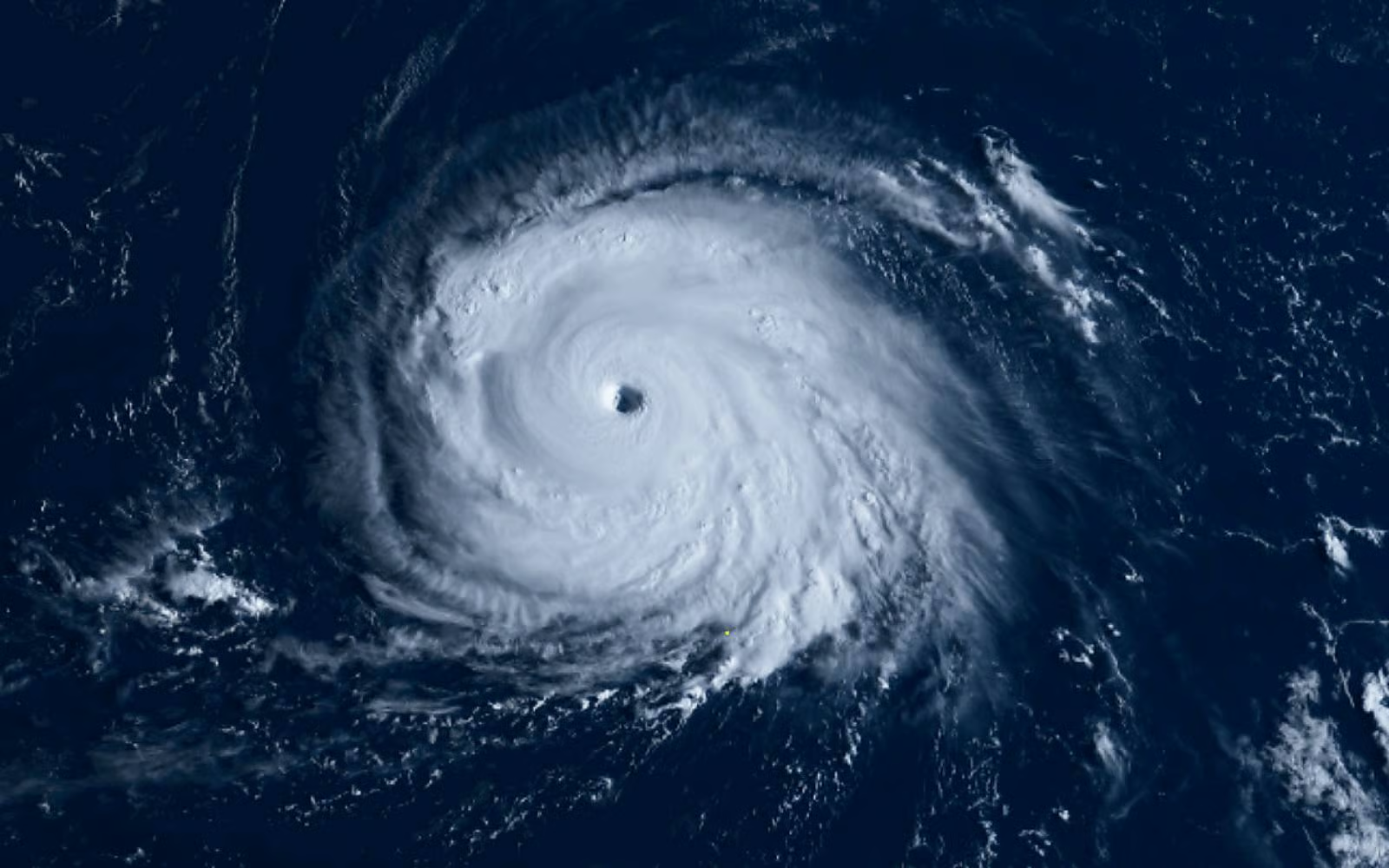
Southeast Asia is facing one of its deadliest weather disasters in recent years after a powerful tropical storm swept across multiple countries, pushing the regional death toll above 500 and affecting more than four million people. The storm delivered relentless rain, destructive winds, and widespread flooding, overwhelming the region’s emergency systems and leaving communities scattered across Vietnam, Thailand, Cambodia, and the Philippines in urgent need of support.
Vietnam has reported the highest number of casualties to date. Many deaths occurred in northern and central provinces where heavy rainfall triggered landslides that buried homes and blocked vital road networks. Rescue teams continue to work through dangerous, unstable terrain as they search for survivors and retrieve bodies, but conditions remain hazardous due to ongoing rainfall and mudslides.
In Thailand, the storm flooded several major provinces, forcing thousands of families to evacuate. Rivers spilled over embankments and inundated farmland, leaving crops destroyed and livestock swept away. Local authorities warned that water levels may rise further as continuous rainfall feeds into already swollen rivers. Schools and government buildings are now serving as temporary shelters for displaced residents.
Cambodia has also taken a severe hit. Flash floods washed through rural communities, destroying wooden houses and damaging key infrastructure. Relief agencies highlighted that many families lack access to clean water, raising fears of disease outbreaks if conditions do not improve quickly. The government has deployed military units to support rescue work and deliver essential supplies.
The Philippines, located on the storm’s outer path, reported significant coastal damage. Strong winds tore off rooftops, toppled trees, and disrupted power across several islands. Despite experiencing lower rainfall compared to mainland Southeast Asia, the impact has still been substantial, particularly for fishing communities whose boats and equipment were lost.
Regional authorities say more than four million people are affected by the storm’s aftermath. Many communities remain cut off due to washed-out bridges and blocked highways, complicating relief operations. Humanitarian groups are calling for rapid international support, noting that the scale of the destruction exceeds what many local governments can manage alone.
More News : Climate Risks Could Wipe Out $1.5 Trillion in U.S. Housing Value, New Analysis Warns
Climate specialists warn that storms of this intensity may become more common as sea temperatures rise and weather patterns shift. The region’s vulnerability is amplified by dense populations, fragile housing, and limited disaster-preparedness resources in rural areas. Officials in several countries have already called for increased investment in climate adaptation programs, including early-warning systems, stronger river barriers, and improved emergency shelters.
Economic losses are expected to be substantial. Early estimates suggest that agriculture, transport networks, and small businesses across the affected nations will take months to recover. Rice fields across Vietnam and Cambodia, already strained by earlier weather events, have been wiped out. Tourism infrastructure in Thailand also suffered damage ahead of peak travel season.
As recovery efforts continue, governments are urging residents in high-risk areas to stay alert. Meteorologists warn that residual rainfall may bring additional flooding in the coming days. With rescue operations still underway and thousands seeking food, water, and shelter, Southeast Asia is bracing for a long and difficult recovery.









