KEY POINTS
- The Seattle Storm issued an official apology after minority owner Celeste Keaton confronted two teenage fans in the stands.
- The fans held signs supporting Indiana Fever guard Sophie Cunningham’s public statements on participation in women’s sports.
- Storm majority owner Ginny Gilder emphasized the organization’s commitment to creating an inclusive and respectful arena environment.
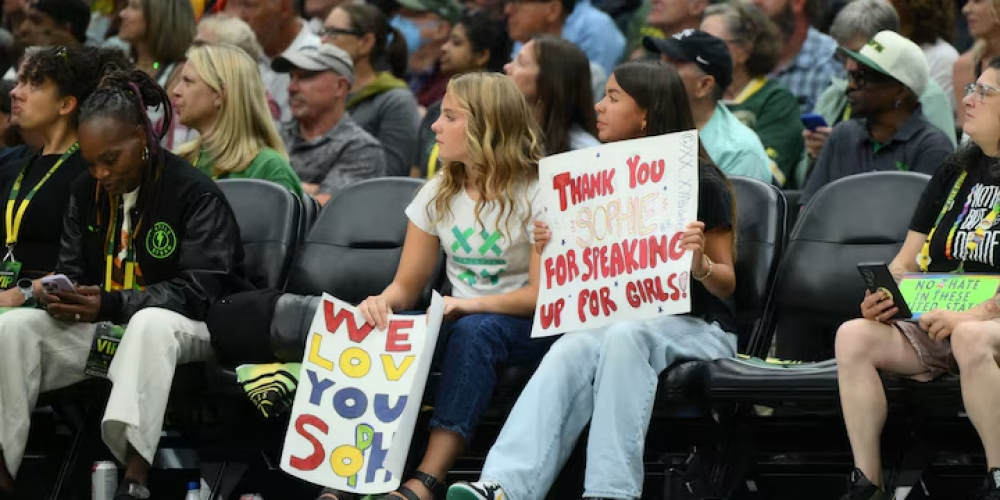
The Seattle Storm issued a public apology after team minority owner Celeste Keaton verbally confronted two teenage fans during a home game against the Indiana Fever at Climate Pledge Arena. The confrontation occurred after the young spectators displayed posters supporting Fever guard Sophie Cunningham’s public comments on women’s athletics. Seattle’s majority owner Ginny Gilder responded quickly to address the incident, reaffirming the franchise’s dedication to hosting a safe and welcoming environment for all basketball supporters.
What You Need to Know
The incident unfolded against the backdrop of an ongoing cultural debate surrounding gender eligibility in women’s professional and amateur sports. Indiana Fever guard Sophie Cunningham recently generated national attention after giving an interview in which she advocated for restricting women’s sports categories strictly to biological females. While her comments drew praise from conservative commentators and women’s sports advocacy groups, they also prompted significant pushback from advocacy organizations and transgender rights activists who argued her stance excluded trans women from athletic competition.
Tensions spilled over into the physical venue ahead of the matchup between Seattle and Indiana. Demonstrators gathered outside Climate Pledge Arena before tip-off, representing opposing sides of the debate with rally signs and chanting groups. Inside the building, the atmosphere remained visibly charged throughout the contest, with fans exchanging competing reactions whenever Cunningham checked into the game or touched the basketball. The heightened security presence and emotional crowd reactions underscored how deeply culture-war issues have penetrated professional women’s basketball.
WNBA franchises have historically cultivated progressive brand identities, emphasizing diversity, equity, and inclusion across their fanbases and player rosters. The Seattle Storm in particular have long been recognized as a flagship organization for social justice initiatives within the league, frequently supporting progressive civic causes and community outreach programs. Consequently, the presence of visible opposing political viewpoints inside the arena created an unusually volatile atmosphere among courtside spectators, arena staff, and team executives.
Seattle Storm Co-Owner Confronts Fans
According to eyewitness reports and video documentation shared online, two teenage girls arrived at Climate Pledge Arena carrying handmade posters praising Cunningham. One sign read, “Thank You Sophie for speaking up for girls!” expressing support for the Fever guard’s recent public statements. The two young fans were seated in lower-level spectator seating near the tunnel area when several surrounding audience members began voicing disapproval, directing continuous boos and negative gestures toward the teenagers throughout the early quarters of the game.
The situation escalated when Seattle Storm minority owner Celeste Keaton approached the teenagers directly in their seats. Witnesses reported that Keaton expressed intense anger over the signs, using profanity while demanding that the young fans lower their posters. Reports indicated that Keaton called the teenagers “insane” during the heated courtside exchange, drawing immediate attention from nearby spectators and stadium security personnel who moved in to monitor the interaction.
Following widespread media coverage and viral social media reaction the next day, Seattle Storm majority owner Ginny Gilder issued an official corporate statement acknowledging the incident. Gilder confirmed that a team co-owner had engaged in an inappropriate dialogue with two attendees during the game and offered an explicit apology on behalf of the franchise leadership group. She reiterated that Climate Pledge Arena must remain a respectful space where every ticket holder feels safe and valued regardless of personal viewpoints.
On the court, the Indiana Fever earned a 105-95 victory over the struggling Storm, powered by solid bench contributions from Cunningham, who knocked down three 3-pointers to score 11 points. Following the final buzzer, team representatives declined to make Cunningham available for postgame media interviews, seeking to prevent further escalation surrounding the outside demonstrations. Meanwhile, the loss marked the seventh consecutive defeat for Seattle, capping a frustrating week for the franchise both on and off the court.
What This Means for Americans
For sports consumers, families, and arena operators across the United States, this courtside incident illustrates how broader political polarization is increasingly impacting the live event experience. Major professional leagues depend heavily on maintaining family-friendly venue environments where young fans can attend games without facing hostile behavior from adults or arena officials. When team executives themselves become involved in confrontations with underage ticket holders, it raises urgent questions regarding fan conduct policies, corporate professionalism, and venue safety standards across professional sports facilities.
Additionally, the event highlights the challenging balancing act facing modern sports franchises as national social debates intersect with commercial entertainment. As individual athletes increasingly use their media platforms to express personal socio-political convictions, team management groups must establish clear operational boundaries to ensure that stadium staff and executive board members treat all paying spectators with basic civility. Ensuring that fan decorum standards apply equally to team owners as well as general spectators will prove essential for maintaining public trust and corporate sponsorship value.
NCN Analysis
The immediate public apology issued by Seattle Storm majority owner Ginny Gilder was a necessary crisis-management step, but the confrontation itself represents a significant operational oversight for the franchise. Executives and co-owners hold a fiduciary responsibility to represent their sports properties with professionalism, particularly when interacting with teenage fans in public spaces. Permitting personal political passions to override professional decorum risks alienating broader segments of the league’s growing fan base at a moment when the WNBA is enjoying unprecedented national visibility and commercial growth.
Moving forward, WNBA league officials should consider establishing formal conduct guidelines specifically governing owner behavior during live games. While passionate debate around social issues is a defining feature of contemporary sports culture, physical arenas must maintain strict boundaries protecting spectators from verbal harassment. Franchises that establish firm, neutral protocols for managing courtside interactions will be far better positioned to protect their brand equity and ensure that game days remain focused on world-class athletic competition.
Professional sports organizations must prioritize fan safety and executive professionalism to protect the integrity of the live game experience.
Reported by the NCN Editorial Team