KEY POINTS
- Denver Nuggets have offered restricted free-agent forward Peyton Watson a five-year contract extension worth $70 million.
- The $14 million average annual value falls below Watson’s reported target of $25 million per year as Denver navigates harsh second-apron luxury tax constraints.
- Multiple rival teams, including the Atlanta Hawks, Los Angeles Clippers, and Milwaukee Bucks, are reportedly monitoring sign-and-trade options for the 23-year-old wing.
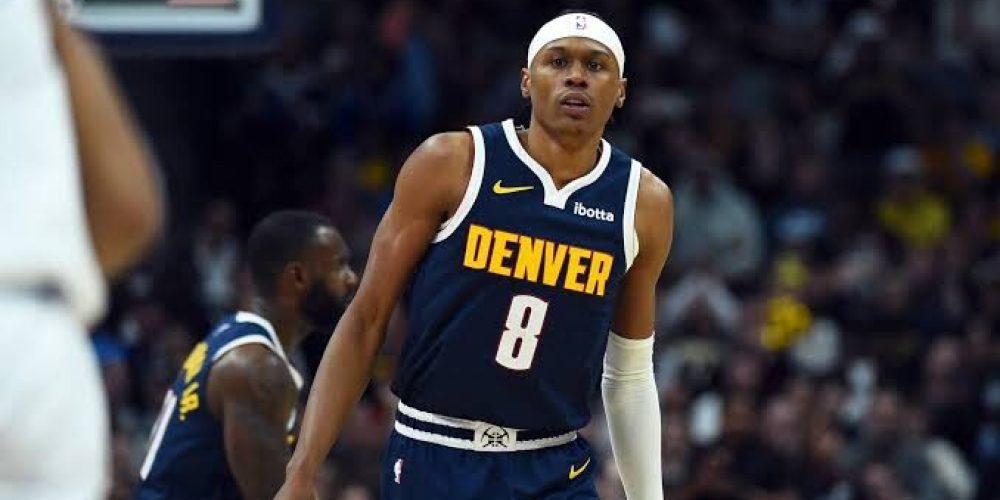
The Denver Nuggets have put forth a five-year, $70 million contract offer to restricted free agent Peyton Watson as the franchise attempts to secure its talented core while avoiding historical luxury tax penalties. The proposed deal, averaging $14 million annually, comes after a breakout 2025–26 campaign for the 23-year-old forward. However, with Watson’s camp initial benchmarks hovering around $25 million per year, contract negotiations remain locked in a high-stakes standoff as training camp approaches.
What You Need to Know
Drafted by Denver with the 30th overall pick in 2022 out of UCLA, Peyton Watson was long targeted by the Nuggets front office as a developmental wing with elite modern potential. Over his first three seasons, Watson steadily evolved from a raw defensive project into a pivotal fixture within Denver’s core rotation. His explosive athletic profile, perimeter lateral speed, and rim-protection instincts turned him into one of the league’s most effective versatile wing defenders.
During the 2025–26 NBA regular season, Watson took an impressive step forward in his offensive production. Averaging 14.6 points, 4.9 rebounds, and 1.1 blocks in 54 appearances, the young forward proved capable of carrying a elevated offensive burden—particularly during extended stretches when superstar center Nikola Jokic was sidelined due to injury. Watson’s developmental leap led many league observers to view him as an essential long-term building block alongside Denver’s championship foundation.
However, Denver’s financial flexibility has been severely restricted by the Collective Bargaining Agreement’s strict punitive guidelines. Following a five-year, $125 million rookie extension granted to teammate Christian Braun last fall, along with Denver matching an offer sheet for Spencer Jones that pushed the team past the restrictive second apron, the Nuggets face astronomical repeater luxury tax penalties. These financial realties have created a tight corridor for general manager Calvin Booth when negotiating new long-term commitments.
Peyton Watson Navigates Restricted Free Agency with Nuggets
The five-year, $70 million proposal put forward by Denver reflects the organization’s balancing act between preserving talent and maintaining financial sustainability under second-apron restrictions. At an average annual value of $14 million, the offer remains far lower than the $25 million per year figure Watson’s representatives at Klutch Sports were seeking heading into the summer. That $25 million benchmark was established by Braun’s extension, with many around the league noting that Watson outproduced Braun across the most recent season.
Because Watson is a restricted free agent, Denver retains the right to match any offer sheet executed with another team. However, with virtually no rival contenders currently holding outright cap space to extend a multi-year offer sheet directly, Watson’s suitors are forced to explore potential sign-and-trade arrangements. Eastern and Western Conference contenders—including the Milwaukee Bucks, Atlanta Hawks, and Los Angeles Clippers—have all monitored Watson’s situation closely in hopes of engineering a deal.
Faced with a massive gap between Denver’s current offer and his target value, Watson’s camp is weighing a risky alternative strategy: accepting the team’s one-year, $6.5 million qualifying offer for the upcoming 2026–27 season. Doing so would allow Watson to play out the final year of his tenure in Denver and enter the market as an unrestricted free agent in July 2027, completely free of restricted rights.
While playing on a qualifying offer carries inherent financial risk regarding potential injury or regression, it presents Watson with ultimate leverage to pick his next destination and secure a market-rate deal. For Denver, having a key player enter a season on a qualifying offer creates unwanted distraction and risks losing a prime young asset for zero return in free agency next summer.
What This Means for Americans
For NBA enthusiasts and sports fans across the United States, the contract dispute between Peyton Watson and the Denver Nuggets highlights how the league’s current CBA rules dictate roster construction for championship contenders. The second apron has effectively placed a hard ceiling on high-spending teams, forcing franchises to make tough decisions between retaining homegrown draft picks or avoiding crippling financial penalties.
Additionally, casual basketball viewers tracking Western Conference standings will recognize that the outcome of these contract talks directly impacts Denver’s championship window. As established stars age across the league, young defensive wings like Watson are essential for slowing down elite perimeter scorers. How Denver handles Watson’s contract situation will serve as a prominent case study for other small-market franchises navigating team building under strict spending caps.
NCN Analysis
The standoff between Peyton Watson and the Denver Nuggets represents the modern NBA’s economic realities at work. Denver holds considerable leverage because external cap space across the league is sparse, giving them little incentive to bid against themselves. However, lowballing a core contributor who outplayed his peers risks burning bridges with a high-profile agency like Klutch Sports and pushing the player toward the qualifying offer.
If Watson accepts the qualifying offer, Denver gains short-term tax relief for the 2026–27 season but completely surrenders long-term control over his future. The most logical resolution for both sides remains a middle-ground compromise—potentially a shorter three-year deal with a player option—or a sign-and-trade that delivers Denver viable rotational pieces while staying beneath hard financial thresholds.
The contract negotiations surrounding Peyton Watson will play a defining role in shaping the Denver Nuggets’ depth and financial strategy for seasons to come.
Reported by the NCN Editorial Team