KEY POINTS
- The Philadelphia 76ers are slated to receive the NBA maximum of 34 nationally televised and streamed games for the upcoming regular season.
- The dramatic surge from 14 national broadcasts last year follows 41-year-old superstar LeBron James signing a two-year contract with the franchise.
- Major media partners including Disney, NBCUniversal, and Amazon Prime Video are building marquee showcases around Philadelphia, including potential Christmas Day headliners.
The NBA television landscape has officially shifted toward Philadelphia. Following superstar LeBron James’ high-profile move to the Philadelphia 76ers, network executives and league schedulers are granting the franchise the league’s maximum allowance of 34 nationally televised or streamed games for the 2026–27 season. This decision represents a massive swing in visibility for a team that made just 14 national appearances during its previous campaign.
What You Need to Know
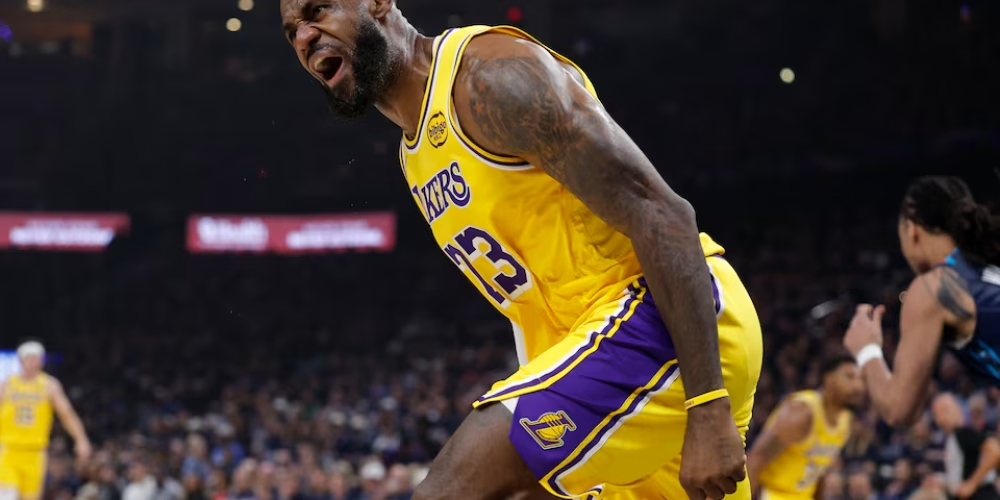
The scheduling adjustment highlights the unmatched broadcast pull that LeBron James continues to command across professional sports. After finishing seventh in the Eastern Conference with a 45–37 record last season, the 76ers were initially projected for modest national exposure. However, James’ decision to leave the Los Angeles Lakers and sign a two-year, $8 million deal with Philadelphia instantly transformed the franchise into a primetime centerpiece for national rights holders.
League leadership acknowledged that the entire 2026–27 regular-season schedule was effectively paused while awaiting the veteran forward’s free-agency decision. NBA Commissioner Adam Silver publicly noted earlier this month that major calendar anchors—specifically opening week matchups and the traditional five-game Christmas Day slate—could not be finalized without knowing where James would play. With the four-time champion officially on board, network executives moved rapidly to adjust their game allocations.
Under current league regulations, no single franchise can appear in more than 34 nationally televised or streamed games during the regular season. Last season, only four franchises reached that upper limit: the New York Knicks, Los Angeles Lakers, Golden State Warriors, and Oklahoma City Thunder. Philadelphia now joins that premier tier, underscoring how a single roster movement can alter multi-billion-dollar broadcasting strategies.
The LeBron James Effect on National Broadcasts
The redistribution of national games spans across the NBA’s entire media partner lineup, including Disney’s ABC and ESPN, NBCUniversal’s NBC and Peacock, and Amazon’s Prime Video. Broadcasters are positioning Philadelphia as a central attraction, leveraging both the star power of James and the established talent already in place, such as former MVP Joel Embiid and All-Star guard Tyrese Maxey. The combination gives networks a potent mix of legendary star power and championship ambition.
A primary driver behind the broadcast overhaul is the creation of compelling storyline matchups. Network partners are actively pitching high-profile fixtures, including a prospective holiday showdown against James’ former squad, the Los Angeles Lakers. Other high-rating possibilities include divisional battles against the New York Knicks or historic rivalries with the Boston Celtics, both of which offer proven viewership numbers across major television markets.
The shift also reflects how distribution models have evolved in modern sports media. Streaming platforms like Peacock and Prime Video require high-converting, tentpole events to drive subscriber acquisition and retain viewers throughout the winter months. By securing Philadelphia’s games, streaming services gain high-demand inventory capable of attracting casual fans and dedicated basketball enthusiasts alike.
Philadelphia’s rapid transformation from a regional broadcast feature to a national media staple represents one of the steepest single-season television jumps in league history. Moving from 14 to 34 national games effectively guarantees that over 40 percent of the team’s regular-season schedule will be accessible across standard cable, network television, or major digital platforms without local market blackouts.
What This Means for Americans
For American sports fans, the NBA’s scheduling decisions change how and where live basketball will be consumed this winter. Viewers across the country will no longer need out-of-market sports packages to watch Philadelphia on a weekly basis. With games regularly featured on over-the-air networks like ABC and NBC alongside widespread streaming access via Peacock and Prime Video, watching James adjust to his new surroundings in Philadelphia will be as simple as turning on primetime television.
The move also carries economic implications for local businesses, sports venues, and national advertisers. Commercial airtime during 76ers national telecasts is expected to command premium advertising rates, benefiting broadcasting partners and corporate sponsors. Meanwhile, sports bars and hospitality venues nationwide are preparing for heightened consumer interest on game nights, particularly during high-profile holiday windows like Thanksgiving week and Christmas Day.
NCN Analysis
From an editorial perspective, the NBA’s decision to maximize Philadelphia’s national exposure is a calculated commercial move, but it carries inherent basketball risks. At age 41, James remains an extraordinary floor general, yet relying heavily on a veteran core that includes an injury-prone Joel Embiid creates vulnerability. If injuries disrupt Philadelphia’s starting lineup mid-season, national networks could find themselves locked into primetime slots featuring depleted rosters.
Nevertheless, the immediate financial and cultural dividend for both the NBA and the 76ers is undeniable. Ticket demand, sponsorship valuations, and national viewership metrics are all projected to reach franchise-record levels. Network executives recognize that James’ final years in the league represent finite, irreplaceable television inventory. Maxing out Philadelphia’s national schedule is a rational exploitation of that reality while the opportunity remains.
With 34 national showcases scheduled, the basketball world will be watching every step of LeBron James’ next chapter in Philadelphia.
Reported by the NCN Editorial Team