

KEY POINTS
- Andrea Pirlo confirmed he is no longer in contention to become head coach of the Italy national team following intense political scrutiny over his sponsorship deal with Russian betting firm Fonbet.
- Newly elected FIGC President Giovanni Malagò halted the appointment despite firm backing from technical director Paolo Maldini and senior advisor Leonardo.
- The collapse of negotiations leaves the Azzurri without a manager as the federation searches for leadership after missing a third consecutive FIFA World Cup.
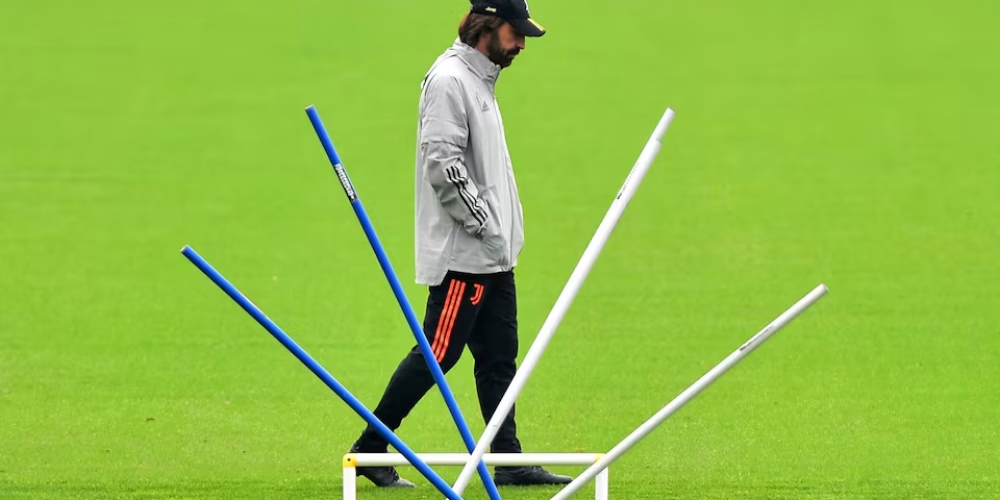
The Italian Football Federation has officially abandoned plans to appoint World Cup winner Andrea Pirlo as head coach of the national team following widespread political objections regarding his commercial links to Russian gambling operator Fonbet. The 47-year-old former Juventus manager revealed via social media that FIGC leadership informed him on Sunday evening that his candidacy had been withdrawn, abruptly halting negotiations for a four-year contract.
What You Need to Know
Italian soccer remains in institutional crisis following the national squad’s failure to qualify for the 2026 FIFA World Cup, marking three consecutive tournaments without the four-time world champions. Following the departure of Gennaro Gattuso in April after a playoff defeat to Bosnia and Herzegovina, the newly established management team of technical director Paolo Maldini and FIGC President Giovanni Malagò initiated a global search for a successor.
After premier coaching figures including Pep Guardiola and Carlo Ancelotti turned down formal approaches, Pirlo emerged as the federation’s primary choice. Supported strongly by Maldini, contract discussions had progressed toward final signatures, with Pirlo preparing to leave his post at Dubai-based United FC to assume control of the national program ahead of UEFA Euro 2028 qualifying.
However, public pressure mounted rapidly over Pirlo’s off-field commercial activities. In late 2025, while managing in the United Arab Emirates, Pirlo signed a global ambassadorial contract with Fonbet, Russia’s largest sports bookmaker. Scrutiny reached a boiling point after media coverage surfaced showing Pirlo alongside former international teammate Marco Materazzi attending a Fonbet promotional event at Moscow’s Luzhniki Stadium during the Russian Cup final in May.
Commercial Links to Russian Bookmaker Trigger Political Outcry
The prospect of appointing an active ambassador for a Russian state-linked entity created significant friction across political and diplomatic channels in Rome and Brussels. Italian lawmakers and European Parliament officials publicly challenged whether an individual representing a major Russian betting company could serve as the ethical and public representative of Italy’s national team while geopolitical sanctions remain active. Ukrainian Football Association President Andriy Shevchenko also voiced direct opposition to former teammates participating in events in Moscow.
Addressing the situation on social media, Pirlo expressed profound bitterness over how the situation unfolded. He defended his association with Fonbet as a standard professional agreement signed during his managerial employment in the UAE, insisting that the sponsorship carried zero political affiliation or endorsement.
“To assign a political meaning to that collaboration is to attribute to me beliefs that I have never expressed and that do not belong to me,” Pirlo stated. He added that throughout his playing and coaching career, he has operated in full compliance with international laws and contractual obligations, lamenting that a sporting appointment was dragged into a divisive political arena.
What This Means for Global Readers
For international sports followers and policy analysts, the breakdown of Pirlo’s candidacy underlines the expanding influence of corporate compliance, international sanctions, and public perception on high-level managerial appointments. As governing bodies implement stricter ethical guidelines, elite figures in sport face unprecedented scrutiny regarding personal endorsement portfolios and regional commercial ties.
For fans of Italian football worldwide, the situation reflects lingering administrative instability within the national federation. As rival European nations finalize their structural setups for the upcoming international cycle, Italy’s prolonged managerial search threatens to delay critical squad rebuilding efforts needed to restore the national team to top-tier competition.
NCN Analysis
The cancellation of Andrea Pirlo’s appointment demonstrates the delicate balance sports administrators must navigate when balancing sporting qualifications with public relations realities. While Paolo Maldini prioritized technical familiarity and international stature by championing his former teammate, President Giovanni Malagò recognized that hiring an active ambassador for a Russian gambling firm presented an unsustainable political exposure for a federation attempting to rebuild its credibility.
From a football perspective, the decision forces the FIGC back to square one with limited marquee managerial options available. With top targets having already declined the position, the federation may be forced to revisit former managers such as Roberto Mancini or Antonio Conte to lead the rebuilding effort. Furthermore, reports indicating tension between Maldini and federation leadership over the decision suggest that organizational alignment remains a central hurdle for Italian soccer’s recovery.
Italian soccer’s journey back to international prominence continues to be hindered by off-pitch friction and governance challenges.
Reported by the NCN Editorial Team









